
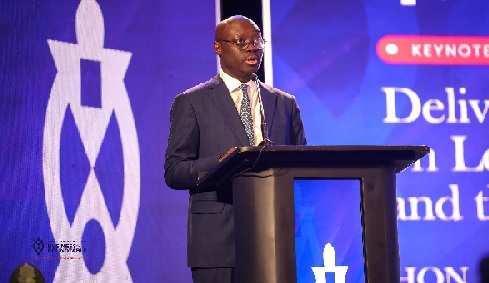
Ato Forson: There are plans to add 3000MW electric power generation by 2030
There are plans to add 3000 megawatts of electric power generation to the existing capacity by the year 2030 as part of efforts to strengthen industrial growth, improve energy stability, and support economic transformation, the Minister of Finance, Dr Cassiel Ato Forson has stated.
Speaking at the Ishmael Yamson & Associates Business Roundtable on Thursday, May 28, 2026, Dr Forson said persistent power instability across Africa continues to impose significant economic costs and weaken the continent’s manufacturing competitiveness.
According to him, Africa loses an estimated US$25 billion annually due to power outages, describing unreliable electricity supply as a major barrier to productivity, industrialisation, and value addition.
“We cannot industrialise in darkness. Energy remains central to Africa’s transformation, yet over 600 million Africans still lack access to electricity,” he stated.
Dr Forson said Ghana fully appreciates the continent’s energy challenges and is pursuing an ambitious energy expansion agenda to address them.
He disclosed that President John Dramani Mahama recently announced plans to build 1,200 megawatts of power capacity, with the broader national target set at 3,000 megawatts by 2030. He added that 30 per cent of the planned additional capacity will come from renewable energy sources.
Dr Forson stressed that Africa’s energy deficit remains unacceptable despite the continent’s abundant natural resources, including gas, hydro, solar, wind, and critical minerals needed for the global energy transition.
“How can Africa speak meaningfully about industrialisation without reliable and affordable power?” he asked.
The Finance Minister further stated that Africa’s next phase of industrial transformation must focus on value addition instead of the continued export of raw materials.
“The next quarter of a century must become Africa’s industrial century — not just extracting lithium, but refining lithium; not just exporting bauxite, but producing aluminium; not just exporting cocoa, but processing it and building competitive value chains,” he said.
Dr Forson also underscored the importance of the African Continental Free Trade Area (AfCFTA), describing trade integration as an economic survival strategy capable of reshaping intra-African commerce and accelerating growth across the continent.
