
The government spent close to GH¢2 billion to increase cocoa farmers’ share of the world market price from the statutory 70 per cent to 90 per cent, the Minister of State in charge of Government Communications, Felix Kwakye Ofosu, has disclosed.
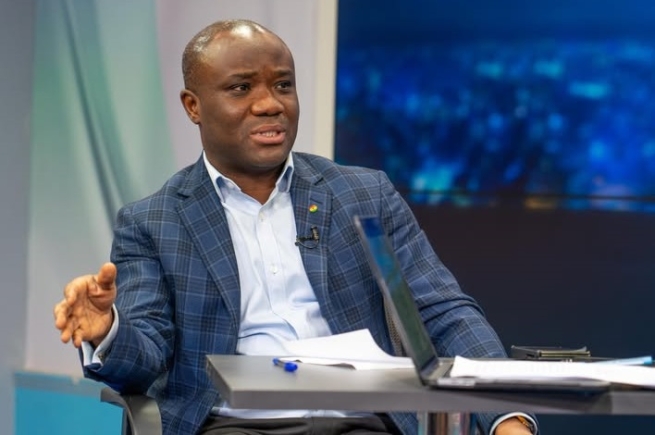
Speaking on TV3 on Saturday, February 28, 2026, Mr Kwakye Ofosu said the policy decision imposed a high cost on the public purse, even though the producer price per bag had recently been reduced.
“We in the NDC promised 70 per cent of the world market price,” he said. “When we announced a producer price of GH¢3,675, it was 70 per cent of the market price at the time. Now we are giving 90 per cent. We have gone 20 per cent higher.”
According to him, raising the farmers’ share meant the government had to absorb the difference that would otherwise have been retained within the cocoa value chain.
“To give 90 per cent, the government has had to spend close to GH¢2 billion to make up for the gap,” he said. “When you give 70 per cent to farmers, the remaining 30 per cent is used to cater for other stakeholders, including the licensed buying companies. There are costs such as fertiliser, pesticides, staff and extension services.”
He said the additional burden had implications for public finances.
“By giving 90 per cent, it means government has taken on an extra 20 per cent cost. When you absorb all of this, it runs into billions of Ghana cedis which we cannot continue to carry,” he said.
On 12 February 2026, the government announced a reduction in the cocoa producer price from GH¢3,625 to GH¢2,587 per bag, representing a 28.6 per cent decrease. The decision triggered public concern, particularly among cocoa-growing communities.
Mr Kwakye Ofosu, however, maintained that the revised price still covered farmers’ production costs.
“This price adjustment is not below the cost of producing a bag of cocoa,” he said. “If farmers were producing at GH¢3,000 and we were paying GH¢2,587, then they would be making losses. That is not the case.”
Explaining further, he added: “If you buy for GH¢10 and sell for GH¢5, you make a loss. If you sell for GH¢25, you still make a margin, even if it is lower than before.”
The minister said the government faced two options in addressing the financing gap.
“There were two options. One was to borrow billions of Ghana cedis in an already difficult fiscal situation. The other was to adjust the price so buyers would return to the market and provide liquidity for licensed buying companies to pay farmers,” he said.
He indicated that early signs pointed to some recovery in market activity.
“Reports from Cocobod show that in recent weeks about GH¢3.6 billion has been advanced to licensed buying companies to purchase cocoa that had remained unsold,” he said, referring to the Ghana Cocoa Board.
Mr Kwakye Ofosu also cited developments in neighbouring Côte d’Ivoire, the world’s largest cocoa producer, where authorities are reportedly considering a reduction in the farmgate price.
“It is not surprising that Côte d’Ivoire, which is facing low buyer interest due to higher prices, is now looking at reducing its farmgate price to clear stocks held in warehouses,” he said.
An economist, Professor Godfred Alufar Bokpin, who appeared on the same programme, acknowledged the government’s intervention but questioned the timing.
“I recognise the effort of government, but it could have acted earlier rather than waiting,” he said.
Prof Bokpin added that exchange rate movements had compounded the sector’s challenges.
“If in a single year your currency strengthens by 40.7 per cent against the dollar, it becomes difficult to maintain margins given where world prices are,” he said, linking the Bank of Ghana’s currency dynamics to pressures within the cocoa industry.
Responding to concerns about timing, Mr Kwakye Ofosu said: “It is a fair point that it could have been done earlier. But it was necessary, and since the adjustment, we are seeing some results.”
