
Fisheries Ministry sanctions Fujian Farms over sanitary breaches
The Minister of Fisheries and Aquaculture, Emelia Arthur, has directed the management of Fujian Farms, a commercial aquaculture company engaged in fish breeding, rearing and processing, to undertake urgent corrective measures following the discovery of serious operational, environmental and safety breaches at the facility.
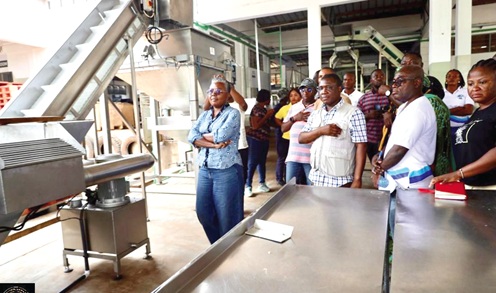
The directive was issued after an inspection by the ministry at Fujian Farms and Tropo Farms, two large-scale tilapia production companies, located at Asutsuare in the Shai Osudoku District in the Greater Accra Region, last Thursday.
The inspection was part of a routine monitoring of fish farms to ensure compliance with industry standards.
Ms Arthur, who was accompanied by the District Chief Executive (DCE) for Asuogyaman, Godwin Bobobee, as well as directors and technical staff of the
Fisheries Commission, warned that failure to comply within four weeks would result in the closure of Fujian Farms.
“Failure to comply will result in the closure of the facility,” the minister cautioned.
Tropo Farms commended
In contrast, Tropo Farms was commended by the minister for maintaining high operational and environmental standards.
The farm was praised for its structured systems, effective biosecurity protocols and contribution to food security and employment.
Immediate measures
As part of enforcement actions, the minister directed the farm to submit a comprehensive corrective action plan within three days.
The facility was also ordered to suspend the stocking of new fingerlings until all identified deficiencies were addressed.
In addition, a 10-member task force has been deployed to the site to supervise operations and ensure strict adherence to regulatory standards.
Fujian Farms was further fined GH¢240,000 as an administrative penalty.
The inspection team uncovered multiple violations at Fujian Farms, including the absence of basic biosecurity protocols, poor sanitation conditions and inadequate waste management systems.
Officials said the lapses posed significant risks to public health, environmental safety and the long-term sustainability of the aquaculture sector.
Other concerns raised included the lack of protective gear for workers, unhygienic handling of fish and processing practices, erosion affecting the broodstock section, poor water quality and the unsafe disposal of dead fish.
Legal backing
Ms Arthur emphasised that the directives were in line with the Fisheries and Aquaculture Act, 2025 (Act 1146), and the Fisheries Regulations, 2010 (L.I. 1968), stressing the government’s commitment to enforcing compliance across the sector.
She explained that the laws mandated operators to adhere to strict standards on environmental management, fish health, hygiene and worker safety, while empowering the ministry and the Fisheries Commission to impose sanctions, including fines, suspension of operations and closure of facilities that failed to comply.
The minister added that the strengthened legal regime was designed not only to punish offenders but also to ensure accountability, protect consumers and align Ghana’s aquaculture practices with international standards.
Zero tolerance policy
Ms Arthur reiterated the ministry’s zero-tolerance policy towards non-compliance and indicated that similar inspections would be carried out nationwide.
The move, she said, was part of efforts to safeguard public health, protect the environment and promote sustainable growth within the fisheries and aquaculture industry.
The Fisheries Minister indicated that operators who flouted the rules would face swift and decisive sanctions, regardless of their size or influence, adding that the ministry would intensify unannounced inspections across aquaculture facilities nationwide.
“The objective is not to cripple businesses but to sanitise the sector and ensure that all players operate within acceptable standards,” she said.
Ms Arthur further stated that consistent enforcement would help restore public confidence, safeguard the environment and position the country’s aquaculture industry to attract investment and compete favourably on the global market.
