
Free primary health care to begin in April
The government will begin to implement the free primary healthcare policy in April with a targeted rollout in 100 deprived districts across the country.
The goal of the policy, which is part of broader reforms aimed at achieving Universal Health Coverage (UHC), is to reach all parts of the country by 2028.
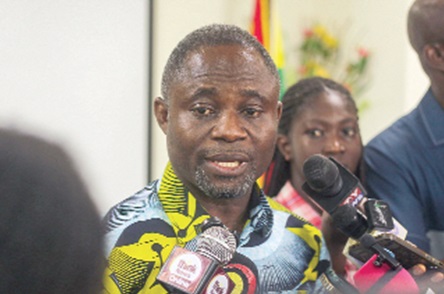
Addressing the media and civil society organisations (CSOs) at a stakeholder engagement in Accra, the Minister of Health, Kwabena Mintah Akandoh, explained that the policy was part of health sector reforms aimed at strengthening access to healthcare while deepening confidence in the National Health Insurance Scheme (NHIS).
He said while primary healthcare would be provided free of charge under the new policy, access to secondary and tertiary healthcare services would still require enrolment on the NHIS.
“Our community health nurses will go to farms, mosques, churches and schools. We are not reinventing the system; we are resourcing it to work better,” he said.
He stated that some schools, particularly those far from health facilities, would have their sick bays converted into clinics as part of the programme.
Primary healthcare
He explained that under the policy, Ghanaians and legally resident persons would be able to access basic healthcare services by identifying themselves with valid documents such as a Ghana Card, voter ID, NHIS card or any form of identification that confirmed residency.
He said the policy framework for the initiative had been completed and the Ministry of Health was currently undertaking extensive stakeholder consultations to ensure broad-based support before implementation.
Mr Akandoh stated that although the annual cost figure for the policy could not yet be provided, ongoing stakeholder engagement would help refine projections.
While admitting that challenges remained within the primary healthcare system, including infrastructure and equipment gaps, he said the government was committed to retooling facilities to improve service delivery.
NHIS
The Health Minister said the government's deliberate effort to pay health service providers promptly had helped stabilise the system and restored the confidence of both providers and subscribers.
“For the past 12 months, you have not heard of service providers withdrawing their services because of non-payment.
That is because the government has made a conscious effort to pay claims on time,” he said.
He revealed that NHIS coverage had increased significantly within the past year, rising from 57 per cent to 66 per cent, a development he attributed to improved reliability in the system.
“When payments are timely, confidence is built.
That is why coverage has moved from 57 per cent to 66 per cent in just one year, and we need to push it even further,” the minister added.
He said prevention and health promotion remained key pillars of the policy framework, noting that early detection and community-level interventions would reduce long-term healthcare costs.
Human resource
Touching on human resource challenges, the minister stressed the need for medical professionals to accept postings to deprived districts as part of national service.
“Last year alone, 700 medical doctors were posted to districts.
The aim is to ensure that every district has at least three doctors.
We must all recognise the sacrifices taxpayers have made, including funding our education,” he said.
He also announced plans to improve the management of medical equipment by separating equipment management from hospital administration, a proposal he said would soon be presented to Cabinet for approval.
On capacity building, Mr Akandoh said the government would roll out post-basic training programmes for nurses in specialised fields such as nephrology and cardiology under the Mahama Cares initiative.
“We need specialised nurses to fill existing gaps.
We also want to train enough to meet local needs and export some, but that requires careful budget and resource management,” he noted.
