

GRA deepens collaboration with media to intensify tax education
The Ghana Revenue Authority (GRA) is to deepen collaboration with the media as part of measures to sustain its national education campaign on taxes.
The campaign is aimed at persuading citizens to voluntarily honour their tax obligations and also file their tax returns.
The initiative forms part of a three-year strategy of the authority which was unveiled on November 5, 2025.
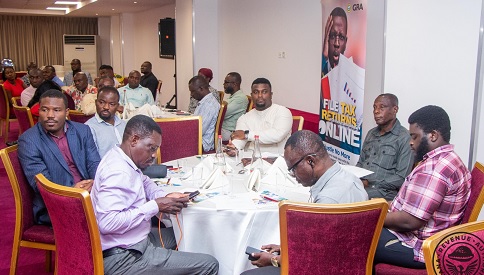
The Commissioner-General of GRA, Anthony Kwasi Sarpong, who was speaking at a media engagement in Accra last Friday, added that the authority was undergoing many reforms, including taxation application.
For instance, he mentioned the new reforms in Value Added Tax (VAT) law that would simplify the tax and reinstate the decoupled levies to ensure they did not become cost to businesses.
“We will be looking at reforming the Income Tax Act, as well as the Customs Act, ”Mr Sarpong said, adding that the authority was deploying technology to facilitate their work.
Significance
The Commissioner-General said paying taxes from the pocket or wallet always came with hesitancy, hence the need to sensitise the people to their tax obligation.
“Without explaining it in simple terms and without creating the awareness it is going to make it difficult for people to voluntarily comply,” he said.
Mr Sarpong, therefore, stressed the need for a stronger partnership with the media to simplify their messages to citizens.
He urged media practitioners to be abreast of the new tax regime.
“So first, we want to really journey with you as partners because you are the right channel to carry our messages across.
“We rely on you as partners, and as friends to give us feedback in areas that we need to strengthen so that we can correct ourselves and make sure that we improve efficiency with which we administer the taxes.”
Decoupling levies
Responding to a question on VAT, Mr Sarpong said the percentage tax on COVID-19, E-Levy and betting tax was gone while decoupling had also been “buried”.
He explained that there was a two and a half VAT on the levies, including Ghana Education Trust Fund (GETfund) and the National Health Insurance Scheme (NHIS).
“In other words, when you paid those levies, it was cost to businesses and that cost was being passed on to consumers.
“With the reforms coming, it is no longer a cost to businesses, and therefore, we believe that businesses will be able to remove it from their prices and that is the reason why the Minister of Finance announced that about six billion is being given to citizens,” Mr Sarpong added.
