
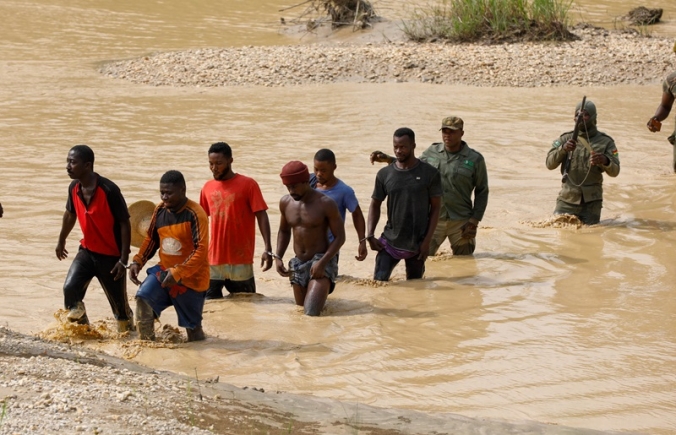
Chiefs and residents of mining communities have called on the government to urgently set up military camps at forest reserves to prevent further destruction by illegal miners.
Speaking in separate interviews, they said the destruction of farmlands, forest reserves and the insecurity caused by illegal miners needed urgent attention.
The Odikro (Chief) of Mmofrafadwen in the Nkawie District in the Ashanti Region, where the Offin Shelterbelt Forest Reserve is located, Nana Mensah Bonsu, said the destruction of farmlands, forest reserves and insecurity caused by illegal miners were frightening and needed urgent attention.
“The galamsey operators commit atrocities against all of us.
They have destroyed our farms, our water, and made life difficult for us here.
We used to enter the forest to pick snails to sell; we depended on it for water, but now all of it is gone,” he said.
For his part, the Odikro of Abokyire, one of the fringe communities at the Oda Forest Reserve, Nana Akwasi Adei Boateng, said the hardship galamsey had brought on the community was scary.
“The Oda River used to be fresh. Growing up, we could drink directly from the river. Anytime we were going to farm, we fetched some.
We also used it to irrigate our crops. But now, we buy sachet water when we are going to the farm,” he said.
Odikro Adei Boateng said chiefs were ready to support the government in the deployment of soldiers to permanent camps to help fight galamsey.
“As chiefs, we are willing to support by providing accommodation for the soldiers if the need arises.
When they are here, we will all be safe,” he stressed in the presence of some residents of the community who also expressed support for the call.
Context
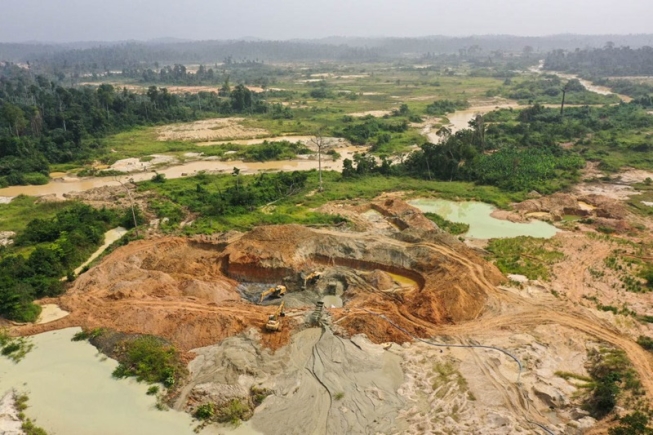
The call follows the resurgence in illegal mining activities characterised by thuggery and insecurity in some forest reserves across the country.
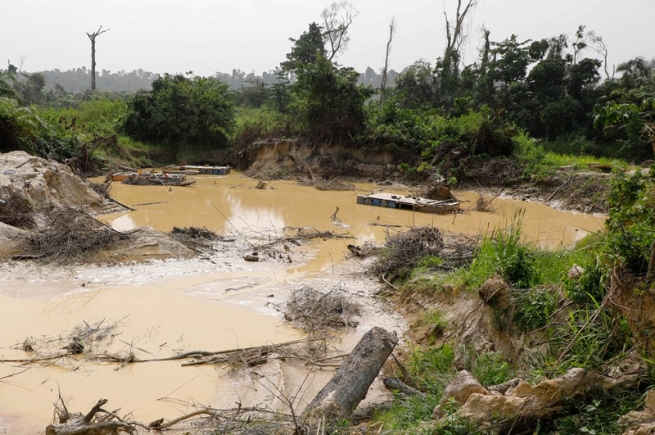
A field visit by the Daily Graphic last week revealed that armed youth continued to perpetrate the environmental crime, leaving a trail of suffocating forest reserves, polluted water bodies, degraded farmlands and fractured ecosystems.
During the one-week field trip to the Ashanti Region, it came to light that in spite of multiple swoops by the National Anti-Illegal Mining Operations Secretariat (NAIMOS) team to crack down on galamsey in forest reserves, the illegal miners had regrouped and were destroying the resource with impunity.
For instance, at the Nkawie Forest District, the armed men had invaded the Offin Shelterbelt Forest Reserve, making it difficult for forest guards to enter the reserve to carry out their duties.
The forest reserve, which was among the nine that the NAIMOS team reclaimed from illegal miners in December last year, had been inundated with illegal miners at the time of the field trip.
Attempts by the rapid response team (RRT) of the Forestry Commission to assess the extent of damage to the Mmofrafadwen section of the forest reserve were met with fierce resistance by the thugs who fired gunshots sporadically to deter the officials from carrying out their lawful duties.
Jimre, Tano Offin forest reserves
The Forest Services Division (FSD) of the Forestry Commission said 67 of the 6,023-hectare Offin Shelterbelt Forest Reserve had been destroyed.
Similarly, 56 hectares of the Asenanyo Forest Reserve had been heavily impacted by galamsey, while the Jimre and the Tano Offin forest reserves had also lost 12 hectares and five hectares, respectively, of their ecosystems to illegal miners.
The Daily Graphic team also observed that seven out of the 13 forest reserves in the Bekwai Forest District had been impacted by illegal mining at different levels.
The affected reserves are Apamprama, Oda River, Supuma, Subin Shelterbelt, Denyau Shelterbelt, Jeni River and Bosomtwe Range.
Permanent camps
The Ashanti Regional Manager of FSD, Clement Omari, supported the calls, saying the scale of destruction caused to forest reserves in the region and the associated security implications required the setting up of permanent military camps to help protect the reserves.
He said the 60 forest reserves in the region, covering an area of 3,795.26 square kilometres (km2), were at risk of destruction if the military was not deployed to permanently protect the resource.
Mr Omari said that although NAIMOS had been instrumental in carrying out operations and swoops that helped to reduce galamsey in forest reserves, the “strike and leave” approach was not yielding the needed results.
“With the presence of NAIMOS, we were able to bring galamsey in forest reserves under control, but as soon as they finish operations and leave, then galamsey operators come back in full force.
“The galamsey people are well armed; they take over and prevent our people from going into the forest. Even our rapid response teams cannot face these people; it is a serious situation we find ourselves in,” he stressed.
He added that when military camps were set up at all the entry and exit points of the forest reserves to monitor and provide security, they would be safe from illegal miners.
Better arms for forest guards
For his part, the Nkawie District Manager of the FSD, Abraham Essel, said the call for permanent military camps at forest reserves that were hotspots for galamsey had become more urgent than ever because further delays would aggravate the loss of forest resources.
“The point is that the military come for operations for two or three days and leave; the police come in for a few days and go; then the illegal miners come back more fortified to the extent that our local capacity cannot contain them,” he said.
The Deputy Regional Manager of the FSD in charge of Bekwai District, Ernest Adofo, said aside from the urgent need to set up military camps at vantage points, it was also crucial to provide better arms for forest guards to carry out their responsibilities of protecting forest reserves.
“The guards should be armed because the illegal miners are armed.
We cannot continue to lose our officers to illegal miners,” he said.
Background
Currently, the FSD of the Forestry Commission takes care of the country’s 288 forest reserves.
As of January 30, 2025, records at the Forestry Commission showed that 44 forest reserves were impacted by illegal mining, with nine of them designated as red zones, 13 marked orange, 18 flagged yellow, and four declared green zones.
The latest figures provided to the Daily Graphic by the Chief Executive of the Forestry Commission, Dr Hugh Brown, showed that by the end of December, 2025, the nine forest reserves that were in the red zone category had been rescued from the control of illegal miners, marking some improvement in the fight against galamsey in forest reserves.
He had also said the Forestry Commission had initiated steps to set up 34 protection camps at vantage areas in forest reserves that were hotspots of illegal mining activities.
Each of the camps, which would host up to 12 forestry guards, would be equipped with communication gadgets, drones and arms for effective surveillance.
