
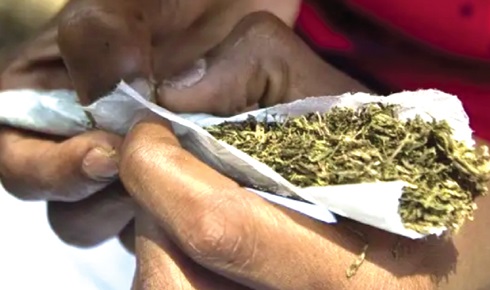
Rashid’s fight against addiction, the growing menace in Wa
At just 25, Rashid Sukur’s body bears the scars of years of substance abuse.
His frail frame, swollen feet, pale complexion and darkened lips paint a picture of a young man aged beyond his years.
Though he has been clean for six months, the withdrawal symptoms remain visible.
The temptation to relapse is strong, yet Rashid clings to the hope of survival, choosing life over instant gratification.
“I couldn’t go a day without tramadol,” he recalls. “It led me into smoking weed and cigarettes, and to sustain the craving, I had to steal to fund my habit.”
Rashid’s story is not unique. It mirrors the experiences of countless young people in the Upper West Region, where drug abuse has reached alarming levels.
The path to addiction
For Rashid, it began as a form of recreation or fun in secondary school with friends.
What started as experimentation quickly grew into an addiction.
Tramadol, a painkiller often misused for its euphoric effects, became his gateway drug.
Then, marijuana, cigarettes and other substances followed.
This path is common among youth in the region. Peer pressure, curiosity and the false promise of escape often lure them into habits that prove difficult to break.
Seeking recovery
Rashid’s failing health forced him to confront his addiction.
Determined to reclaim his life, he sought help and now appeals passionately to drug dealers and community leaders.
“I’m begging the drug dealers to stop. I’m also calling on our chiefs and traditional authorities to make and enforce laws that will protect young people from going through what I experienced.”
His plea underscores the human cost of the drug trade — lives derailed, families broken and communities destabilised.
Community alarm
The crisis has not gone unnoticed. During last year’s Dumba Festival, the Wala Traditional Council chose the theme: “The Fight Against Drug Abuse: The Role of Traditional Leaders.”
Chiefs and elders used the platform to discuss strategies for combating the menace.
Naa Kadri Ibrahim, Secretary to the Wa Naa, described drug abuse as one of the gravest social threats of the 21st century.
“Drug abuse has led to a breakdown in our moral values.
Some young people, under the influence of drugs, no longer show respect to elders and authority,” he lamented.
Parents share this concern. Barbara Eledi, a mother, expressed heartbreak over the growing number of youth hooked on tramadol and other substances.
“As a mother, it is heartbreaking to see our children hooked on drugs.
The real culprits are those who sell these substances.
Traditional leaders must take bold steps, including imposing strict sanctions, to stop this menace,” she stressed.
Institutional measures
The Food and Drugs Authority (FDA) in the Upper West Region has intensified its fight against illicit substances.
The Regional Head, Kelvin Dafaari Sunkpal, explained that the FDA conducts extensive public education through schools, communities and radio platforms.
“We educate the public through school outreaches, community programmes, radio discussions and targeted youth engagements,” he said.
He warned about the dangers of commonly abused substances such as tramadol, snuff, energy drinks, cough syrups and shisha.
“Smoking one session of shisha is equivalent to about 20 sticks of cigarettes, yet many young people don’t know this,” he cautioned.
The FDA also employs surveillance tools like the ‘True Scan’ device to detect suspicious medicines and collaborates with agencies such as the Pharmacy Council, Narcotics Control Commission, Ghana Police Service and traditional leaders.
Role of media
Mr Sunkpal emphasised the importance of the media in sustaining public attention on drug enforcement cases. “The media is a key partner.
When cases go quiet, enforcement efforts die.
Strong media engagement can push institutions to act and even pursue appeals when necessary,” he said.
The Upper West Regional Minister, Charles Lwanga Puozuing, echoed this sentiment, urging consistent coverage to strengthen enforcement.
“If the media stays with us, we can push back. We may not eradicate it completely, but we can make meaningful progress,” he stated.
Law enforcement, prosecution
The Wa Municipal Chief Executive, Alhaji Issah Dawanaa, assured the public that arrests and prosecutions of drug dealers are ongoing.
“Some suspects have already been arrested and others are under prosecution.
We are serious about this fight, and we will not relent,” he said.
He stressed that education, enforcement and community involvement must go hand in hand to restore hope among the youth.
A cry for collective action
The drug menace in Wa is not just a personal battle for Rashid or a challenge for enforcement agencies.
It is a societal crisis demanding collective action.
Traditional leaders, parents, educators, media and law enforcers must unite to dismantle drug networks and protect the next generation.
