
Trade ministry to hold fugu exhibitions across African markets
The Minister of Trade, Agribusiness and Industry, Elizabeth Ofosu-Adjare, has announced plans to roll out a fugu exhibition initiative across African markets, beginning with Zambia, as part of efforts to promote Made-in-Ghana products, create jobs and expand export opportunities.
The initiative, which would be undertaken in collaboration with the Ministry of Tourism, Culture and Creative Arts, also aims to showcase Ghanaian culture, open new export markets, improve pricing, generate foreign exchange and create sustainable employment for women and youth in the textile value chain.
She said the renewed national interest in fugu, inspired by President John Dramani Mahama's recent promotion of the attire in Zambia and the introduction of Wednesday as a national fugu-wearing day, had led to increased demand for the traditional attire.
Event
Speaking at a meeting with the Smock Weavers Association of Ghana in Accra last Monday, Mrs Ofosu-Adjare said the engagement aimed to assess the state of the business.
She expressed appreciation to them for their contribution to the fashion industry.
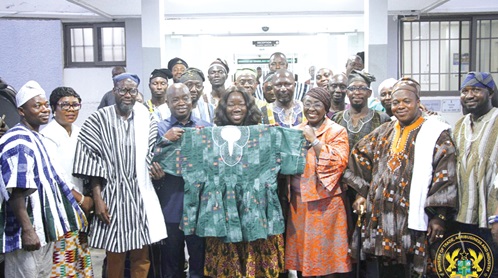
Present at the meeting were the Minister of Tourism, Culture and Creative Arts, Abla Dzifa Gomashie; the Deputy Minister of Trade, Sampson Ahi; the Smocks Chief of Tamale, Mohammed Iddrisu; the Chief of Smocks — Upper West, Abdulrahaman Naa Jimba, and the President of the Agortime Weavers Association, Thompson Yaw Avornyotse.
There were also officials from the Ghana Export Promotion Authority (GEPA) and the Kente and Smock Weavers Association from the Upper East, Upper West and Volta regions.
Ahead of the meeting, the weavers set up a mini exhibition centre on the premises of the Ministry of Trade, which was inspected by the two ministers.
Commitment
Mrs Ofosu-Adjare expressed her outfit’s commitment to supporting weavers and producers in moving from small-scale production to commercial scale to meet both domestic and international demand.
She said there was a need to modernise designs to appeal to younger consumers, particularly the Gen Zs, who represent a significant share of the population and have evolving fashion preferences.
By incorporating new styles and trends, the minister said producers can expand their customer base and increase sales.
For her part, Ms Gomashie underscored the need to leverage UNESCO conventions and presidential advocacy to strengthen the country’s cultural and creative sector, particularly traditional textiles such as fugu and kente.
She said the ratification of the UNESCO Convention now positions Ghana to formally engage UNESCO for support in areas such as training, capacity building and technical assistance for the cultural sector.
The minister described President Mahama as a global icon of Ghanaian heritage, whose fashion choices, particularly during his inauguration, had influenced national trends and elevated the profile of traditional attire.
Challenges
The smock associations expressed appreciation to the President and the government for promoting fugu and for the interventions planned to support the sector.
They, however, mentioned challenges the industry was facing, including production costs, access to capital and market infrastructure.
Mohammed Iddrisu, who has been in the business for 30 years, described market access as a challenge for weavers in the north, adding that high rent often pushed smaller traders out of business.
He also highlighted the dependence on imported thread from China and noted that exchange rate fluctuations made production costs unpredictable and expensive.
Mr Avornyotse also identified the high cost of cotton thread as a major concern, noting that this was prompting many producers to switch to polyester, undermining authenticity and quality.
