‘We finally found home’ - Caribbean descendants return to ancestral abode
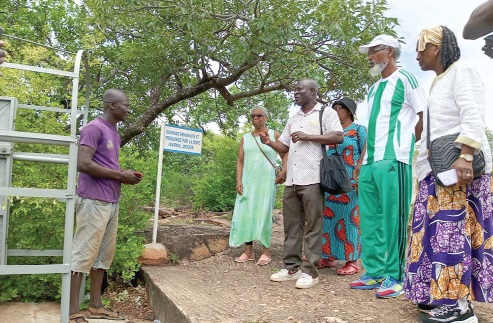
Tears welled up in the eyes of Charmaine Francis, a Caribbean tourist, as she stood silently at the entrance of the ancient Nok Cave, near the red rocks of the Nakpanduri Escarpment in the North East Region.
She solemnly recalled how her forebears once hid in the very cave some centuries ago, to escape from being captured by the Dagomba and Tchokossi slave traders around 18th century.
She and a group of Caribbean descendants living in the United States had made a long journey across continents, tracing their roots back to Nakpanduri in the North East Region, to reconnect with their heritage and have a feel of the land where their ancestors once lived, resisted, and survived the brutality of the transatlantic slave trade.
Genesis
Some of the Caribbean residents currently in the United States of America have undergone DNA testing in recent years.
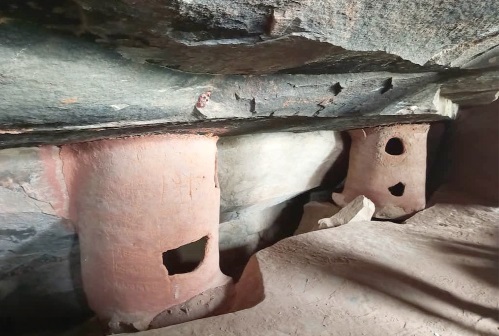
Some remnants of the items that were used by the ancestors at the cave
The results showed 78 per cent African ancestry, with 28 per cent specifically linked to Northern Ghana.
But for them, it was not just about numbers in a lab report; rather, it was about a profound spiritual affirmation of something they had always felt deep within.
Beyond the science, they had noticed that their physical features, the layout of their homes, and even the patterns of their native landscapes in the Caribbean bore a striking resemblance to those in Nakpanduri, a town in the North East Region.
Driven by this deep yearning to reconnect with their heritage, the group embarked on a sacred journey to retrace the footsteps of their forebears.
One of the most emotional stops on this pilgrimage was a visit to Nok Cave, a hidden fortress where their ancestors are believed to have taken refuge to escape slave raiders during the era of the transatlantic slave trade.
The cave once served as a strategic refuge for the Moba people, protecting them from slave raiders, particularly the Tchokossi and Dagomba, who traded captives to Europeans in exchange for weapons and horses.
Located specifically at Nagou Tandjouare in the northern part of Togo, the cave is connected to the Nakpanduri Escarpment and stretches to Tusuk in the North East Region.
Within the cave are some large cylindrical structures filled with handmade clay jars for storing grains and livestock.
Also, natural springs provided the ancestors with a reliable water source, which was purified using local plants.
African identity
Ms Charmaine, a leader of the group, said, “It feels like I have walked into the very pages of my ancestors’ history, from where our people were taken and our heritage was stripped. And yet we were made to feel ashamed of who we are.”
She admonished African communities across the globe to embrace their heritage, reject cultural erasure, and reclaim their identity with pride.
Recounting the history behind the cave, a Tour Guide, Koulbeme Mikabini, said the Moba people built ingenious defense systems hidden within cliffs and rocks in the slave trade era.
He explained that they stored grains in cylindrical clay jars, hid livestock, and purified spring water with medicinal plants, making it possible for them to remain hidden for months.
“Our ancestors would descend through overhanging vines into these caves.
They created an underground world to survive.
When the raiders came, many fell into the trap. Horses would gallop off the cliff edges.
Our people turned terrain into a weapon,” he said.
Writer’s email: