
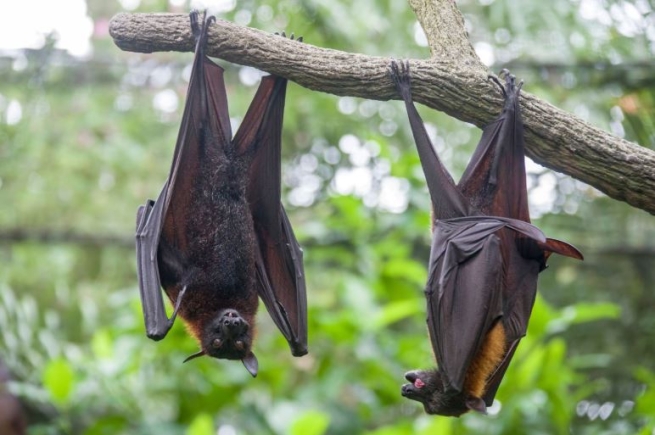
Health authorities have renewed attention on the Nipah virus, a rare but deadly infectious disease that causes periodic outbreaks in parts of Asia, amid concerns about its high fatality rate and the absence of approved treatments or vaccines.
Nipah virus is a zoonotic infection, meaning it can be transmitted from animals to humans. It can also spread through contaminated food and, in some cases, from person to person. The virus was first identified in 1999 during an outbreak among pig farmers in Malaysia and Singapore, which resulted in severe illness and significant loss of life.
Fruit bats, particularly those belonging to the Pteropus genus, are recognised as the natural hosts of the virus. These bats, commonly known as flying foxes, can shed the virus through their saliva, urine and droppings. Research has shown that Nipah virus can also infect other animals, including pigs, dogs, cats, goats, horses and sheep, sometimes acting as intermediate hosts that increase the risk of human exposure.
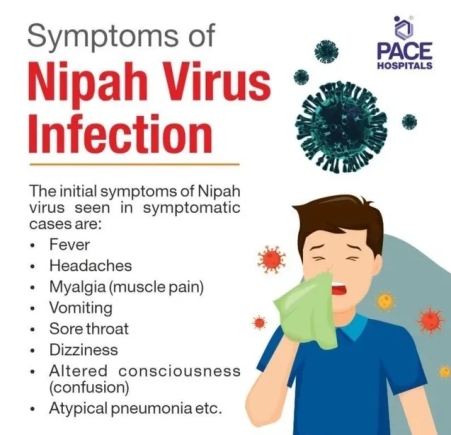
Following infection, symptoms typically appear within four to 21 days, although longer incubation periods have been recorded in rare cases. The illness often begins suddenly with fever and flu-like symptoms, which may progress to pneumonia or other serious respiratory conditions. The most dangerous complication is encephalitis or meningitis, which usually develops several days after the initial symptoms and is associated with a very high risk of death.
Health experts estimate that between 40 and 75 per cent of people infected with Nipah virus do not survive. Survivors may experience long-term neurological problems, including seizures and changes in personality. In rare instances, the virus can reactivate months or even years after the initial infection.
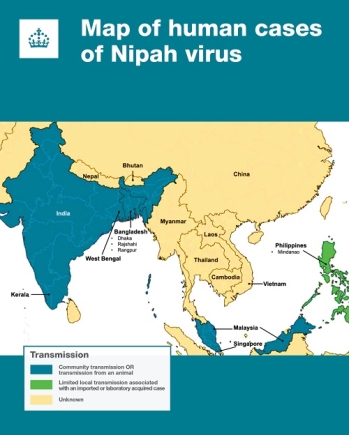
Human outbreaks of Nipah virus have been reported only in South and South-East Asia, largely in rural or semi-rural settings. Countries that have recorded outbreaks include Bangladesh, where cases have occurred almost every year since 2001, India, including repeated outbreaks in Kerala since 2018 and a current outbreak in West Bengal, as well as Malaysia, Singapore and the Philippines. While antibodies to the virus have been detected in bats across parts of Asia, Ghana and Madagascar, no human outbreaks have been recorded outside South and South-East Asia.
Transmission to humans often occurs through direct contact with infected animals or by consuming food contaminated by bats. In several outbreaks, infections were linked to the consumption of raw or partially fermented date palm sap, which can be contaminated by bat saliva or excreta. The sap is commonly known as Khejur juice when raw and as Tari or Khajuri Tadi when fermented. Person-to-person transmission has also been documented, particularly among family members and caregivers in close contact with infected patients, especially those with respiratory symptoms.
There is currently no proven treatment for Nipah virus infection and no licensed vaccine to prevent it. Medical care is limited to intensive supportive treatment for severe cases. However, several experimental therapies, including monoclonal antibodies and antiviral drugs, are under development or in early clinical trials.
The World Health Organization has classified Nipah virus as a priority pathogen requiring urgent research and development, citing its high fatality rate and pandemic potential. In March 2025, the UK Health Security Agency designated Nipah virus as a high-priority pathogen, highlighting the urgent need for investment in diagnostics, treatments and vaccines.
UKHSA is also involved in international response efforts through its Public Health Rapid Support Team. In Bangladesh, where outbreaks occur regularly, the team is working with local partners to support education programmes in schools, aimed at teaching children how the virus spreads and how infection can be prevented, with the goal of protecting entire communities.
Health officials say the risk to most travellers remains very low, provided basic precautions are followed. People visiting affected regions are advised to avoid contact with bats and sick animals, refrain from consuming raw date palm sap, practise good hand hygiene and seek medical advice promptly if symptoms develop during or after travel.
