
By-Elections in Ghana: Democratic necessity or needless source of violence?
By-elections are a constitutional necessity to select a new member of parliament (MP) for a vacant parliamentary seat.
Reasons might include the death or incapacity of a sitting member.
The issue is highlighted following the tragic events of August 6, when eight prominent Ghanaians were killed in a helicopter crash.
Among them was the National Democratic Congress (NDC) MP for Tamale Central, Dr Ibrahim Murtala Mohammed.
Prof. Alidu Seidu, a prominent political scientist at the University of Ghana, was recently declared the new MP for Tamale Central.
An inter-party contest was not necessary as no other party put up a candidate.
Instead, there was an intra-party competition to select the next MP: Prof. Seidu won.
Desirability
For some, by-elections are a crucial component of democracy.
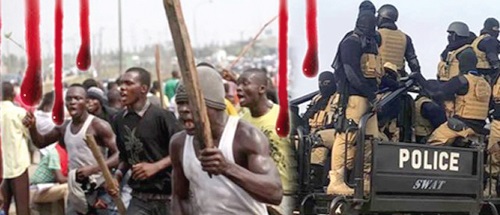
Yet, within Ghana’s Fourth Republic, by-elections have received media attention for the wrong reasons: political violence, egregious party polarisation and very high costs.
This stimulates public debate regarding whether by-elections are necessary.
Some contend that an internal party replacement system should replace by-elections.
That is, someone from the same party as the former sitting MP takes their place without electoral competition.
The issue of the desirability of by-elections has periodically surfaced in Ghana, notably when there is a high level of associated political violence.
The historic association with violence and political polarisation, which some perceive to be a reason to discontinue by-elections, reflects the fact that by-elections in Ghana are generally high-stakes issues, with competing political parties regarding them as a means to gain an advantage in parliament or to gauge national sentiment regarding the incumbent government.
The result, typically, is enhanced and intensified political rivalry, characterised by often violent clashes between competing groups of party ‘foot soldiers’, that is, vigilante groups characteristically linked to Ghana’s most prominent political parties, the NDC and the New Patriotic Party (NPP).
Replacing MPs
Arguments have been made for replacing an MP without a by-election.
First, there would likely be no electoral violence, as without inter-party competition, there would be no purpose in having confrontational party-based foot soldiers.
Second, there would be significant cost savings.
Without an expensive competition to elect a new MP, neither the state nor the parties would incur major expenses (electoral campaigns and security).
Third, there would likely be a reduction in party political polarisation, because of diminished rivalry in constituencies as the new MP will come from the same party as the departed Member.
Fourth, doing away with by-elections might be advocated as a temporary measure: a stopgap solution until stronger democratic practices are established and consolidated.
Arguments for party replacement may appear to some to be compelling.
At the same time, they raise profound democratic concerns.
First, there is erosion of democratic competition.
Elections not only fill a vacant seat but also allow citizens to engage in decision-making and hold politicians to account.
Bypassing this process may undermine the very essence of representative democracy.
What about Tamale Central?
Professor Alidu Seidu is the MP-elect and residents had no direct role in choosing him.
Who will he be accountable to: Voters of Tamale Central or the NDC that selected him?
Then there is the issue of political exclusion.
By restricting candidacy to the deceased MP’s party, other voices in the constituency are effectively silenced.
Voters who might have preferred an alternative perspective or who simply wanted to register dissent, are denied the opportunity to do so.
The absence of genuine contest risks deepening the perception that Ghana’s democracy is the property of the NDC and the NPP, rather than a genuinely democratic system.
Independent MPs
What about independent MPs? Party-affiliated MPs may be replaced internally, but should independents enjoy the same privilege: nominate a successor without a by-election?
Such an arrangement would almost certainly provoke accusations of discrimination and raise serious legal and ethical questions about equality before the law.
Finally, critics argue that replacing by-elections with party appointees ignores the problem of political violence; it does not confront it.
Consistent efforts should be made to address root causes of electoral violence.
This requires strengthening law enforcement, dismantling vigilante groups and promoting a political culture that rejects violence as a mobilisation tool.
Without such efforts, the cycle of tension will merely resurface in other electoral contests.
Electoral security
To reconcile the need for democratic competition with the imperative of safety, Ghana must adopt a forward-looking approach.
First, electoral security should be strengthened through impartial and professional deployment of security forces, ensuring that voters and candidates feel safe regardless of party affiliation, as during the recent Akwatia by-election.
Second, elite consensus must be promoted and advanced.
A universally accepted code of conduct, signed and enforced by all major political actors, could help reduce hostility during by-elections.
Third, enhanced civic education is vital.
Citizens must understand not only their rights but also destructive consequences of violence for democratic governance and community peace.
Finally, we should rule out legal reforms.
A broad, inclusive national conversation should explore alternative electoral systems—such as proportional representation or ranked-choice voting—which might help reduce the current zero-sum nature of Ghana’s politics.
By-elections will likely remain a constitutional requirement.
Recommendations shouldn’t be made to abolish them but to make them safer, fairer and more meaningful for all Ghanaians.
The writers are an Emeritus Professor of Politics, London Metropolitan University, UK, and a Political Scientist.
