
Use pulpits to confront corruption, poor governance - Christian Council urges prophets, religious leaders
The Christian Council of Ghana (CCG) has urged prophets and religious leaders to use their prophetic voices to confront corruption, nepotism, intolerance, poor governance and other societal ills.
“Prophets and religious leaders owe a duty—to God, to the nation and to their own consciences—to help build a strong society anchored in moral and ethical values,” it said
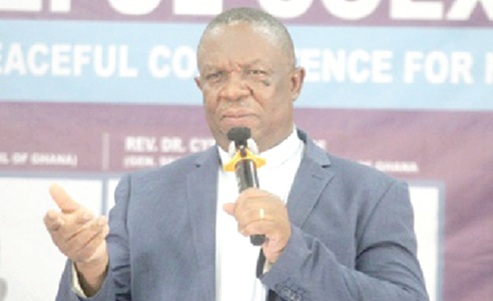
A statement issued in Accra and signed by the General Secretary of the CCG, Rev. Dr Cyril Fayose, therefore, cautioned prophets and religious leaders against using pulpits, media platforms and social media to spread false or misleading prophecies that might generate fear or panic.
NPP primary/sanity
It cited the spread of such prophecies at the recent national primary of the New Patriotic Party (NPP) to elect its flagbearer, during which numerous prophecies emanated from various individuals about the election's outcome.
It said that while some prophets accurately predicted the outcome of the polls in favour of the re-election of former Vice President, Dr Mahamudu Bawumi, others did not.
“This development has become a source of concern to the CCG.
The council raises a critical theological question: How can the same God reveal different outcomes of the same event to different prophets,” it asked.
It, therefore, called for a more sanitised and responsible religious environment in 2026 and beyond.
“If the nature, manner and outcomes of political prophecies in Ghana are not carefully examined, they risk creating the erroneous impression that the God proclaimed by these prophets is inconsistent,” it said.
It noted that in extreme cases, conflicting prophecies might portray “God as confused or indecisive-one who declares a matter and then reverses course.”
The statement wondered if God was concerned only with the outcomes of elections in Ghana.
“Is He not equally concerned about how the nation is governed, about socio-economic justice and about the collective well-being of His people?
Is God indifferent when citizens suffer in hospitals due to the "no bed syndrome," leading to preventable loss of life among the nation's workforce,” it asked.
It pointed out that “authentic prophecy must withstand scriptural scrutiny, promote the common good and denounce wrongdoing.”
Responsible
It said that while the CCG affirmed that every citizen, including prophets, has the right to practise and manifest their religion, those freedoms must be exercised responsibly.
“Religious liberty must be balanced with civic responsibility to ensure that the exercise of faith does not generate fear, panic, or social unrest,” stressing that “Ghanaian law does not permit the use of religion as a vehicle for fear-mongering or incitement.”
The statement said Section 208 of the Criminal Offences Act, 1960 (Act 29), criminalises the publication of false statements, rumours or reports likely to cause fear and alarm or disturb public peace.
Reflections
It said as Christians observe the season of Lent and Muslims also observe Ramadan, “this sacred period should inspire personal and collective reflection on how best to advance socio-economic justice and national prosperity.”
The statement said such reflection would better serve the national interest than the misuse of pulpits and electronic platforms to circulate false or misleading messages that add no value to society.
