
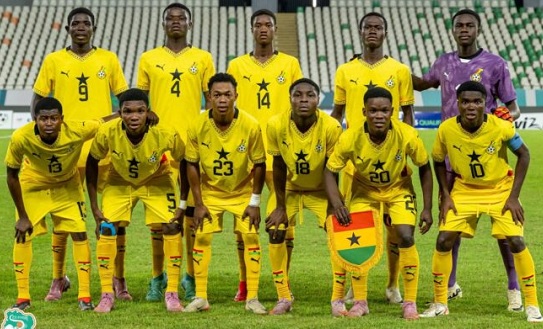
Ghana’s return to the CAF U-17 Africa Cup of Nations is not a routine participation. It is a moment of reckoning for a team very critical to the future of the sport in Ghana.
After nearly a decade in the wilderness, the Black Starlets head into Morocco with a responsibility that goes far beyond results on the pitch.
This campaign is about restoring pride, reviving a fading legacy and, critically, repairing a talent pipeline that has shown worrying signs of breakdown over the past decade.
For a nation that once defined global youth football, the decline has been stark.
The Starlets were not merely successful; they were the gold standard — FIFA U-17 World Cup winners in 1991 and 1995, and finalists in four consecutive editions between 1991 and 1997.
They produced a generation of elite footballers — Nii Odartey Lamptey, Samuel Kuffour and Michael Essien — who progressed seamlessly into the Black Stars and elevated Ghana’s global standing.
That conveyor belt has since slowed, then stalled. The absence of the Starlets from the continental stage has not only dented national pride; it has disrupted the structural continuity of Ghana’s football development system.
Youth teams are meant to feed into one another — U-17 to U-20, to the senior national team. When that chain weakens, the consequences inevitably surface at the top.
That is why this tournament matters. And that is why the spotlight is firmly on Prosper Narteh Ogum.
The coach carries the burden of immediate results and long-term national interest. His mandate is clear: guide the Starlets to make a meaningful impact in Morocco and, at the very least, secure qualification to the FIFA U-17 World Cup. Anything short of risks prolonging a cycle Ghana can no longer afford.
The challenge before them is formidable. Drawn in a brutal Group D, Ghana open against a disciplined and physically organised Algerian side, before facing defending champions Senegal and a technically sound South African team.
It is a group designed to test character, tactical discipline and mental resilience. Of the Starlets
Yet, within that challenge lies opportunity. The expanded tournament offers 10 qualification slots for the FIFA U-17 World Cup, making progression achievable but only for teams capable of consistency under pressure. Ghana must not merely compete; it must execute.
Preparations have offered cautious optimism. The narrow 1-0 defeat to Mali in their final friendly was less a failure and more a necessary reality check.
The performance revealed a team with structure, pressing intensity and attacking promise, even if the finishing edge remains a concern. Coach Ogum himself acknowledged the value of that test, describing it as the level of competition required to prepare his side for what lay ahead.
Importantly, the squad is not short of talent.
For the Graphic Sports, Morocco offers the Starlets a stage to reconnect Ghana with its football identity. But more importantly, it offers a chance to restart a system that once powered the nation’s success.
Failure would not simply mean elimination; it would signal that Ghana’s most important football pipeline remains broken.
Success, however, could mark the beginning of a long-overdue revival.
The Starlets have carried Ghana before. Now, they must do so again for pride, for legacy, and for the future of Ghana football.
