
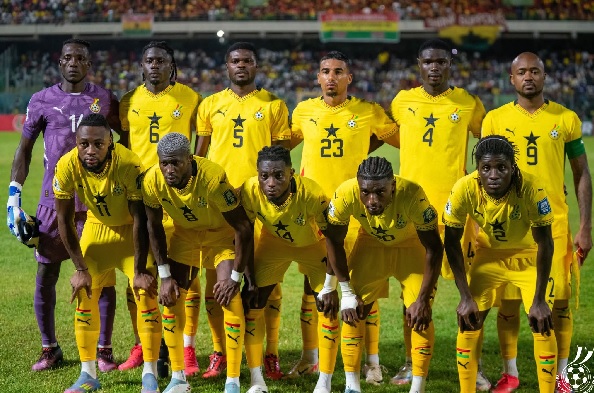
Sports Editorial: Otto Addo must pick World Cup squad built to win, not to please
With the 2026 FIFA World Cup now less than four months away, Ghana’s preparations have entered a decisive phase.
On June 17, the Black Stars will walk out in Toronto to face Panama in their opening Group L fixture, with England and Croatia lying in wait.
It is a formidable group, one that demands not sentiment, nostalgia or political correctness, but cold, hard football decisions.
That is why former Ghana Football Association vice-president George Afriyie’s intervention this week deserves careful attention.
In backing head coach Otto Addo as the sole authority on whether to invite Crystal Palace striker Eddie Nketiah and Nottingham Forest winger Callum Hudson-Odoi, Afriyie has cut through the emotional fog clouding the debate.
His message is simple and uncompromising: selection must be based on merit and form, not on who was present during qualification or who once turned down an invitation.
The controversy surrounding the England-born pair has intensified since Ghana secured qualification. Both previously declined overtures from the GFA while exploring their international futures with England.
Now, with the World Cup stage secured, they have indicated readiness to represent Ghana. For some, that timing has raised questions of loyalty.
Afriyie, however, is right to reframe the discussion. The Black Stars, he argues, belong to every eligible Ghanaian footballer performing at the highest level.
If a player is in top shape, competing in a major league and qualifies under FIFA regulations, why should he be excluded on emotional grounds?
Crucially, he insists that the final call must rest with Otto Addo. It is the coach who assesses squad balance, tactical needs and dressing-room chemistry.
It is the coach who carries the burden of results in a group featuring elite opposition. And it is the coach who must assemble a squad not merely capable of participation, but of competing.
History supports this meritocratic approach. Afriyie recalls the protracted pursuit of Iñaki Williams, who took years to commit to Ghana despite early overtures.
His eventual decision to represent the Black Stars demonstrates that international allegiance is often shaped by timing, opportunity and personal conviction. Football careers evolve; so too do international decisions.
More pointedly, Afriyie dismisses the notion that players who featured in the qualifiers should enjoy automatic preference.
Ghana used 46 players across 10 qualifying matches. Only 26 can travel to the World Cup. By definition, difficult omissions are inevitable.
No one owns a permanent shirt in the national team. The Black Stars exist to win matches for Ghana, not to reward participation certificates.
The most compelling precedent remains the 2010 World Cup campaign in South Africa. Kevin-Prince Boateng was not part of the qualification journey, yet his late inclusion proved transformative.
Ghana reached the quarter-finals, their finest World Cup performance to date. Whatever debates surrounded his personality, his impact on the pitch was undeniable.
That lesson is instructive today. The World Cup is unforgiving. Form fluctuates. Injuries strike. Tactical demands shift. What matters is assembling the most battle-ready squad at that precise moment in time.
The Graphic Sports believes that, as Ghana prepare for Panama, England and Croatia, the conversation must move beyond emotion.
If Nketiah and Hudson-Odoi are in peak condition and fit Otto Addo’s tactical blueprint, they should be considered. If not, they should not.
The standard must be excellence — nothing less.
