
Sports traffickers target young athletes
The growing abuse of sport as a gateway for human trafficking has come under renewed scrutiny, with government officials warning that criminal networks are increasingly exploiting the dreams of young athletes through fake football contracts, bogus scholarships and fraudulent overseas trials.
That stark warning dominated the launch of activities marking this year’s World Day Against Trafficking in Persons in Accra, where stakeholders rallied behind the theme: “Human Trafficking Can End: The Time is Now – Blow the Whistle on Sports Trafficking.”
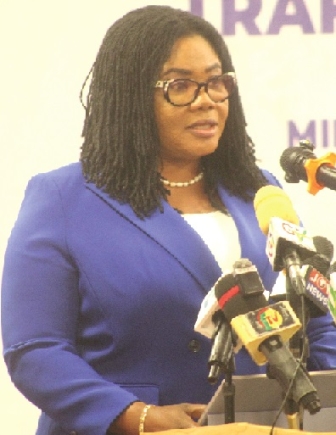
Addressing government officials, security agencies, civil society organisations, development partners, journalists and anti-trafficking advocates, the Minister for Gender, Children and Social Protection, Dr Agnes Naa Momo Lartey, described sports trafficking as an emerging threat that is preying on the ambitions of vulnerable young people.
Unsuspecting victims
She warned that traffickers and unscrupulous agents were increasingly disguising exploitation as legitimate sporting opportunities, luring victims with promises of professional contracts, scholarships, international recruitment and football trials.
“Sport is meant to inspire hope, discipline, opportunity and national pride,” Dr Lartey noted. “Unfortunately, traffickers and exploiters are increasingly taking advantage of these dreams through false promises of sports contracts, scholarships, trials and recruitment opportunities.”
According to the minister, many victims ultimately find themselves trapped in exploitative working conditions, irregular migration arrangements and trafficking situations far removed from the opportunities they were promised.
She, therefore, urged parents, guardians and communities to remain vigilant and report suspicious recruitment activities before vulnerable young people fall victim to exploitation.
Government tightens response
Dr Lartey reaffirmed the government’s commitment to combating human trafficking through the rigorous enforcement of the Human Trafficking Act, 2005 (Act 694), as amended by the Human Trafficking Amendment Act, 2009 (Act 784), alongside child protection and cybercrime legislation.
She said state institutions were working closely with law enforcement agencies, traditional authorities, civil society organisations, development partners and community actors to prevent trafficking, rescue victims, prosecute offenders and support survivors.
The minister disclosed that Ghana’s anti-trafficking efforts were producing measurable results. The number of victims rescued rose from 821 in 2021 to 846 in 2022 before surging to 2,089 in 2023. Although the figure dipped marginally to 1,994 in 2024, it rebounded strongly in 2025, when authorities rescued 2,331 victims nationwide.
Of the victims rescued last year, 425 were children, while 1,996 were adults. The figures further showed that 1,544 were men and 789 were women.
“These figures are not just numbers,” Dr Lartey stressed. “They demonstrate improved collaboration among institutions, increased public awareness, strengthened enforcement operations and enhanced capacity to identify and rescue victims.”
Cybercrime crackdown
The minister attributed much of the increase in rescue figures to intensified action against cyber-enabled trafficking, online exploitation and romance scam networks.
She revealed that 206 offenders had been prosecuted and convicted for cybercrime, trafficking and exploitation-related offences, including fraud by false pretences.
Additionally, 64 offenders were convicted for human trafficking and child labour-related offences following investigations into 2,022 cases in 2025.
Media role critical
The Secretary of the Ghana Journalists Association, Dominic Hlordzi, underscored the media’s critical role in exposing trafficking syndicates, educating the public and promoting justice for victims.
He noted that communities around the Volta Lake had long attracted national attention as suspected hotspots for trafficking and exploitative child labour practices, with sustained media coverage helping to mobilise support for rescue operations and interventions.
