
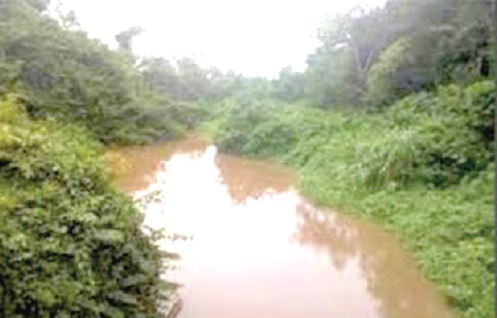
Last month, I returned to my village in Berekum (Bono region) and stumbled upon a quiet miracle.
The river we used to cross on our way to the farm some 40 years ago was still clean.
Slow-flowing, serene and alive. Logs of wood still lay across it, forming a rustic bridge. I stood there, overwhelmed by memory and gratitude.
As children, we drank from that river using leaves we shaped like cups.
The water was cool, refreshing and pure, more than just a source of hydration.
It was a symbol of life, community and nature’s quiet generosity.
Its gentle flow produced a soft whizzing sound that soothed us, even as we trudged along with heavy baskets of cocoyam balanced on our heads.
But this joy was shadowed by a painful truth: this river is now an exception, not the norm.
Under siege
Across Ghana, our water bodies are under siege and dying from illegal mining or galamsey.
Rivers that once teemed with life now run thick with mercury and silt.
Forests are stripped bare and flattened. Farmlands are poisoned and contaminated.
And entire communities are left thirsty, left without water and their future hanging in the balance.
In parts of Kasoa and the Central Region, residents have gone over three months without water from the Ghana Water Company Limited (GWCL).
The contamination is so severe that purification has become nearly impossible.
This is not just an environmental crisis; it is a public health emergency.
So, I ask, will we still have water in the next few years?
This is the question every Ghanaian must ask.
If we continue down this path, the answer may be no.
Our children may never know what it means to drink from a clean stream or farm beside a living river.
And here is where we need everyone, and every Ghanaian.
We must act now! Preserving our rivers is a national duty.
You may point to the government, but it goes beyond that.
What we must do
• Local leaders must be supported to protect their lands and report or act on illegal activity, including mining.
• Let every school teach the value of clean water and sustainable land use.
• Galamsey must be stopped, not with slogans, but with action.
Arrests, prosecutions and land reclamation efforts must be consistent and transparent, regardless of political affiliation.
The fight against illegal mining requires moral courage and national resolve.
As a country, we must be willing to take bold, principled decisions – including refusing to purchase gold from small-scale miners engaged in environmentally destructive practices, even if it comes at an economic cost.
• Invest in alternatives: Galamsey thrives on no jobs for the youth and desperation, and is influenced by ‘big people’.
We must create viable livelihoods that protect both people and the planet.
• We must urgently re-canalise all choked rivers to restore access to clean water.
The people of Kasoa, and many others suffering the consequences of galamsey, deserve immediate relief.
Reopening these waterways is essential to enable the GWCL to resume safe and reliable water supply to affected communities.
River
Let the river be our teacher! That stream in my village in Berekum still flows, not just with water, but with memory, resilience and warning.
It reminds me, and I guess you as well, that preservation is possible.
But it also asks: What will you do to ensure I’m still here tomorrow?
Clean rivers, like the one in my village, should not be mere memories; they must be our mission.
Galamsey is killing our future, one river at a time.
But let us remember that when the water stops, so does life.
Let this story awaken our conscience.
Let it stir our hearts.
And let it move our hands to protect, to restore and to honour the land that has always sustained us.
The writer is a Public Health physician/Deputy executive director, Christian Health Association of Ghana (CHAG)/Editor-in-Chief of the UGMS Alumni Newsletter.
