

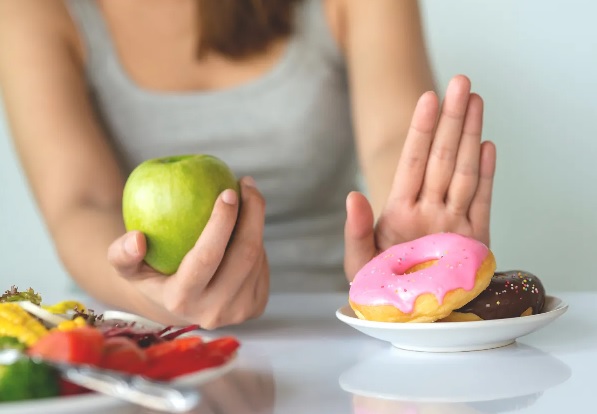
Added sugars, such as table sugar, honey and syrups, should not make up more than five per cent of the energy you get from food and drink each day.
There are lots of different ways added sugar can be listed on ingredients labels, such as sucrose, glucose, fructose, maltose, fruit juice, molasses, corn syrup and honey.
Food labels tell you how much sugar a food contains:
high in sugar – 22.5g or more of total sugar per 100g
low in sugar – 5g or less of total sugar per 100g
Some packaging uses a colour-coded system that makes it easy to choose foods that are lower in sugar, salt and fat. Look for more "greens" and "ambers", and fewer "reds", in your shopping basket.
Breakfast
Many breakfast cereals are high in sugar. Try switching to lower-sugar cereals or those with no added sugar, such as plain wheat biscuit cereal, plain shredded whole-grain cereal, no-added-sugar muesli, plain porridge, wholemeal toast, and plain natural yoghurt topped with chopped fruit.
Porridge oats are cheap and contain vitamins, minerals and fibre. Make porridge with semi-skimmed, one per cent or skimmed milk, or water.
If you usually add sugar to porridge, try adding a few chopped dried apricots or a sliced or mashed banana instead.
For a more gradual approach, you could eat sugary cereals and plain cereals on alternate days, or mix both in the same bowl.
If you add sugar to cereal, you could try adding less. Or you could eat a smaller portion and add some chopped fruit, such as a pear or banana.
Main meals
Many foods that we do not consider to be sweet contain a surprisingly large amount of sugar. Some ready-made soups, stir-in sauces and ready meals can also be higher in sugar than you think.
When eating out or buying takeaways, watch out for dishes that are typically high in sugar, such as sweet and sour dishes, sweet chilli dishes and some curry sauces, as well as salads with dressings like salad cream, which can also be high in sugar.
Condiments and sauces such as ketchup can have as much as 23g of sugar in 100g – roughly half a teaspoon per serving. These foods are usually served in small quantities, but the sugar count can add up if eaten every day.
Snacks
Healthier snack options are those without added sugar, such as fresh or tinned fruit (in juice, not syrup), unsalted mixed nuts, plain popcorn, rice cakes, crackers topped with lower-fat cheese or lower-sugar yoghurts.
If you are not ready to give up your favourite flavours, you could start by having less. Instead of two biscuits in one sitting, try having one. If your snack has two bars, have one and share the other, or save it for another day.
