
Prof. Asamoah calls for modernisation of traditional leadership
The Pro Vice-Chancellor of the University of Professional Studies, Accra (UPSA), Professor Emmanuel Asamoah, has called for the modernisation of traditional leadership to effectively respond to the nation’s developmental challenges.
“We value the role of traditional leaders in national development. Our challenges as a country require leaders who are well equipped, well informed, and able to respond to changing times,” he said.
Prof. Asamoah also added that the Constitution and the Chieftaincy Act both affirmed the crucial role of traditional authority, making investment in their capacity essential.
"For this reason, UPSA has dedicated part of its mandate to support traditional institutions through capacity-building, research and policy engagement.
“We are always ready to deepen our partnership with the United Nations Population Fund (UNFPA) in making this dream fruitful, as timely and impactful, especially at a moment when the country continues to tackle diverse social challenges," he said.
Prof. Asamoah made the call at a stakeholder engagement seminar in Accra on the theme: “Gender-based violence: The role of traditional leadership.”
It was jointly organised with the UNFPA and the Otumfuo Centre for Traditional Leadership (OCTL).
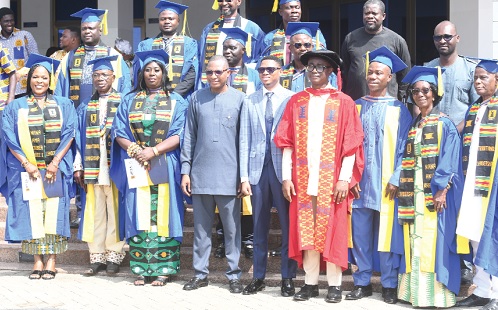
The event also witnessed the graduation of students from the Centre’s Diploma in Leadership programme.
Prof. Asamoah further said that the UPSA considered traditional leadership as a crucial partner in national development, hence the university’s commitment to providing structured academic training tailored to the role and responsibilities of chiefs and queenmothers.
"This will ensure that traditional authorities are not only grounded in culture and customs, but are also equipped with modern tools and knowledge needed to address emerging issues like gender-based violence, harmful cultural practices and community-level governance," he said.
The acting Director of OCTL, Dr Joseph Gerald Nyanyofio, also highlighted the importance of collaboration between political institutions and traditional leadership in ensuring effective governance.
“The effectiveness of governance architecture in this nation will remain a mirage without the necessary marriage between traditional leadership and political governance.
“Our value system, our communities, and our civilisations have been effectively championed and safely guarded by traditional leaders,” he said.
Support
A Programme Analyst for Gender and Gender-Based Violence of UNFPA, Bawa Faisal, said his outfit was actively supporting the development of a comprehensive diploma in traditional leadership.
“I picked up an advert of the Otumfuo Foundation two years ago and took it to my office.
That simple decision is what has brought us here today.
“For us at UNFPA, our collaboration with UPSA and the Otumfuo Centre is rooted in a shared vision, one where traditional leadership remains a powerful driver of social transformation and the protection of women, girls and vulnerable populations,” he added.
Mr Faisal, however, expressed concern over the lack of inclusion of queenmothers at the National House of Chiefs, saying, “It is a serious matter, and we need a national dialogue to ensure our big mamas are represented at the apex level of traditional governance".
The Norwegian Ambassador to Ghana, John Mikal Kvistad, emphasised the need to bridge traditional authority with younger generations.
“Modern democracy should be a bridge between traditional leaders and young people. Also, traditional leaders must be heard 100 per cent, otherwise development will not be successful in the long run," he said.
An officer at the Ministry of Gender, Children and Social Protection, Saphia Tamimu, said the government was committed to eliminating harmful cultural practices and also protecting vulnerable populations.
