
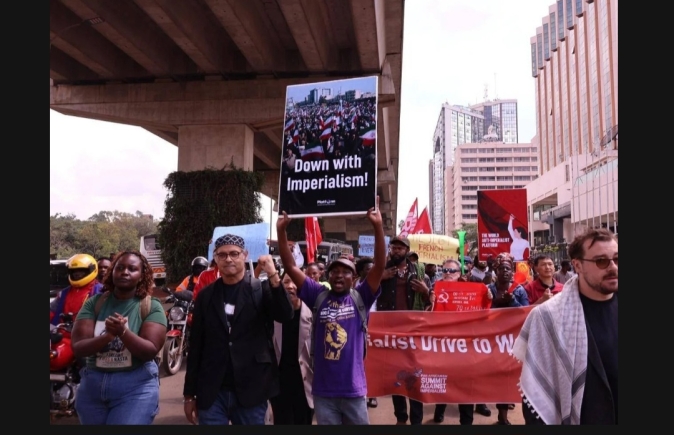
The Nairobi Counter-Front: PASAI 2026 and the people’s challenge to Neo-Colonialism
As the high-security gates of the Kenyatta International Convention Centre (KICC) closed behind heads of state for the rebranded "Africa Forward" Summit this May, a different kind of history was being written in the community halls and streets of Nairobi.
The Pan-Africanism Summit Against Imperialism (PASAI) 2026 has emerged not merely as a protest, but as a sophisticated, multi-national intellectual and grassroots offensive against what organizers call the "mask of environmental diplomacy."
While French President Emmanuel Macron and Kenyan President William Ruto touted "investment-led partnerships," the PASAI assembly—convened by the Communist Party Marxist-Kenya (CPMK), the All-African People’s Revolutionary Party, and a coalition of global movements—offered a blistering critique of the status quo.
Unmasking "Africa Forward"
The core mission of PASAI 2026 is centered on a singular, urgent objective: exposing the imperialist nature of the France–Africa Summit. For the delegates at PASAI, "Africa Forward" is a euphemism for a new scramble for Africa, one that swaps 19th-century bayonets for 21st-century "green energy" contracts and IMF structural adjustments.
Beyond the immediate sessions of the summit, PASAI’s vision stretches across borders, successfully forging a formidable global front of resistance. This coalition brings together a diverse array of voices from regions currently on the front lines of geopolitical struggle, including the Democratic Republic of Congo and Sudan, where delegates have highlighted the direct correlation between foreign military intervention and the systemic plunder of natural resources. By connecting these local crises to the broader experiences of resistance in Palestine and Haiti, the summit effectively weaves together the disparate threads of global anti-imperialist movements into a unified, coherent narrative of defiance and solidarity.
Central to this movement is a deep-seated focus on the plight of the grassroots, specifically the working-class and peasant movements that bear the brunt of neo-colonial policies. PASAI 2026 serves as a critical platform for addressing the "dehumanized labor" that has emerged as a direct consequence of African deindustrialization and exploitative resource extraction. By amplifying these voices, the summit aims to build enduring networks between youth, women, and ecological movements, ensuring that the path toward genuine sovereignty is paved by the people themselves rather than external elites. On the official summit portal at PASAI 2026, more information on the initiatives and the full list of thematic workshops are explained.
The summit set to adopt the "Nairobi Declaration" a document intended to serve as a roadmap for genuine sovereignty. Unlike the official declarations drafted in five-star hotels, this document prioritizes grassroots voices, self-determination, and a rejection of the "financial stranglehold" maintained by international financial architectures.
Additionally, the Pan-Africanism Summit Against Imperialism (PASAI) 2026 has not only been a site of intellectual rigor but also a flashpoint for intense state repression. Between May 11 and 12, the streets of Nairobi witnessed a heavy police presence as the masses mobilized to challenge the "Africa Forward" narrative. On the first day of the conference, five students from the Revolutionary Student Commission; the student wing of the Communist Party Marxist-Kenya (CPMK), were arrested and detained at the Nairobi Central Police Station. While these students were eventually released on cash bail by the night of May 12, the situation escalated on the summit’s second day. A delegation of 14 anti-imperialist protesters, including international representatives from Britain, South Korea, and Greece, were arrested while attempting to deliver a petition to the Kenyan Parliament. These individuals remained in detention as the official summit concluded, sparking a global outcry for their immediate release.
The arrests have become a central talking point for PASAI organisers and the people, who argue that the state’s response reveals the "neocolonial character" of the current administration. Important details to note include the summit's rejection of 800 French soldiers reportedly arriving in Kenya ahead of new security agreements, which PASAI frames as a direct threat to sovereignty. Furthermore, the summit emphasized that the official "Africa Forward" agenda, is a calculated "rebranding" of French influence following its expulsion from the Sahel. By holding the counter-summit at the historic Ufungamano House, PASAI 2026 successfully reclaimed a space for grassroots leadership, ensuring that the people’s will remains the definitive people’s roadmap for climate justice and economic self-determination.
The Digital Front: Viral Resistance
The struggle for African sovereignty has been amplified globally through the viral power of the #PASAI2026 hashtag. This digital watchman served as a real-time ledger of the movement's progress, connecting the local protests in Nairobi to an international audience of activists and revolutionary parties. By tagging every arrest and workshop update, the movement ensured that the state’s attempts at repression were documented and challenged in the court of global public opinion.
Alongside the powerful tag, #FranceOutOfAfrica and #StopFrenchImperialism trended heavily throughout the two-day event. These slogans directly targeted the "Françafrique" system, drawing lines between the historical exploitation of West Africa and France's current strategic pivot toward East African frontiers.
Finally, the hashtag #HandsOffCPMK also became a rallying cry for solidarity following the detention of party members and international delegates. This tag specifically highlighted the defense of Kenyan civil society against state intimidation, linking the struggle for democratic rights at home with the broader anti-imperialist fight abroad. Together, these viral movements have successfully reframed the narrative, ensuring that while the elites met in conference halls, the digital and physical streets belonged to the people.
However, the Pan-Africanism Summit Against Imperialism (PASAI) 2026 has been fortified by a broad coalition of progressive and revolutionary organizations that see the Nairobi counter-summit as a critical line of defense for African sovereignty. Key allies who consistently amplified PASAI’s mission through its global networks, linking the struggle in Kenya to broader liberation movements in Palestine and the Caribbean as well as provided critical media coverage and intellectual framing included; The Pan-African Progressive Front (PPF), Black Agenda Report, Peoples Dispatch and the Global Pan African Movement, who have been instrumental in issuing solidarity messages, documenting state repression, and ensuring that the calls for an anti-imperialist front reach a worldwide audience of trade unionists, students, and peasant organizations.
The PPF has joined forces with PASAI because we firmly believe that genuine freedom cannot exist without economic emancipation. The substantial body of research and materials that the PPF has compiled in the field of reparative justice will serve as a critical weapon in this struggle. For Pan-Africanists, the question of breaking Africa free from the stranglehold of the European-dominated banking system is absolutely paramount. It is a fight for our continent's very sovereignty. Make no mistake: all that Macron and other Western leaders truly seek is Africa’s wealth — the same wealth they have been looting from this continent since the dawn of colonial rule. They have no intention of stopping now.
As a progressive force fundamentally rooted in the pursuit of Reparative justice for the continent, the Pan-African Progressive Front (PPF) views the summit’s urgent call for the cancellation of colonial debt and the abolition of the CFA Franc as inseparable from the broader struggle for reparations. This focus aligns perfectly with PASAI’s mission to dismantle the financial structures of neo-colonialism, which continue to drain African wealth and stifle genuine development. In a decisive move to bolster the summit's intellectual and legal framework, the PPF aimed diligently to submit a comprehensive brief on the case for reparations, arguing that the elimination of exploitative debt and monetary control is not merely a policy shift, but a required act of historical redress.
