


Siemens Ghana takes a swipe at banks
Siemens Ghana's hope of establishing the first wind power project in the country has hit a snag, following the unwillingness of banks to finance the 100-150 megawatts capacity plant.
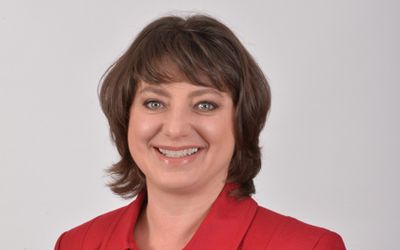
According to the Chief Executive Officer of Siemens Southern & Eastern Africa, Madam Sabine Dall'Omo, the banks were insisting that unless the government issued a sovereign guarantee for the loan that was needed to finance the project, the company will not go ahead to grant the funds that the branch of the company needed.
The banks' posture, she said, had, therefore, caused a delay in the establishment of the project, which was expected to be sited on the upper part of the country's west coast.
The gesture is in spite of the fact that everything that is needed for the project to take off, including feasibility studies, was completed and ready, Madam Dall'Omo added.
"In terms of capacity, it is in the range of 100 and 150 megawatts and it depends on what the financing arrangement will be. We are currently waiting for the financing arrangement and as soon as we get a bankable project together, the project can fly," the CEO, said after an interaction with some media practitioners and Siemens Ghana's stakeholders.
The situation has placed the company and its counterpart independent power producers in a tight spot as far as raising financing to support power projects was concerned, she said.
The sovereign guarantee is needed to cushion interest rate on the loan from going up, which will return to hurt power consumers through high tariffs.
Withdrawal of GoG guarantees
Until recently, the Government of Ghana was issuing sovereign guarantee to independent power producers (IPPs) such as Siemens Ghana, willing to set up and operate power projects.
Although the guarantees helped to raise the number of IPPs and the power they add to the national grid, it resulted in an increment of the national debt stock, which ended 2015 at GH¢1002 billion, equivalent to 72 per cent of year's gross domestic product (GDP).
The impact of those guarantees on the debt burden resulted from the inability of the off taker - the Volta River Authority (VRA) and its immediate customer, the Electricity Company (ECG) - to pay realistic tariffs for power generated from these projects.
As a result, majority of those finances often go bad, forcing the granting banks to fall back on the sovereign guarantees.
To help prevent that from repeating, the government, under the three-year extended credit facility with the International Monetary Fund (IMF), said it was no long guaranteeing for IPPs. The new arrangement was part of a new financing mechanism that ensures that state-owned enterprises (SOEs) such as the VRA and the ECG are made to borrow in their own balance sheets.
Currently, the government is fashioning out a credit payment plan for a GH¢2.2 billion debt the VRA owes some of its lenders.
Complementing investment status
But while the decision to stop issuing guarantees for power projects may be good for national fiscal management, Siemens' CEO said it could be detrimental to the success of the IPPs concept in the country.
"Right now, it is, maybe, not a good story because, you see, IPPs will want to have the coverage in other to get the credit lines from the banks. This is because anytime you take a new business as a technology into a country, the banks are also skeptical because they need to cover the risk from a financial aspect.
"So, in the moment we are in a little bit of a tight spot and it needs to be seen over time," she said.
After chalking an enviable image as a beacon of peace and stability in the subject and the continent as a whole, Madam Dall'Omo said Ghana needed to cement its status as a preferred investment destination with some sovereign guarantees for projects such as Siemens Ghana's wind power plant to be able to fully realise the benefits that come with that status.
That notwithstanding, she said her outfit will continue to lobby for funds to help realise the company's objective of setting up a wind power project in the country.