
Sometimes, leadership is not measured by grand speeches but by bold decisions.
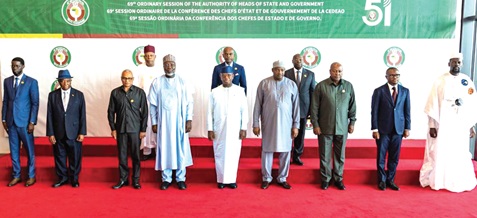
At the recent ECOWAS Summit in Lungi, Sierra Leone, Côte d'Ivoire received rare recognition from fellow heads of state.
It became the first - and so far the only - member state to fully implement the regional bloc's decision to remove selected taxes on air transport and reduce passenger and security charges.
It is a significant milestone in a region where the cost of flying has long been one of the biggest barriers to tourism, business and regional integration.
Not long ago, I was searching for airfares for a journey within West Africa. As always, the price made me pause.
For a relatively short flight between two neighbouring countries, the fare was almost as much as a promotional ticket to Europe.
It is an experience familiar to many travellers in our part of the continent and one of Africa's greatest travel contradictions.
We proudly celebrate more than five decades of ECOWAS and the free movement of people.
We champion the African Continental Free Trade Area and speak passionately about regional integration.
Yet travelling to the country next door often costs more than travelling much farther afield.
Something about that simply does not add up.
The real cost of flying
The problem is not the airlines alone.
For years, aviation experts have pointed to the layers of taxes, passenger charges and airport fees imposed by governments across West Africa.
By the time these are added to the base fare, air travel becomes unaffordable for many people.
Ironically, high taxes often produce the opposite of what governments intend.
Expensive tickets discourage travel.
Fewer passengers mean fewer flights, lower tourism receipts and reduced revenues for airlines, airports, hotels and the many businesses that depend on visitor spending.
It becomes a cycle that limits growth instead of encouraging it.
A reform worth celebrating
This is why Côte d'Ivoire's achievement deserves attention.
The country has demonstrated that lowering aviation taxes is not simply an economic sacrifice but a strategic investment in connectivity and competitiveness.
At the Summit, ECOWAS leaders urged other member states to follow Côte d'Ivoire's example by fast-tracking the implementation of reforms agreed in Abuja in 2024.
Those measures include removing selected aviation taxes and reducing passenger service and security charges.
If implemented across the region, they could significantly lower airfares and stimulate demand for travel.
That would be good news not only for airlines but also for tourism, trade and investment.
Tourism begins with accessibility
As someone who writes about tourism every week, I often remind readers that destinations compete on more than attractions alone.
Accessibility matters just as much.
A country may boast beautiful beaches, fascinating heritage, colourful festivals and excellent hotels, but if getting there is too expensive, many potential visitors will simply choose another destination.
Tourism begins long before a visitor checks into a hotel.
It begins when they search for a flight.
Lower airfares would encourage more Ghanaians to explore Côte d'Ivoire, Senegal, Sierra Leone and The Gambia. Equally, they would encourage more travellers from those countries to discover Ghana.
That is how regional tourism grows - through frequent, affordable and convenient travel.
More than leisure travel
The benefits extend well beyond holidays. Across West Africa, entrepreneurs, traders, academics, creatives and professionals travel regularly for meetings, exhibitions, festivals and conferences.
Many still choose long and exhausting road journeys because flying remains beyond their budgets.
Affordable air travel would save time, improve productivity and strengthen economic ties between neighbouring countries.
It would also provide a major boost to the meetings, incentives, conferences and exhibitions sector by making it easier for organisers to attract delegates from across the region.
For destinations investing heavily in tourism and business events infrastructure, cheaper regional flights could be a game changer.
Turning policy into reality
Of course, adopting a regional decision is easier than implementing it. Although the ECOWAS reforms were agreed more than a year ago, Côte d'Ivoire remains the only country to have fully complied.
That should concern all of us. Regional integration cannot exist only in declarations and summit communiqués.
Travellers judge progress by what they pay when they book a ticket.
Governments must now work with aviation regulators, airport authorities and airlines to ensure that lower taxes are reflected in lower fares.
Only then will passengers experience the real benefits of the reforms.
A region better connected
One of the greatest joys of travel is discovering how much we have in common with our neighbours.
Our music, cuisine, languages and traditions frequently cross borders more easily than we do.
West Africa has enormous tourism potential because every country offers something unique while sharing deep cultural and historical connections.
Making it easier and more affordable to travel within the region is therefore about much more than aviation.
It is about bringing people closer together, strengthening regional economies and making the ECOWAS vision a lived reality rather than an aspiration.
Côte d'Ivoire has shown what is possible. Now the rest of the region must follow.
We are not delusional to assume that the removal of taxes leading to cheaper airfares alone will solve every challenge facing tourism and aviation in West Africa.
Such issues as connectivity, improved infrastructure, stronger airlines and simplified travel processes will all remain essential.
But reducing the cost of flying is one of the most important steps the region can take.
When travelling from Accra to Abidjan, Dakar, Freetown or Lagos becomes as affordable as the vision of regional integration promises, West Africa will finally begin travelling like the community it has always aspired to be.
