
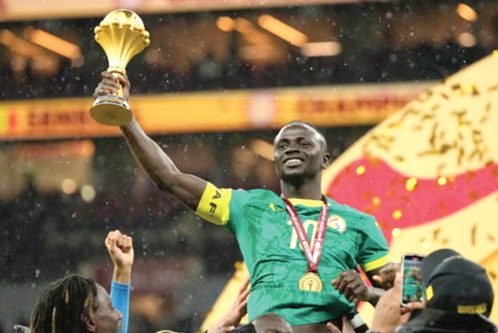
On January 18, 2026, the Africa Cup of Nations final delivered more than a football champion.
It delivered a leadership lesson that resonates far beyond sport. Watched by millions across Africa and the world, the match between Senegal and Morocco became a powerful case study in resilience, influence and decision-making under extreme pressure.
At the heart of that moment stood Sadio Mané. His actions offer timely and practical lessons for Ghana’s political leaders, public servants, business executives, entrepreneurs and individuals navigating uncertainty in an era defined by economic stress, governance reforms, and rising public expectations.
Leadership, as that night proved, is not tested when conditions are fair.
It is revealed when they are not.
The moment that changed the game
With the score goalless deep into stoppage time, a controversial penalty was awarded against Senegal.
Tempers flared. Senegal’s players and officials walked off the pitch in protest, risking automatic defeat.
Emotions, not strategy, were about to decide the outcome.
One man refused to leave
Sadio Mané stayed behind, still protesting the decision but refusing to abandon the contest.
He ran into the tunnel, called his teammates back, and insisted they finish the game.
The penalty was taken and saved. Senegal regrouped, scored in extra time, and lifted the AFCON trophy.
What turned potential collapse into victory was not talent alone.
It was composure, influence and resolve at the most difficult moment.
Why this “Alter” Matters for Ghana
Ghana today stands at a critical juncture. The nation is navigating economic recovery, fiscal discipline, political competition, institutional reform, and growing citizen scrutiny.
In such moments, leadership failures often stem not from a lack of knowledge but from emotional reactions, short-term thinking, or the abandonment of responsibility when pressure peaks.
Mané’s decision to stay on the pitch mirrors what effective leadership looks like in Ghana’s current context.
Political leadership under pressure
In recent years, Ghana’s political leadership has faced severe economic headwinds. Inflation peaked above 50 per cent in 2023, public debt exceeded 90 per cent of GDP at its height, and confidence in state institutions was strained.
By 2025, tough and unpopular reforms began to show results.
Public debt ratios declined, legacy energy sector debts of over 1.4 billion dollars were cleared, and macroeconomic stability gradually returned.
These outcomes required leaders to remain engaged when criticism was loudest.
Walking away from reform would have been politically easier.
Staying the course demanded resilience similar to Mané’s insistence on finishing the match.
Political leadership, like football leadership, is not about avoiding controversy.
It is about managing it without surrendering the long-term objective.
Business leadership and Eeconomic resilience
Ghanaian businesses have operated in a volatile environment marked by high interest rates, currency depreciation, and reduced consumer spending. Between 2023 and 2024, several firms downsized or exited the market.
Yet by mid-2025, Ghana recorded economic growth above six per cent, driven largely by services, agriculture and non-oil activities.
This recovery was sustained by business leaders who adapted rather than exited.
Manufacturers renegotiated supply chains.
Banks strengthened risk management and wrote off bad loans totalling more than one billion cedis to protect their balance sheets.
Entrepreneurs pivoted their business models rather than abandoning ventures.
The Mané principle applies directly here. When conditions worsen, abandoning the pitch guarantees defeat.
Staying allows space for recovery, innovation and eventual success.
Public sector leadership and institutional credibility
Public institutions face constant pressure from citizens demanding efficiency, fairness and results. Reforms in revenue administration, mining royalties, digitisation of public services, and public financial management have often met resistance and public scepticism.
Yet institutional progress rarely happens through protest alone.
It happens when leaders stay engaged, absorb criticism, adjust strategies, and continue implementation.
Just as Senegal needed a goalkeeper back on the goal line, Ghana’s institutions need leaders present, accountable and steady when systems are tested.
Personal leadership in everyday Ghana
Leadership is not confined to presidents or CEOs. It appears in personal finance decisions, career growth, entrepreneurship and community service.
Many Ghanaians face moments when systems feel unfair, opportunities are delayed, or rules change unexpectedly.
The instinct to quit, disengage, or blame is natural.
Mané’s response offers a counter lesson.
Control what you can. Stay disciplined. Finish the race.
Resilience at the personal level compounds into resilience at the national level.
The business and financial logic of staying the course
From a financial perspective, resilience is not emotional optimism. It is strategic value creation.
Companies that survive downturns often outperform peers when recovery begins.
Governments that implement reforms during hardship regain investor confidence faster.
Individuals who continue to develop skills during difficult periods improve their lifetime earning potential.
Walking away locks in losses. Staying creates optionality.
Mané did not guarantee victory by staying.
He preserved the possibility of it.
That is the essence of sound leadership and sound economic decision-making.
Conclusion
The AFCON 2026 final was not just a sporting spectacle.
It was a lesson in leadership when the rules feel unfair, and the pressure is highest.
Ghana’s future depends on leaders who stay on the pitch.
Leaders who resist emotional exits.
Leaders who influence rather than intimidate. Leaders who understand that delay is not defeat, and adversity is not destiny.
Sadio Mané’s leadership can best be related to Rudolph Giuliani’s reminder that “weddings are discretionary and funerals are mandatory for leaders”.
Sadio Mané’s composure and responsibility in the tense January 18 AFCON Final exemplified true leadership, aligning best with René Carayol’s insight that “when the sea is calm, everyone is a great swimmer, but it is when the sea is turbulent that great leaders are found”.
In politics, business, public service and personal life, the message is clear. Until the final whistle blows, the work is not over.
Those who stay focused, composed and committed give themselves and their nation the best chance to win.
Email: www.pefghana.org
