
The Accra Metropolitan Assembly (AMA) has announced cuts to its proposed 2026 licence fees for beauty schools, salons and dressmaking businesses, in a move aimed at boosting skills development and easing the financial burden on small and medium operators across the capital.
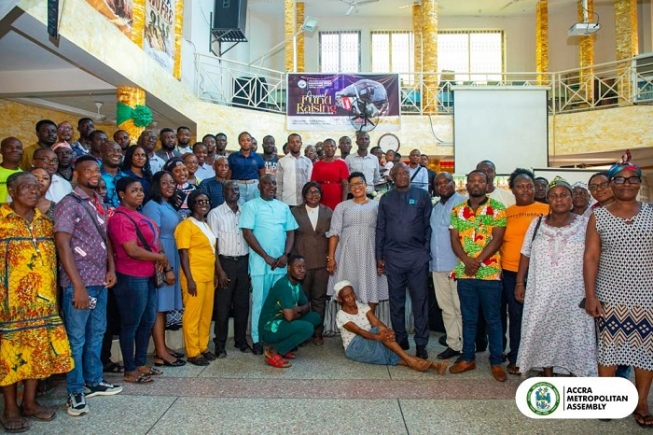
The decision, part of the Mayor’s broader plans to support vocational training and stimulate entrepreneurship, was disclosed during a stakeholder engagement on the 2026 Fee-Fixing Resolution held on Monday at the North Kaneshie Pentecost Church.
Under the revised proposals, annual licence fees for beauty parlour schools will fall sharply from GH¢2,600 in 2025 to GH¢1,700 in 2026. The fashion and dressmaking sector will also experience notable reductions, with charges for industrial fashion designers dropping from GH¢2,800 to GH¢1,700, and small industrial designers from GH¢1,400 to GH¢1,000.
Large-scale operators will now pay GH¢500 instead of GH¢750, medium-scale operators GH¢300 instead of GH¢466, and small-scale operators GH¢140 instead of GH¢210. Fees for non-industrial large-scale dressmakers will be reduced from GH¢190 to GH¢130.
Presenting the tariff adjustments, Budget Analyst at the AMA, Bernard Nii Armah Cleland, described the new figures as a significant relief for institutions providing both training and commercial services.
He said the Assembly recognised the critical role beauty and fashion establishments play in equipping young people, especially women, with employable skills, and therefore sought to ease the cost of formal licensing.
Mr Cleland noted that while fees for regular beauty parlours and smaller salons have largely been maintained to ensure fairness across the sector, some categories received moderate downward adjustments to reflect prevailing economic conditions. Big salons, for instance, will now pay GH¢220 instead of GH¢280 annually.
He added that micro-businesses such as braiding and weaving-only salons, as well as small salons, will retain their 2025 rates to avoid imposing additional pressure on operators already grappling with challenging economic conditions.
According to the AMA, the reductions are intended to encourage more businesses to formalise their operations, expand training opportunities and contribute to job creation across the metropolis. The Assembly says it remains committed to supporting entrepreneurship while providing an enabling environment for vocational excellence.
