
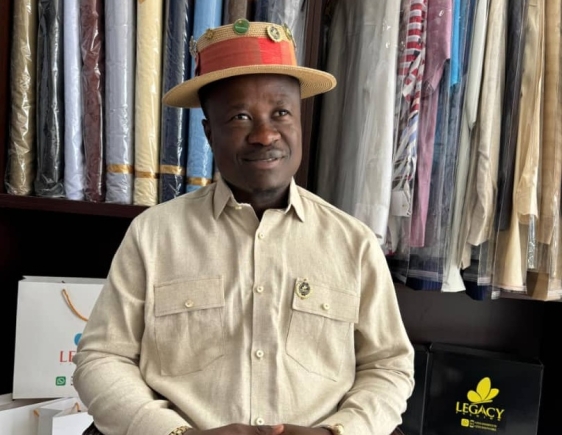
Ban second-hand clothing now – Ghanaian designer Master P warns of infections from used underwear
Ghanaian designer and Chief Executive Officer of Master P Ventures and Legacy Fashion, Kwabena Owusu Agyemang, popularly known as Master P, has renewed calls for a ban on second-hand clothing, warning that users of imported used clothing risk viral and bacterial infections, particularly through the wearing of used brassieres and panties.
According to the fashion entrepreneur, the second-hand garments flooding Ghanaian markets are treated with various sprays in their countries of origin before being dumped on Ghana.
"Second-hand clothing are not good for us. All forms of spray are applied on them in various countries before they are dumped on us. If you are observant you will realise that the United Kingdom, United States, China and others have their peculiar scents in all these waste they hoard for years and flood our markets with," Master P said.
He specifically raised concerns about the health implications for women who purchase and wear second-hand undergarments.
"Let's take our dear females for instance; you may not get HIV/AIDS for using used clothing of a patient, but there are complaints of hard-to-treat itchings under the breast and other private parts over the use of such panties and bras," he stressed.
Existing law not enforced
Master P pointed out that Ghana already has legislation banning the importation of certain second-hand items, but the law has not been implemented.
In 1994, Ghana passed Legislative Instrument 1586, which outlawed the importation, clearance and sale of undergarments because they were found to be unhygienic and presented a health hazard. The LI states: "No person shall import for commercial purpose or on commercial quantities any of the following goods which are second-hand or which have been used – handkerchiefs; men, women and children's underpants; mattresses and sanitary ware."
A person who imports any goods contrary to the regulation commits an offence and is liable on conviction to a fine not exceeding GH¢500,000 or imprisonment for a term not exceeding one year or both, and the goods in respect of which the offence was committed shall be liable to be seized and forfeited to the State. Both LI 1586 of 1994 and LI 1693 place a ban on the importation of some used merchandise.
Despite the legislation, second-hand clothing continues to flood Ghanaian markets with little to no enforcement.
GH¢50 can buy quality new clothing
Master P also shot down the perception that buying from boutiques is too expensive, arguing that affordable alternatives exist.
With as low as GH¢50, he said, anyone can get something quality for themselves, save themselves from infections found in second-hand clothing, and feel good about their appearance.
Call for corporate investment
The fashion entrepreneur further called on corporate Ghana to invest in state-of-the-art industrial machines so that Ghanaian fashion designers would not have to travel to China and other countries for production and accessories, a practice which he said depletes the economy.
Warning to the youth
In a related development, Master P lamented what he described as growing laziness among Ghanaian youth, which he said fuels the quick money syndrome.
He urged the youth to work hard and avoid shortcuts to making wealth, emphasising that sustainable success comes from diligence and perseverance, not from chasing fast cash through questionable means.
