
Baseline Study urges action-oriented interventions to strengthen coastal resilience in Ghana
Key findings and recommendations from the Improved Resilience of Coastal Communities (IRCC) Baseline Study Validation conducted in Ghana and Côte d’Ivoire have highlighted the need for action-oriented interventions to strengthen coastal resilience.
The study provides an evidence-based assessment of conditions in 11 target communities in Ghana and will serve as a benchmark to measure the project’s progress, impact, and accountability throughout its implementation.
The project, funded by the Adaptation Fund and coordinated by UN-Habitat focused on livelihoods, social protection and climate adaptation to help vulnerable coastal populations cope with challenges such as flooding, food insecurity, and threats to local economic activities.
The study stated that knowledge about climate risks already exists in many coastal communities, but effective resilience will depend on creating the enabling environment—through infrastructure, institutional coordination, and livelihood support — to translate awareness into practical action.
It said about 81.8 per cent of respondents who receive early warning messages report that the information arrives on time, and a high proportion act on the alerts when they receive them.
Event
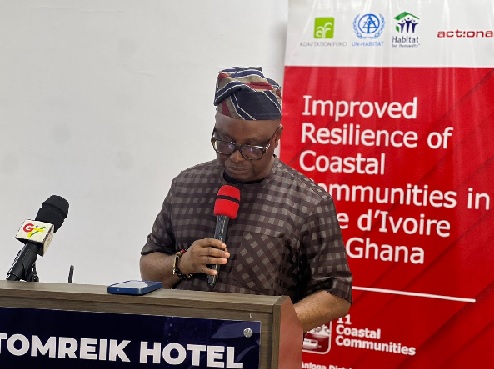
This was revealed at the IRCC Baseline Study Validation Workshop organised by ActionAid Ghana in Accra yesterday (March 12).
the event was held in collaboration with Habitat for Humanity, Adaptation Fund and the Government of Ghana.
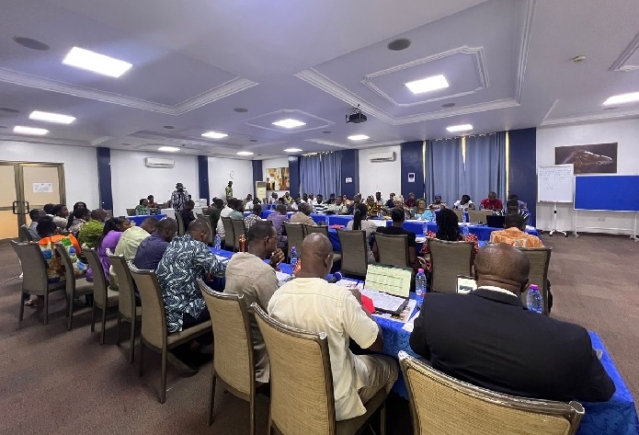
It brought together representatives of government institutions, development partners, UN Habitat and ITC, traditional authorities represented by civil society organizations and representatives of some coastal communities.
In attendance were Country Director Action Aid Ghana, Mr John Nkaw, Senior Director Programmes for Africa and Acting Vice President for Habitats for Humanity International Africa, Madam Mathabo Makuta, National Development Planning Commission and Co-Chair of the Steering Committee of the Improved Resilience of Coastal Communities in Ghana and Cote d'Ivoire Project, Madam Sandra Kessia Mankwa and Emelyne Wright-Hanson, who represented the Ministry of Environment, Science and Technology.
Facts
Lutuf A. Rahman of the Management for Development Foundation West Africa Team, who made the presentation said the study also found limited adoption of nature-based solutions, with 73 per cent of respondents not using any such measures.
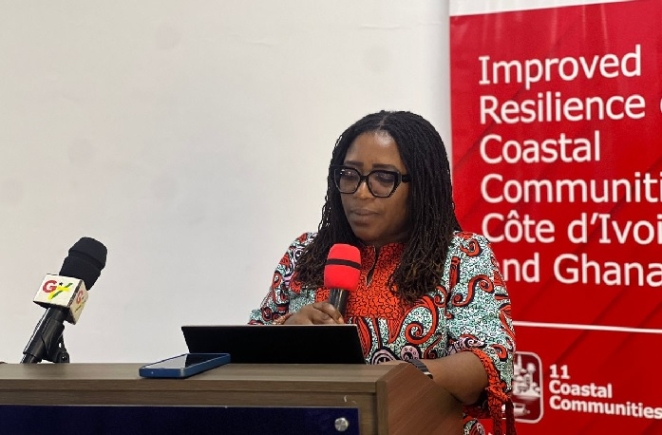
He said mangrove restoration was the most common practice but was still used by only about 24.9 per cent of respondents adding although some communities have bylaws to protect mangroves, enforcement remains weak.
Regarding climate-smart agriculture, he mentioned that awareness exists but practical adoption remains modest.
Around 32 per cent of respondents were not using any climate-smart agricultural techniques, while others practiced measures such as crop diversification, soil and water conservation, and water-efficient irrigation.
The assessment further highlighted major infrastructure gaps in coastal communities as a large number of respondents reported the absence of drainage systems in their neighbourhoods, increasing vulnerability to flooding.
"So if the project wants to construct drainage, it's also good to see if people are willing to break in. Especially, this could be a very good thing when we are looking at sustainability of the project. So those are just some of the key things," he said.
"In terms of the impact, they gave us a lot of impact on landfills, like destruction of their farmland, reduced crop yields, and then they said you'll get no fish catch and loss in income for fishermen and those things. In terms of health, they were talking about flooding and waterborne diseases. And then also issue of malaria because of bleeding and those things," he added.
Key Recommendations
The baseline study proposed several recommendations to guide the implementation of the IRCC project, including shift from awareness to practical action, strengthen community-based early warning systems and investment in small-scale resilient infrastructure
It also recommended promotion of effective ecosystem management, linking conservation with livelihood benefits and expanding livelihood diversification programmes.
Importance
Country Director of ActionAid Ghana, John Nkaw emphasized the importance of coordinated and evidence-based action to strengthen the resilience of coastal communities in Ghana against climate change impacts.
Mr Nkaw noted that the baseline study provides an evidence-based assessment of conditions in 11 target communities in Ghana and will serve as a benchmark to measure the project’s progress, impact, and accountability throughout its implementation.
He stressed that sustainable resilience can only be achieved when local voices—including traditional leaders, queen mothers, chiefs, and community representatives—are central to decision-making processes.
Mr Nkaw called for active collaboration and shared ownership among stakeholders to ensure the project delivers inclusive, empowering, and long-term solutions that strengthen climate resilience and sustainable development in Ghana’s coastal areas.
