
District-level poverty report: Yunyoo Nasuan poorest, Ayawaso North least deprived as 250 districts record improvement
A child born in Yunyoo Nasuan in the North East Region enters a world where more than half the population lives in multiple deprivations simultaneously, while a child born in Ayawaso North in Accra faces a poverty rate of just 5.5 per cent; a wide 46-percentage-point gap that has now been laid bare for the first time in Ghana's history, as the country launches its maiden district-level multidimensional poverty rankings covering all 261 districts.
The report, produced by the Ghana Statistical Service using internationally accepted Small Area Estimation techniques, reveals that while 250 districts recorded reductions in multidimensional poverty between 2021 and 2025, progress remains deeply uneven. Yunyoo Nasuan District in the North East Region recorded the highest multidimensional poverty incidence in 2025 at 51.6 per cent, while Ayawaso North Municipal in the Greater Accra Region recorded the lowest at just 5.5 per cent.
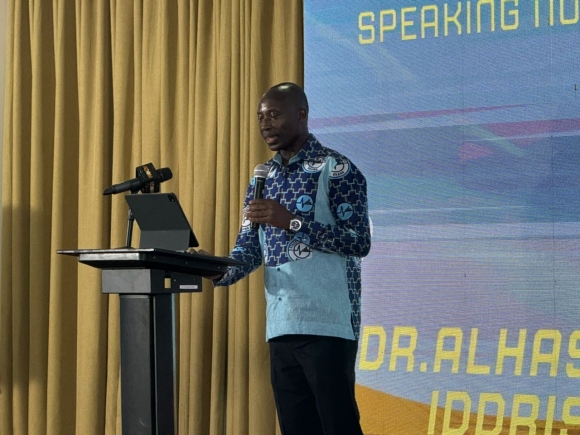
In his welcome remarks at the Alisa Hotel in Accra on Monday, May 18, 2026, the Government Statistician, Dr Alhassan Iddrisu, declared that Ghana was moving beyond national averages to bring poverty statistics closer to the people, closer to communities, and closer to where decisions are made.
"For the first time in Ghana's history, we are able to produce comparable multidimensional poverty estimates for all 261 districts consistently over multiple years. This is not just another statistical release. It is a major milestone for Ghana's statistical system, decentralised planning, poverty targeting, and evidence-based policymaking," Dr Iddrisu said.
He explained that multidimensional poverty measures whether people are able to live healthy, productive, safe, and dignified lives, encompassing not only income but also access to education, health, housing, sanitation, electricity, nutrition, and employment opportunities.
Remarkable progress but serious warnings
The report shows that Wa West District in the Upper West Region recorded the largest improvement nationally, reducing multidimensional poverty from 61.9 per cent in 2021 to 24.0 per cent in 2025. Sekyere Afram Plains in the Ashanti Region also made dramatic progress, falling from 50.5 per cent to 13.5 per cent over the same period.
"These districts show that meaningful progress can happen, even in places that once faced very high poverty levels. We must study what worked in these districts and apply the lessons everywhere," Dr Iddrisu urged.
However, the findings also contain serious policy warnings. Guan District in the Oti Region recorded the largest increase in multidimensional poverty, rising from 28.1 per cent in 2021 to 34.8 per cent in 2025. The six districts with the highest poverty incidences are all located in the North East Region, with poverty remaining concentrated mainly in parts of the North East, Northern, Oti, Savannah, Upper East, Upper West, and Bono East regions.
"This tells us clearly that progress cannot be assumed. It must be monitored, sustained, and strengthened continuously," the Government Statistician warned.
Rankings must guide action, not stigmatise
Delivering a statement on behalf of the Minority Leader, Alexander Kwamena Afenyo-Markin, the Second Deputy Minority Whip, Jerry Ahmed Shaib, commended the Ghana Statistical Service for producing what he described as one of the most important governance and accountability tools for poverty reduction in recent years.
"Poverty is not an abstract concept. Poverty is experienced in homes, in our communities, in our schools, in our health centres, in our marketplaces, and in our workplaces. Poverty is felt when a child cannot stay in school. Poverty is felt when a household lacks clean water or electricity," Shaib said.
He stressed that the district rankings must be used responsibly and should not become instruments for political point-scoring or stigmatisation.
"A district with high poverty levels should not be blamed. Rather, it should be prioritised. It should receive support, and it should receive sustained national attention. That is the true value of evidence-based policymaking," he added.
A tool for Parliament and local planning
The Chairperson of Parliament's Finance Committee, Isaac Adongo, delivered the address on behalf of the Majority Leader, Mahama Ayariga, who was unable to attend due to other national assignments.
Adongo noted that poverty is not only about money but also about where a child goes to school, whether families can access healthcare, and whether communities have clean drinking water, sanitation, electricity, jobs, and opportunities.
"These findings are highly relevant to the work of Parliament. Parliament approves national budgets, oversees public expenditure, scrutinises policies and programmes, and represents communities across the country. The district poverty rankings provide members of parliament with practical evidence to advocate more effectively for their constituents and to support further and more targeted developmental actions," he said.
He appealed to the Finance Minister to ensure that the findings shape the next budget cycle, adding: "The ball is now in your court to make sure we facilitate the work that is done to achieve the results we want."
Credible data strengthens democratic governance
Dr Rasheed Draman of the Africa Centre for Parliamentary Affairs (ACEPA) delivered a solidarity message on behalf of civil society organisations, emphasising that credible data strengthens democratic governance.
He recalled a visit to the Parliament of Zambia where a traditional leader had asked lawmakers: "When you sit in Parliament and debate and talk, where do you get the information from? Because definitely my people are absent in that discussion."
Draman noted that the district-level fact sheets help bring the realities of the people that members of Parliament represent into the decision-making process.
"This release is more than a statistical event. It is an accountability event and an opportunity to strengthen the link between data, policy, budgeting, oversight, and ultimately the welfare of all citizens of this country," he said.
He appealed to the media not to sensationalise the findings but to communicate them in ways that citizens can understand, and urged MMDAs to integrate the findings into their medium-term development plans and local budget processes.
Next step is gender disaggregation
The Board Chairman of the Ghana Statistical Service, Dr Anthony Yaw Baah, praised the Government Statistician and his team for their professionalism and dedication, noting that the presence of many parliamentarians at the launch was a testament to the importance of the work.
He disclosed that when he received an electronic copy of the results, he immediately called the Government Statistician to request gender-disaggregated data, to which Dr Iddrisu responded that work was already underway.
Government pledges targeted action and fiscal decentralisation
Delivering the keynote address on behalf of the Minister for Finance, Dr Cassiel Ato Baah Forson, the Deputy Minister of Finance, Thomas Nyarko Ampem, made a surprising personal revelation about the data from his own constituency.
"Look, the statistic is telling me that 81.9 per cent of my constituents do not have decent toilet. Is that not surprising? So if you don't know this, you continue to be building schools. I'm not saying building schools are not important, but the important things that will help them out of multidimensional poverty will be scaled," Ampem said.
He noted that under the current definition, a person is deprived if the household has no toilet, specifically a WC toilet, or if they use a bucket or pan, or if they use a public toilet or shared toilet outside the household.
"So you may be constructing public toilets thinking you are solving the problem, but that is also not the solution," he said, urging members of parliament to keep these findings in mind when approving the formula for the District Assemblies Common Fund.
Ampem announced a significant policy shift, revealing that the government would move deliberately from economic stabilisation to inclusive growth and socio-economic transformation, as directed by President John Dramani Mahama.
"Macroeconomic stability remains the foundation, but the next phase of the research agenda is clear: growth and jobs, alongside social protection and human development," he said.
He made a pledge on behalf of the Finance Minister to support the Ghana Statistical Service with funds to go to all 16 regions to discuss the findings with all metropolitan, municipal, and district assemblies.
"Just this morning, my boss was telling me that we should focus on fiscal decentralisation. He wants us to have a programme to deepen fiscal decentralisation. We are sending a lot of funds to the assemblies. How do we make sure that they are applying the funds correctly for areas that will make the best impact?" he asked.
Ampem also addressed the striking finding that all six bottom districts are from one region – the North East.
"As policymakers, we must be deliberate about sending resources and interventions to bring them up. The story shouldn't be the same next year when we publish the next episode of this. We must see that those who are at the bottom are coming up. We must be deliberate about this," he stressed.
He outlined government interventions already underway to address multidimensional deprivation, including the 'No Fees Stress' intervention, free sanitary pads, the School Feeding Programme, capitation grant, National Health Insurance support, increased support for persons with disabilities, the 1,200-megawatt thermal power plant, and the One Million Coders programme.
"In other words, we understand that poverty is ultimately about denied opportunity, and that is precisely what this government is determined to change," Ampem said.
