
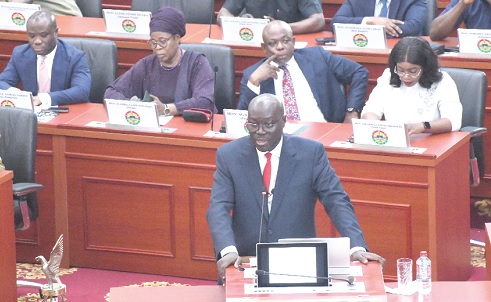
2026 Budget through lens of communication, digital transformation
Ghana’s 2026 National Budget marks a strategic departure from the traditional balancing of expenditure and revenue.
Instead, it elevates digitalisation, communication systems, ICT innovation and media governance as the primary anchors of national transformation.
At its core, the budget suggests that Ghana’s prosperity and global competitiveness will hinge on the speed and effectiveness with which it adopts the architecture of a modern digital development state.
A central pillar of this vision is the Ministry of Communications, Digital Technology and Innovations (MoCDTI), which receives GH¢1.3 billion—an unprecedented allocation signalling the government’s intention to leverage technology as a driver of economic reform.
This investment spans key agencies including the National Communications Authority, Cyber Security
Authority, National Information Technology Agency and the Data Protection Commission. Notably, a dedicated GH¢30 million for rural telephony, GH¢70 million for Digital Youth Hubs and GH¢100 million for the One Million CODERS initiative reflect a deliberate effort to reduce digital disparities and cultivate a future-ready workforce capable of competing in global digital markets.
A flagship innovation in the budget is the introduction of Artificial Intelligence (AI) into customs processes.
Ghana’s import bill in 2024 totalled GH¢204 billion, yet only GH¢85 billion was captured for taxation—highlighting systemic leakages through under-invoicing and smuggling.
AI-driven customs automation aims to close these gaps, enhance real-time monitoring and recover billions in lost revenue.
Countries such as Singapore and Estonia have demonstrated that AI-enabled customs systems significantly increase efficiency and fiscal stability.
Ghana’s adoption of similar reforms positions the country to strengthen revenue mobilisation and improve its competitiveness under the African Continental Free Trade Area.
Agenda
The rural telephony agenda remains a critical component of inclusive development.
Over the past few years, Ghana’s Rural Telephony and Digital Inclusion Project have expanded basic connectivity to more than a thousand previously unserved communities.
Yet large disparities persist, particularly in Northern Ghana and mountainous enclaves where 2G/3G networks still dominate.
The GH¢30 million allocation for 2026 seeks to upgrade connectivity infrastructure, improve access to affordable devices and expand digital literacy for rural households.
While the amount remains modest relative to existing gaps, its targeted application can enhance rural productivity, expand mobile financial services, strengthen access to health and education platforms and reduce exclusion from the digital economy.
Globally, these interventions align with successful models of digital transformation.
Rwanda’s Digital Ambassadors Programme, coding academies and innovation cities have created thousands of jobs and repositioned the country as a continental hub of digital outsourcing.
Kenya’s “Silicon Savannah”—built around Konza Technopolis and nationwide coding and innovation hubs—has generated over a million digital gig jobs.
India’s Digital India programme similarly demonstrates the economic potential of sustained investment in ICT training, tech hubs and BPO ecosystems.
Ghana’s Digital Youth Hubs and One Million CODERS programme reflect these global best practices and offer young people structured pathways into software engineering, cybersecurity, animation, digital entrepreneurship and remote-work markets.
While larger allocations would accelerate nationwide rollout, the current investments establish an important foundation for long-term digital job creation.
Governance
The budget also strengthens digital governance reforms aimed at enhancing public-sector accountability.
Key interventions include integrating the Ghana Electronic Procurement System (GHANEPS) with GIFMIS, deploying real-time audit technologies and enforcing digital verification across payroll systems.
These reforms target chronic inefficiencies such as ghost names, inflated contracts and irregular procurement practices.
When digital financial management is implemented with rigour, it improves fiscal discipline, reduces waste and enhances public trust.
Human capital development receives significant attention. By establishing ICT laboratories in Girls’ Senior High Schools, the government prioritises gender inclusion in STEM, reflecting global evidence that women’s participation in digital fields accelerates national development.
Investments in demographic data systems, particularly the digitisation of Births and Deaths Registry services, are equally important for effective social protection, education planning and health-care delivery.
Media governance, often overlooked in development analysis, receives mention through an allocation to the National Media Commission. In an era of misinformation, political polarisation and digital manipulation, strong media oversight is vital not only for democracy but also for economic stability.
A credible communication environment reduces conflict, supports investor confidence and strengthens the national information ecosystem.
While the digital transformation agenda is ambitious, risks remain.
Cybersecurity threats, rural electricity deficits, resistance to digital accountability and shortfalls in ICT professionals could undermine implementation.
Success will depend on sustained investment, cross-agency coordination, strong institutional leadership and continuous capacity-building.
Overall, the 2026 Budget signals that Ghana’s digital transition is no longer theoretical—it is unfolding.
With consistent implementation, Ghana could join Rwanda, Kenya, India and
Singapore in building a resilient, technology-driven development model.
The ultimate challenge lies not in the design of this digital architecture but in translating it into the lived realities of job creation, enhanced revenue mobilisation, improved governance and expanded opportunities for all citizens.
Ghana’s digital future is promising, and the 2026 budget provides a coherent foundation for constructing that future.
The writer is an Associate Professor of Development Communication Studies,
Faculty of Communication & Media Studies,
University for Development Studies, Tamale.
E-mail:
