
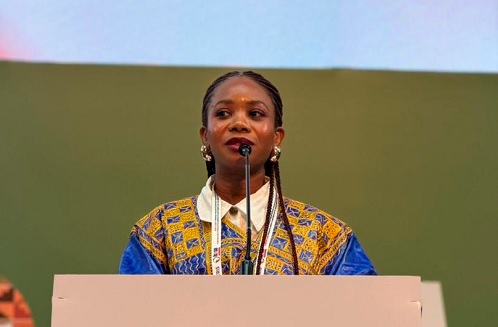
Empower young girls with comprehensive knowledge on SRHR — Researcher
A Ghanaian PhD candidate from the University of Ottawa in Canada, Rachel Lawerh, has underscored the need to empower young girls with comprehensive knowledge of their sexual and reproductive health and rights (SRHR).
That, she said, was crucial for young women to navigate their health and wellbeing effectively.
“Some of these young people are into petty trading themselves, trying to survive. How can we mobilise and get them certain loans, certain supports that can push them as they move forward?” she said at the International Conference on AIDS and STIs in Africa last Friday.
Conference
Hosted by Ghana for the first time, Africa's largest conference on AIDS and STIs drew more than 3,000 delegates from 85 countries.
Organised by the Society for AIDS in Africa (SAA), the conference featured issues such as the far-reaching impact of HIV and advocating sustainable solutions to fill the gap left by the withdrawal of critical AIDS funding.
The conference was on the theme, “Africa in Action: Catalysing integrated sustainable responses to end AIDS, TB and Malaria”.
Ms Lawerh’s research work presented at the conference was on the topic, “Through Our Eyes: Exploring the Experiences of Young Women Living with HIV in Lower Manya Krobo, in the Eastern Region ”, using 21 participants, aged 15 to 24 and 15 key informant interviews with health providers, policy makers and programme leads.
With the aid of a methodology called photovoice, the research focused on the sexual reproductive health challenges faced by young women living with HIV in the district.
This methodology allowed participants to capture images that hold personal significance, with the ultimate goal of giving young women a voice and bringing their stories to the forefront, thereby enabling meaningful community engagement.
Safe space
Ms Lawerh, who hails from the Lower Manya Krobo District, said many participants expressed that they felt unable to disclose their HIV status to family due to stigma, but visits to healthcare facilities offered them a safe space to discuss their challenges with health workers who provided the much-needed support.
On the impact of funding cuts on interventions in beneficiary communities, she observed that many former peer supporters, young women trained to aid their peers living with HIV, had lost their jobs due to these cuts.
The loss of outreach programmes, she said, had further limited support options for those unable to visit hospitals.
She has, therefore, made a case for the country to look within, adding, “We cannot continue to rely on external aid to solve issues that are at our local level system.
“We have to look at local funding. We have to look at our local district health offices.
At first, they had certain programmes that provided food and support to these young people. We need to go back to those,” she said.
