
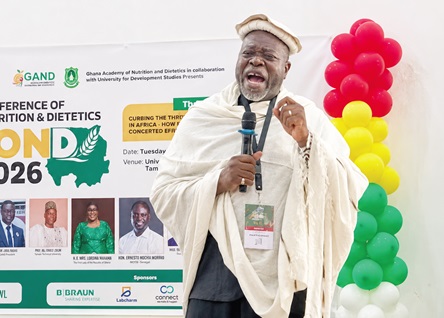
A professor of nutrition has advocated the development of comprehensive food and nutrition policies to address the country's burden of malnutrition.
Professor Francis Bruno Zotor, who is the Vice-President of the International Union of Nutritional Sciences (IUNS), said effective and well-coordinated food policies were critical to creating an enabling environment for improved nutrition, particularly among children, while ensuring that interventions delivered sustainable and measurable results.
He stated that although several nutrition interventions had been implemented over the years, many had been carried out in isolation, limiting their overall effectiveness.
Speaking at the annual conference of the Ghana Academy of Nutrition and Dietetics (GAND) in Tamale last Tuesday, Prof. Zotor stressed the need for an integrated policy framework that would harmonise nutrition programmes across sectors, eliminate duplication and maximise their impact.
The conference was on the theme: "Curbing the Triple Burden of Malnutrition in Africa: Mobilising Stakeholders for Concerted Effective Action".
The triple burden of malnutrition is the coexistence of undernutrition (including stunting, wasting and underweight), micronutrient deficiencies (hidden hunger), and overweight, obesity and diet-related non-communicable diseases.
It remains a major public health challenge in Ghana and across Africa, affecting health, education and economic development.
The conference seeks to promote collaboration among policymakers, nutrition professionals, researchers, development partners and other stakeholders to address the triple burden of malnutrition through evidence-based policies, strategic partnerships and sustainable interventions.
It brought together members of the academy, academics, health professionals, government officials, development partners and students from across the country.
Indigenous foods
Prof. Zotor emphasised that national food policies should not only focus on increasing agricultural production but also ensure that all Ghanaians had access to safe, affordable and nutritious food.
He identified indigenous staple foods as an important component of Ghana's food system that could significantly contribute to reducing malnutrition, particularly among children under five years.
The nutritionist pointed out that foods produced by local farmers were rich in nutrients and, when properly promoted and consumed, could improve child nutrition and contribute to raising a healthier generation.
Prof. Zotor, therefore, appealed to health professionals to intensify public education on the nutritional value of indigenous foods and encourage households to incorporate them into their daily diets.
Human capital
For his part, the President of GAND, Rev. Prince Baidoo, said the triple burden of malnutrition was silently eroding Ghana's human capital and threatening the country's development aspirations.
"It is a national call to action. It is a reminder that no single institution, profession or ministry can solve Ghana's nutrition challenges alone. Success demands collaboration," he said.
The President of GAND said primary health care should shift attention from treating disease to preventing illness, from hospitals to communities, and from illness to wellness, urging nutrition professionals to make preventive nutrition the cornerstone of their work.
Rev. Baidoo further called on government institutions, development partners, academia, civil society organisations and the private sector to deepen collaboration to address all forms of malnutrition and improve the nutritional well-being of the population.
Collaboration
The Northern Regional Minister, Ali Adolf John, described undernutrition as a persistent public health challenge that continued to affect child growth, productivity and socio-economic development, particularly in Northern Ghana.
He said Metropolitan, Municipal and District Chief Executives (MMDCEs) had a critical role to play in implementing nutrition-sensitive programmes within their jurisdictions.
"Agricultural departments must promote diversified food production, education directorates must strengthen nutrition education in schools, environmental health units must intensify sanitation campaigns, while our religious, community and traditional leaders must champion healthy lifestyles and behavioural change," he said.
