
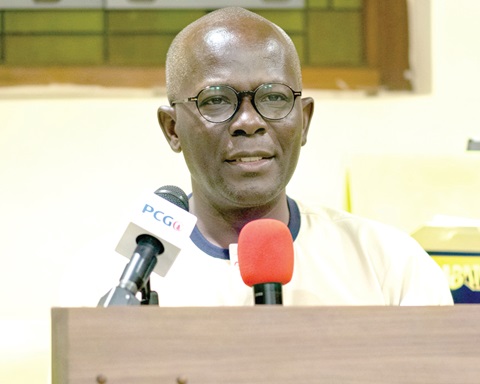
Christians, especially those of Ga descent, must embrace the Homowo Festival as part of cultural heritage and not be dismissed as pagan worship, the Rector of the Akrofi-Christaller Institute of Theology, Mission and Culture, Rev. Professor Philip Tetteh Laryea, has entreated.
“People think Homowo is part of pagan worship, but it is our culture and our way of life.
We do not throw these things away; we reinvent and redirect them,” he said.
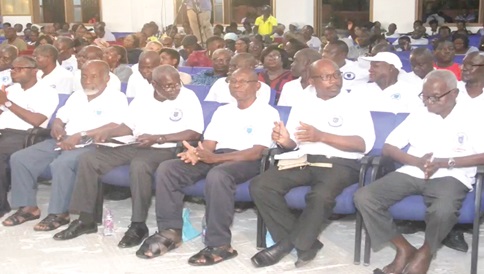
Rev. Prof. Laryea made the call at the 2026 Homowo Lecture held in Accra last Wednesday night.
The lecture was organised by the Presbyterian Church of Ghana’s Committee on Ecumenical and Social Relations in collaboration with the GaDangme Research Institute.
It was held on the theme: Hɔmɔwɔ, Ga Kusumi Kɛ Kristofɔi Ahɛŋmɔkɛyɛli: Afi Nyɔŋma Gbiijurɔyɛli (Celebrating Our Traditions: A Recap of 10 Years of Homowo Lecture), and marked 10 years of discussions on the relationship between Ga traditions and the Christian faith.
Cultural identity
Delivering the keynote lecture, Rev. Prof. Laryea said Homowo was primarily a cultural celebration that reflected the history, identity and values of the Ga people.
He explained that although the festival predated Christianity in the country and had traditionally involved indigenous religious practices, its cultural significance should not be discarded because of its origins.
“We should encourage the preservation of indigenous heritage in ways consistent with Christian values,” the Rector said.
He added that many traditional practices could be reinterpreted through the Christian faith, drawing parallels with Christmas and Easter, which he said had non-Christian origins before being adopted into Christian worship.
The theologian added that abandoning such traditions would erode the cultural identity of the Ga people.
Rev. Prof. Laryea also expressed concern that many Ga Christians were gradually losing touch with their heritage.
He urged them to cherish their indigenous names, explaining that Ga names conveyed family lineage, birth order and place of origin.
“A Ga name is an address. Once a child mentions his or her Ga name, people can often identify the family and community the child belongs to,” he said.
The Rector also identified six key values reflected in Homowo and other traditional festivals, including honouring community founders, cleansing communities, reconciliation, unity, thanksgiving and communal renewal.
Rev. Prof. Laryea said those principles promoted social cohesion and were consistent with Christian teachings.
“Some of these things are not evil in themselves.
They are values that have sustained our communities and should be preserved,” the theologian said.
Rev. Prof. Laryea further appealed for peaceful celebrations during this year's Homowo festivities, urging residents to resolve disputes and avoid violence to preserve the festival's reputation.
Homowo philosophy
For his part, a Minister and Lecturer at Trinity Theological Seminary, Rev. Dr Charles Amarkwei, said the central philosophy of Homowo, which is to overcome hunger through hard work and preparation, aligned with Christian values.
He explained that the Homowo Lecture series had helped many Christians to appreciate that they could celebrate the festival without compromising their beliefs.
Rev. Dr Amarkwei added that Christians should remember the good deeds of their ancestors as a source of inspiration but refrain from practices associated with ancestor veneration or the worship of deities.
“We should apply the principles of Homowo to modern life by working diligently, developing skills and creating opportunities to eliminate poverty,” he said.
The Homowo Lecture is an annual platform that promotes dialogue on the relationship between Ga culture and the Christian faith.
The 2026 edition marked the 10th anniversary of the initiative.
