
Stakeholders call for ethical, inclusive, digital skills development for youth
Stakeholders in youth development, digital innovation and agriculture have called for stronger collaboration, ethical frameworks and a shift in mindset to fully harness the potential of the country’s youthful population for national development.
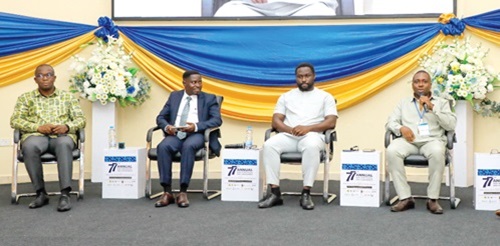
The call was made at a panel discussion on youth development opportunities, where speakers from academia, technology firms and development projects shared insights on skills training, artificial intelligence (AI), ethical digital practices and agribusiness as pathways for employment and growth.
The discussion last Wednesday was part of the series of activities to mark the 77th Annual New Year School and Conference (ANYSC) in Accra.
The conference was organised by the University of Ghana’s School of Continuing and Distance Education.
Involve youth
The Deputy Director for Programmes at the Digital Youth Village, Professor Simon Peter Kafui Aheto, said it was important to actively involve young people in planning and building the country they desired.
He stressed the importance of providing practical experiences for the youth, and the need to build on existing knowledge and avoid repeating past mistakes.
On ethics and AI in education, Prof. Aheto drew attention to international frameworks, particularly UNESCO’s guidelines on AI and the need to embed ethical considerations into teaching and learning.
He warned that while technological advancement was important, ethical behaviour in the digital space was critical, especially in an era where actions could easily be traced.
The Deputy Director for Programmes at the Digital Youth Village, however, revealed plans to digitalise indigenous games to create learning tools, revenue and employment opportunities, citing successes in countries such as South Africa and Nigeria.
Mindset shift
A representative of Adwumatech AI, Frank Acquaye, called for mindset shifts and basic technological understanding, adding that foundational concepts in AI should be prioritised before broader policy debates.
He explained that his organisation provided training for young people and undertook data annotation and mutation services for international technology firms, adding that plans were underway to build capacity in data engineering, data analysis and data science.
Mr Acquaye pointed out that Adwumatech AI was establishing a research unit to collaborate with local and international researchers with a focus on language translation.
He said the project was to move beyond text-based translation to audio translation, making AI solutions more relevant to everyday Ghanaian contexts such as markets and community health delivery.
One Million Coders
A representative of the One Million Coders Project, Fredrick Yeboah, said the initiative sought to train and equip one million young Ghanaians in digital innovation and entrepreneurship.
He said during the pilot programme last year, 1,000 people were trained in the Ashanti, Greater Accra and Upper East regions in areas such as AI, web programming, networking and business process outsourcing.
Mr Yeboah said there would be collaborations with global technology firms such as Google to train 300,000 people nationwide using public universities and their learning centres.
“We see universities are mostly in the regional capitals, so we are starting from the regional capitals, and then we send it to the districts,” he said.
Mr Yeboah said the programme would also train 1,000 instructors to deliver training to targeted beneficiaries.
AI framework
A Senior Lecturer at the University of Ghana Learning Centre in Cape Coast, Dr Hayford Ayerakwa, who is also with the Nkabom Project, stressed the need for basic infrastructure, advocacy and systems to mitigate the negative impacts of AI.
He stated challenges in rural schools, including the lack of electricity, but cited inspiring examples of young people teaching themselves coding despite the difficult conditions.
Dr Ayerakwa warned that without a national AI framework, the country risked being left behind as other countries invested heavily in AI infrastructure.
