
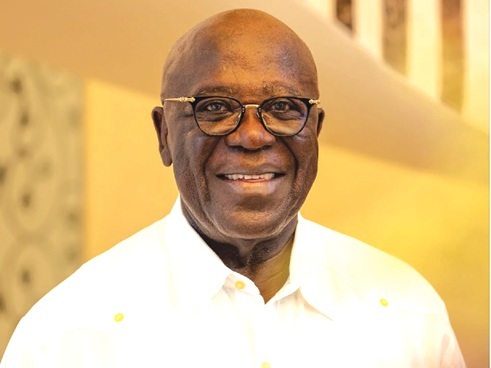
Renowned Ghanaian business executive, Sir Sam Jonah, has stressed that mistreatment of Africans investing on the continent can discourage businesses from investing across the continent.
He said incidents such as xenophobic attacks against Africans and sustained harassment of African-ownedinvestments by state agencies could also contribute to capital flight to financial centres such as London and Dubai.
He, therefore, called on African governments to protect African investors and workers as zealously as they courted foreign investors, warning that the success of the African Continental Free Trade Area (AfCFTA) depended on creating a safe and predictable environment for cross-border trade and investment.
Speaking at the Global Business Forum in Accra last Friday, the business executive stated that the experience had exposed the challenges that confronted African investors in other African countries.
Sir Sam alleged that his significant real estate investment in Nigeria had been subjected to sustained harassment by state agencies.
He explained that Ghanaian workers on the project had also endured treatment similar to the recent xenophobic attacks against Africans in South Africa, describing the experience as a threat to the growth of intra-African investment.
“I have made a significant investment in a real estate development in Nigeria, a country I hold in high regard and in whose promise I have long believed.
“That investment has been subjected to sustained harassment by state agencies.
Ghanaian workers on the site have endured treatment not dissimilar to the scenes we deplore in South Africa,” he said.
Background
The Global Business Forum (GBF) is a high-level platform that brings together government leaders, investors, CEOs, entrepreneurs and business professionals to promote trade and investment and create practical business opportunities.
The forum, held on the theme: “The world we help to create”, provided a platform for knowledge sharing, networking and discussions on the complexities of doing business globally, while promoting partnerships and the exchange of best practices.
It was attended by business executives, local and international entrepreneurs, investors and business leaders, with a focus on identifying new opportunities, expanding business networks and strengthening Ghana’s position as a global business hub.
Capital flight
Sir Sam, who was the keynote speaker, said the treatment meted out to African investors could undermine efforts to retain capital on the continent and deepen intra-African investment.
He explained that investors considered the business environment before committing their resources, and would naturally move their capital to jurisdictions where they felt more secure.
Sir Sam stated that African governments could not attract investment while creating conditions that made investors feel unwelcome in their own continent.
“When African capital is harassed in Africa, we should not wonder why it flees to London and Dubai,” he said.
He added that the challenge was not limited to large investors, but also affected young entrepreneurs who lacked the financial resources and networks to withstand prolonged regulatory or institutional difficulties.
Dr Jonah called on African governments to give African investors the same protection and attention they offered non-African investors.
He said a safe and predictable business environment was essential to encourage investors to commit capital across borders and to expand their operations.
Sir Sam explained that the success of AfCFTA would depend not only on trade policies but also on how African countries treated investors and workers from other member states.
“Governments must protect African investors and African workers as zealously as they court foreign ones,” he added.
Dr Jonah said AfCFTA faced a serious threat if member states failed to translate their commitments into practical action.
He explained that signing trade agreements alone could not create a functioning single market without efficient ports, reliable infrastructure, harmonised standards and effective payment systems.
Sir Sam stated that African countries needed to remove the barriers that continued to make it difficult for businesses to trade across borders.
“The AfCFTA has been signed. It must now be lived — in customs halls, in boardrooms, and in the daily choices of every procurement officer,” he said.
The business mogul added that African governments had to ensure that goods, services, capital and people could move more freely across the continent.
Competitiveness
Dr Jonah, a former Chief Executive Officer (CEO) of AngloGold Ashanti and Founder of private equity firm, JonahCapital, said African businesses also had a responsibility to make the continent’s single market work by becoming competitive enough to attract orders from fellow African countries.
He explained that businesses would always seek suppliers that offered the best combination of quality, price, reliability and efficiency, regardless of where they were located.
Sir Sam stated that African companies could not expect consumers and businesses to buy from them simply because they were African.
