
A new study by the Catholic Relief Services (CRS), in collaboration with the National Peace Council, has identified youth unemployment, poverty, weak governance and social exclusion as the major factors increasing the vulnerability of communities in northern Ghana to violent extremism, despite the country remaining largely peaceful.
The research, conducted across the five northern regions, found that 86 per cent of respondents identified youth unemployment as the single biggest driver of vulnerability to violent extremism, underscoring the strong connection between economic exclusion and insecurity.
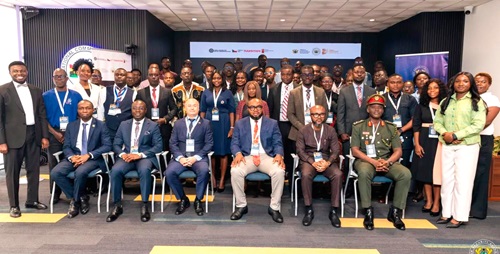
The findings were presented by the Head of the Department of Communication and Media Studies at the University for Development Studies (UDS), Professor Muhammed Abdulai, at a stakeholders' dissemination workshop in Bolgatanga last Wednesday, under the Prevention of Violent Extremism through Social Accountability (PoVETSA II) project, funded by the Netherlands Ministry of Foreign Affairs.
Findings
The mixed-methods study, carried out between May and June 2026, surveyed 845 respondents in 30 communities across 10 districts in the Northern, North East, Savannah, Upper East and Upper West regions.
It found that unemployment, corruption, poor governance, limited educational opportunities, substance abuse and peer pressure continued to expose many young people to extremist recruitment.
The study revealed that 72.1 per cent of respondents associated corruption and unfair treatment with violent extremism, while 66.5 per cent cited substance abuse and 60.4 per cent pointed to peer pressure as significant risk factors.
Researchers further established that 76.6 per cent believed unemployed young men were more likely to engage in risky behaviour, while 78.8 per cent of male respondents identified the lack of jobs as a major source of frustration and vulnerability.
Social media also emerged as a growing concern, with 51.6 per cent of respondents indicating that it influenced violent behaviour and 41.4 per cent acknowledging exposure to violent online content.
Local conflicts
Beyond economic hardships, the research identified unresolved land disputes, ethnic tensions and governance challenges as persistent sources of instability in many communities.
Women, Fulbe communities and other marginalised groups were found to suffer disproportionately from conflict, exclusion and limited participation in decision-making, even though women were recognised as effective informal peacebuilders.
The study described this situation as a "peacebuilding paradox", in which those playing key roles in preventing conflicts often have the least representation in formal peace structures.
Root causes
The PoVETSA II project Manager at CRS Ghana, Adelaide Yiriyelleh, said the findings demonstrated that preventing violent extremism required addressing the structural conditions that made communities vulnerable.
She said investing in young people, creating sustainable livelihoods, strengthening accountable governance and building trust between communities and state institutions were essential to preserving Ghana's peace.
She stressed that evidence-based interventions were needed to tackle the root causes of violent extremism before extremist groups could exploit existing vulnerabilities.
The Chairman of the Upper East Regional Peace Council, Alhaji Sumaila Issaka, called for stronger collaboration among government institutions, security agencies, civil society organisations, traditional authorities and local communities.
He said sustaining Ghana's peace required early dialogue, the prompt resolution of grievances and stronger trust between citizens and public institutions.
Recommendations
The researchers concluded that violent extremism in northern Ghana could not be explained by a single factor, stressing that coordinated interventions addressing livelihoods, governance, gender inequality and social cohesion would provide the strongest defence against future extremist threats.
The Upper East Regional Minister, Donatus Akamugri Atanga, said although Ghana had remained largely insulated from terrorist attacks, the country's proximity to the volatile Sahel required sustained vigilance and stronger collaboration among government, security agencies, traditional and religious authorities, civil society organisations and local communities to prevent violent extremism.
He urged stakeholders to treat the research as a strategic policy resource rather than merely another report, stressing that investing in youth employment, inclusive governance, women's empowerment and community resilience was more effective and less costly than responding to conflict after it had erupted.
