
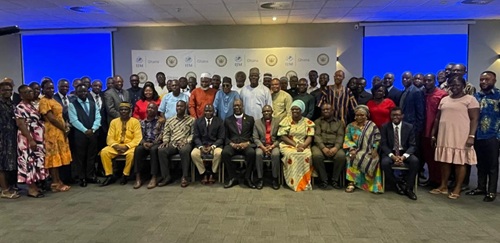
Religious leaders urged to support fight against human trafficking, child labour
The Ministry of Local Government, Chieftaincy and Religious Affairs is to integrate child protection measures into the performance assessment of Metropolitan, Municipal and District Assemblies (MMDAs) as part of efforts aimed at fighting human trafficking and child labour.
When it is implemented, the assemblies would be required to establish or strengthen holding facilities where rescued children could receive care, psychological support and preparation for reintegration into society.
The Sector Minister, Ahmed Ibrahim, said the inclusion of child protection indicators in the annual assessment of assemblies would serve as a marking scheme to ensure accountability and improved performance at the local level.
Meeting
The minister was speaking during a high-level meeting of Heads of Faith-Based Organisations organised by the Ministry of Local Government, Chieftaincy and Religious Affairs in collaboration with the International Justice Mission (IJM) in Accra last Thursday.
It was aimed at educating religious leaders on human trafficking issues and train them in ways they could use their influence to combat child trafficking, child labour and other forms of child abuse.
He pointed out that religious leaders, including pastors, imams and traditional authorities were often the first point of contact in communities when issues arose, placing them in a unique position to detect and respond to cases of abuse.
“There is no way something will happen within a community and these leaders will not be aware. We are calling on them to blow the whistle when necessary and use their pulpits to preach against these harmful practices,” he said.
Efforts
Mr Ibrahim acknowledged that while the country might not have fully eradicated child trafficking and labour, significant progress had been made over the years, expressing optimism that continued collaboration would yield greater results.
He urged religious leaders to continuously preach against child exploitation, promote children’s rights and encourage families to prioritise education and proper care.
Collaboration, vigilance
The National Director of Advocacy and Partnerships at IJM, Worlanyi Kojo Foster, stated that despite the strong religious presence in the country, cases of child labour and trafficking persisted, indicating a gap in awareness and engagement within faith communities.
He pointed out successful collaborations with churches such as the Presbyterian Church of Ghana, to train various groups within its structure, urging all faith-based organisations to adopt similar approaches and work closely with government agencies to implement proactive measures to fight against trafficking and child exploitation in communities.
The Head of the Anti-Human Trafficking Unit of the Ghana Police Service, Superintendent William Ayariga, and a Board Member, AU Advisory Board Against Corruption, Edem Senanu, called for a united front to fight against human trafficking.
A survivor of human trafficking, Dobey Godwin, called on parents and caregivers to be vigilant and also follow up on their children and wards when they left them in the care of others to prevent them from being trafficked.
