
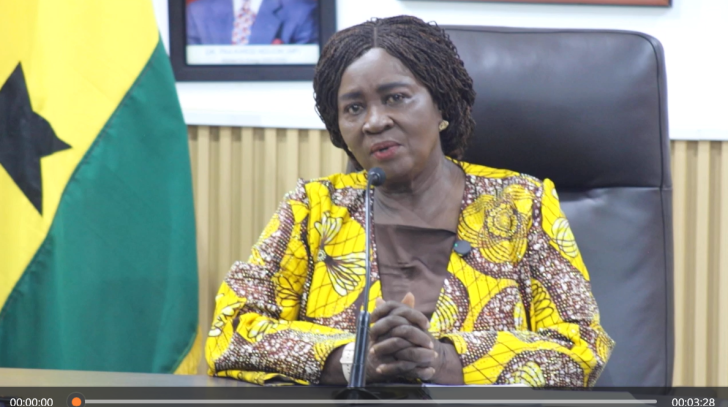
Vice President Prof. Jane Naana Opoku Agyemang has called for urgent and sustainable solutions to the growing number of colonial-era land compensation claims against the state, warning that the potential financial exposure could put severe pressure on public resources.
She made the call during a visit to the Ministry of Justice in Accra on February 5, 2026, where the Attorney General briefed her on the scale of land compensation cases currently before the courts.
“Some claims are as much as 500 million Ghana cedis,” the Attorney General said, adding that the cumulative liabilities could run into billions of cedis. “These are historic claims, dating back to colonial times, and the courts have consistently ruled in favour of the claimants.”
Prof. Opoku Agyemang described the situation as serious and stressed the need for practical and lasting responses to the growing claims burden.
“We need to find ways of dealing with these claims, find different ways of compensation should that be necessary. We rely on you to advise us on what is workable, practical and enduring,” she said.
She noted that the issue had broad national implications, warning that escalating compensation payments could divert scarce funds away from infrastructure development, social services and other critical public programmes.
The Vice President therefore urged stronger collaboration among state institutions to safeguard public finances while ensuring that legitimate claims are handled fairly and responsibly.
The Attorney General, Dominic Ayine, outlined some of the challenges confronting the Ministry, including funding and staffing gaps, particularly in the newly created regions, which he said could hamper efforts to effectively manage the cases.
He added that adequate resourcing, together with legislative and administrative measures, would be required to prevent a long-term strain on the state.
Prof. Opoku Agyemang emphasised that any decisions taken must be legally sound and practically workable to avoid burdening future administrations.
“Regardless of who initiated them, it is still about the country. We have to be careful so that we don’t leave legacies that trouble those who follow us,” she said.
The visit formed part of the Vice President’s broader tour of ministries to engage staff, assess operational challenges and strengthen coordination across government sectors.
