
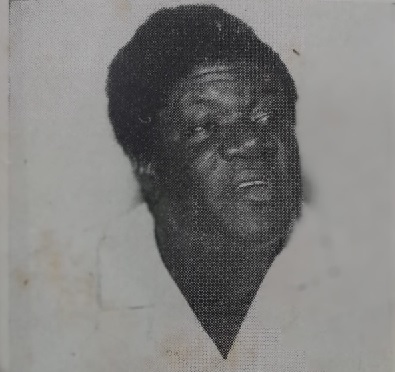
The Ohene Djan story - Ken Bediako writes
Ace Radio Sports journalist Dan Kwaku Yeboah has produced a short documentary on Ohene Djan, Ghana's legendary sports administrator of international repute. I have watched the video and it is worth the attention of all true lovers of the nation's sports history.
I had a chat with Kwaku in the course of his duty and he was visibly upset, like me, that Accra Stadium named after Ohene Djan in 2004 has been unceremoniously
scrapped.
Unconfirmed reports said some hoodlums, reportedly with the support of some faceless power brokers destroyed the Ohene Djan Stadium signboard and that was the end. To my mind this doesn’t make sense.
I have kept reminding those in charge of our sports that the naming of sports facilities after outstanding personalities was a government approved national exercise in 2004 by the Kufuor administration.
A whole committee of knowledgeable sports historians headed by the late Dr Owusu Ansah produced a comprehensive report in ten months detailing who and how to recognize Ghana’s outstanding sports personalities. Baba Yara Stadium,
Theodosia Okoh Hockey Stadium, Azumah Nelson Sports Complex all resulted from the work of the Committee inaugurated by Kwadwo Baah Wiredu then Minister in charge of Sports.
If continuity means much to the Sports Ministry as an entity it may be prudent to alert the current Sports Minister Kofi Iddi Adams who recently inaugurated the Ghana Sports Fund Board to search for the report of the Committee to recognise outstanding sports personalities set up by the late predecessor Kwadwo Baah Wiredu.
Mr Iddi Adams may not need to go too far. Yours truly was an active member of the committee and has a copy of the report.
As Dan Kwaku Yeboah’s documentary would portray, Ohene Djan was a perfect administrator in all sports disciplines. Admittedly football was his favourite. He was Executive secretary of GFA and executive member of both CAF and FIFA.
Ohene Djan a trained school teacher, farmer and cocoa broker loved football to the hilt.
He also had a flair for writing and usually contributed articles for Graphic sports under a synonym. This explains why we were that close.
As a 23-year-old junior reporter at the Daily Graphic in 1964, he tasked me to do a lot of research work for his authoritative book "A short History of Soccer in Ghana and "The Rise of The Black Star Xl" which was edited by Nana Akufo-Addo then student at University of Ghana.
For the benefit of the younger generation, I will start producing occasionally the history of Ghana football as told by the colossus whose full name is KWABENA OHENE DJAN, a Royal from Aburi Akuapem. Here we go
"BIRTH OF GHANA FOOTBALL
History has eloquently recorded the great pioneering service rendered to Ghana from Cape Coast, the cradle of the country's education and the former seat of our government. Cape Coast was also the birthplace of Ghana football.
Contrary to popular belief Accra Hearts of Oak is not the first premier club of Ghana, it is only the oldest existing club. It is now authentically revealed that the first football club formed in Ghana and which marked the birth of football in the country was the Cape Coast Excelsior in 1903.
The students of the local Govt Boys school were already sports conscious and under the headmastership of a Jamaican sportsman called simply Master Briton, Cricket and Lawn Tennis were enjoying tremendous popularity in the school.
The enthusiasm with which the students followed sports was fantastic. It was therefore natural that the interesting origin of Ghana football should be associated with pupils of this school.
Few foreign newspapers were in circulation in Ghana and the enthusiastic students became fascinated and thrilled about a didactic account of football they read from an English newspaper in 1903.
With understandable anxiety they decided to play it.
Enjoying warm encouragement and patronage from Headmaster Briton a group of 22 keen pupils of the Cape Coast Boys Govt School and a few excited youngsters from the twin embarked upon a secret training course in footballing.
Enthusiasm and commonsense were their coaches and Master Briton played the role of a team manager. Secretly and energetically the Oguaa boys trained.
Wishing to take the whole of the country and West Africa by surprise, it was believed that the game had not been played anywhere in West Africa previously- the young lads played mostly in the night when the full moon was on at the Victoria Park then a well kept place for ceremonies.
Impressed and enthused by their own progress the group of soccer pioneers arranged and ordered some equipment jerseys (red and yellow stripes) white long running shorts pairs of hoses football boots and caps.
The first football used by the pioneers were gifts from friendly sailors who docked regularly at Cape Coast ports.
Most of the sailors who landed ashore were keen sportsmen and played games regularly with the Governor of the country and other European civil servants who abounded in the capital.
The happy band of football adventurists continued with their secret training and after three months planned a grand outdoor ceremony at the Victoria park.
Accordingly Cape Coast Victoria Park was lined and marked. Goal posts were fixed and the first football pitch in Ghana
was thus created.
With high Government officials present, the first two teams from the first football clubs in the country put in appearance to introduce the game to the country although the game was played outside any existing code the excited crowd yelled and thoroughly enjoyed themselves as they watched 22 youngsters running around and kicking a spherical object. It was a fitting baptism and the occasion was graced with the presence of the then Governor of the country Sir Frederic Hodgson himself a keen sportsman.
It is significant to note that Excelsior played in boots from the very day they introduced football into the country.
Excelsior received a warm reception and urged by the general public and Governor Sir Frederic, the Oguaa boys married themselves to a dedicated training programme and soon their fame soared beyond the boundaries of the capital.
Excelsior having mastered the rudiments of the game, Sir Frederic arranged for them to play their first challenge match against a European side comprising Sailors from a ship which had docked at Cape Coast port and some Europeans resident in Cape Coast.
The match which was played on Boxing Day (Dec 26) 1903 was full of excitement and Excelsior were initiated with an encouraging 1-2 defeat.
By popular request a return game was arranged and Excelsior excelled winning by 3-1 they earned a sweet vengeance. Football had really been born in Ghana.
Regular friendly fixtures were arranged for Excelsior and white civil servants in Cape Coast. Ships docking at Oguaa harbour supplied at frequent intervals Sailor teams who also played with the pioneer team of Ghana. This exercise enabled Excelsior to improve by leaps and bounds.
The early matches were officiated by Europeans but in 1905 a few Africans studied the laws of the game and began to handle matches.
The game quickly captured the fancy of the youth in Cape Coast and like mushrooms clubs sprang up in the town.
When the game of football was introduced travelling in the country was mostly on foot and so the football gospel did not travel fast After playing for several months Excelsior however moved to nearby towns and played demonstration games.
These evangelical crusades proved extremely popular and successful and within a matter of months the new game was being played with amazing skill at Elmina Saltpond and Winneba.
Cape Coast the original home of Ghana football dominated local football until the middle 40s.
Clubs were formed and reformed Evertons, Blanksons Xl Energetics, Sparts, Swallows, Rose Xl, Bolton Wonderers, Judges, Gardens, Titanics and Majestics have all faded away but today Venomous Vipers and Mysterious Dwarfs have sprang up from their debris to uphold the proud tradition of Cape Coast football.”
The name of Ghana's legendary sports administrator, Ohene Djan, cannot be easily forgotten when the history of the world's outstanding sports personalities are being immortalised.
Strangely enough, some faceless power brokers in this country, who most probably have no sense of humour, are determined to erase from history, the glorious achievements of this great sports personality of international repute.
How and why the Accra Sports Stadium named after this fabulous Ohene Djan 20 years ago was mysteriously erased will continue to baffle the sporting fraternity.
It is however, heart warming a group of well meaning sports journalists, led by Dan Kwaku Yeboah of Peace FM fame, are crusading for the restoration of OHENE DJAN SPORTS STADIUM in the capital city.
As promised, yours truly backs this crusade to restore the honour done Ohene Djan who was also a good writer and sports historian.
I will endeavour to serialise Ohene Djan's recollections of the history of Ghana football published in 1964 and edited by Nana Addo Dankwa Akufo-Addo then student at University of Ghana who would be President of Ghana in 2017.
From the BIRTH OF GHANA FOOTBALL last week, the focus today is - FOOTBALL IN THE WEST.
Lying in close proximity to Cape Coast the birthplace of Ghana football, exciting and sterling stories of the new game gradually travelled through traders and fishermen to Sekondi Takoradi.
Meanwhile, school boys going home on holidays thrilled and fascinated the population of Sekondi/Takoradi with "grand" exhibition of football matches.
With the aid and encouragement of their headmasters, the game quickly assumed disproportionate popularity in the local schools of Methodist, Roman Catholic, and English Church Mission, Vivacious port workers at Sekondi also were the first ardent students of the game.
But real football life in the Sekondi/Takoradi area started with the construction of the railway line no wonder the cream of the players was centred in the railway workshops.
The formation of a powerful non-departmental team, Eleven Wise in 1919, marked the beginning of a distinct football era.
In Sekondi/Takodadi area. Mosquitoes,Western Wanderers, Jerricho, Railway Apprentices and Ga United were some of the great clubs which sprang into existence by the end of the second decade of the 20th century.
Football became the crazy sport in the cosmopolitan town of Sekondi/Takoradi and the need to control and organise the sport became imperative.
In 1925 Mr Sunner Wilson, District Commissioner of Sekondi/Takoradi formed a District Football Association, which later developed and expanded into the Western Region Football Association.
Mr Sunner Wilson the founder, became its first chairman and a senior clerk from his office was appointed to the post of secretary.
The District Commissioner, Mr Wilson, was only a pioneer apostle concerned with the laying of the foundation for the Association and as soon as this was accomplished he handed over the affairs and administration of the Association to representatives of the clubs.
Sir Tachie Menson who was better known as chairman of the Public Services Commission, had the distinction of becoming its first elected chairman. Sir Charles represented the Eleven Wise Football Club.
The year 1925 also saw the birth of Fante United Football Club which later reforned into Hasaacas and became two formidable clubs in the Region. The Tachie Menson administration quickly settled down to business and organised local league and knockout competitions.
The Railway Apprentices Football Club was the nost fearsome and dominated the early competitions.
Football was flourishing at this stage in all the big towns and municipalites and the need to look beyond their area boundaries for exploits dawned upon the members of the Sekondi Football Association.
Contacts were quickly established with Tarkwa a mining town harbouring adventurous youth who loved the crazy sport exceedingly. Cape Coast, Saltpond Accra and Kumasi also gained football in contacts with Sekondi/Takoradi.
In 1926 Sekondi Takoradi played her first inter district match against Accra in the capital city. This game which ended in a 3-0 triumph for Accra was played on the Accra Government school pitch.
The return match which was played in Sekondi was another success for Accra Eleven but on this occasion it was a close 2-1 affair.
Football continued to progress in Sekondi at an alarming rate and it was not accidental that in the 1937 special inter provincial coronation football competition Sekondi/Takoradi were the runners up losing to Accra by a lone goal.
1938 was a proud year of sweet vengeance for Sekondi/Takoradi for they met and licked Accra Eleven in a match played in Elmina For winning this matçh Sekondi/ Takoradi received a cash reward of 100 pounds sterling and Accra Eleven, the losers, had a brand new football.
From 1940 to 1957 the Sekondi Takoradi District Football Association passed through the throes of administrative difficulties with concommittant regular changes in leadership.
When Mr Kodwin succeeded Mr Dadzie as chairman in 1957 the administration became more stable and the regional expansion exercise was completed. A powerful regional association embracing all the towns and districts in the Western Region was organised.
The Kodwin regime became the most faithful arm if Richard Akwei's central administration and remained absolutely loyal during the glorious refomation of 1957.
Pursuing a policy of unquestionable loyalty to constituted authority the Western Region quickly joined forces with the reformers after they had been recognized by the Ghana Amateur Sports Council in 1958.
