
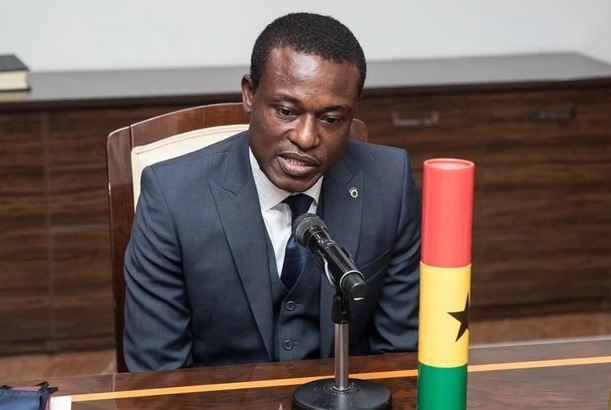
Whether or not OSP has power to prosecute; Supreme Court permits 14 CSOs to join suit
The Supreme Court has given 14 civil society organisations (CSOs) the greenlight to join the suit challenging the constitutionality of the Office of the Special Prosecutor (OSP’s) and its power to conduct prosecutions.
The motion for leave to join as amicus curie was granted by a seven-member panel of the apex court today (May 19, 2026) after their lawyer, Kizito Beyuo demonstrated that the CSOs were instrumental in the creation of the OSP and had expert knowledge that could help the court to determine the issues before it.
The CSOs are the Transparency International Ghana, Ghana Anti-Corruption Coalition, Ghana Centre for Democratic Development (CDD-Ghana), IMANI Africa, Democracy Hub, STAR-Ghana Foundation, NORSAAC, Penplusbytes, ACEP, Odekro, A Rocha Ghana, Parliamentary Network Africa, One Ghana Movement, and Africa Education Watch.
They have been given 14 days to file their processes.
Suit
On December 12, 2025, one Noah Ephraim Tetteh Adamtey invoked the exclusive original jurisdiction of the Supreme Court to interpret the constitution by filing a suit for the court to declare the exercise of prosecutorial powers by the OSP as unconstitutional.
He is seeking, among other reliefs, a declaration that the OSP Act, 2017 (Act 959) is unconstitutional to the extent that it confers “original or insulated prosecutorial authority on the Office of the Special Prosecutor, is inconsistent and in contravention of Articles 1(2), 88(3), (4), 93 (2) and 296 of the Constitution and is, therefore, null, void and of no effect”.
Again, he is seeking a declaration that “sections 3(3) and 4 of Act 959, in purporting to make the Office of the Special Prosecutor independent of the Attorney-General in the initiation, conduct and termination of prosecutions, violate the Constitution.”
- Related articles
- High Court rules OSP cannot prosecute cases in Ghana
- OSP unfazed by power to prosecute ruling
- Stop the infighting: OSP-AG feud is a costly distraction
- More OSP cases suffer adjournments
- Abolishing OSP, what a shame
- Fate of OSP, future of anti-corruption mandate
A-G's position
In his draft statement of case, the A-Gs argues that Article 88 (3) of the 1992 Constitution solely vests prosecutorial powers in the A-G alone, and therefore Parliament acted unconstitutionally by passing the OSP Act, 2017 (Act 959), which made it compulsory for the A-G to delegate part of its prosecutorial powers to the OSP.
Article 88 (3) of the 1992 Constitution stipulates that “The Attorney-General shall be responsible for the initiation and conduct of all prosecutions of criminal cases”, while Article 88 (4) provides that: “All offences prosecuted in the name of the Republic of Ghana shall be at the suit of the Attorney-General or any person authorised by him in accordance with law”.
Again, the A-G contends that Act 959 has unconstitutionally varied the prosecutorial powers of the OSP in many ways.
“First, it compels the Attorney-General to abandon its constitutional duty to be responsible for the prosecution of all criminal offences—he is, by the terms of the Act, now only responsible for the prosecution of offences which the OSP is not prosecuting.
