
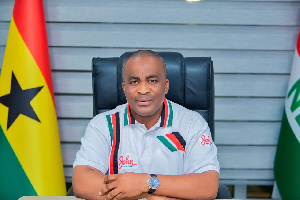
As the conversation around Emmanuel Nii Ashie Moore's leadership continues, party insiders and political analysts are now focusing on what happens after the ballots are counted. His tenure, they argue, is not just about winning seats — it is about building institutions that outlast any single election cycle.
1. Institutionalising the 'Road Map' for future wins
Ashie Moore's biggest legacy may be the systems he put in place. The regional collation centres he championed are now permanent structures, trained and ready for 2028. Instead of scrambling every election year, Greater Accra now has a tested "war room" model: data rooms in each constituency, trained IT officers, and real-time results transmission protocols.
2. Youth and women as the new face of NDC in Accra
Beyond logistics, Ashie Moore made deliberate investments in human capital. Under his "Accra Youth in Politics" drive, more than 2,000 young comrades were trained in digital campaigning, community organising and public speaking. Women's wings across the 34 constituencies received targeted support for micro-business grants and leadership training. The result: Greater Accra now fields the highest number of female parliamentary candidates and youth organisers in the NDC.
3. From orphan constituencies to competitive battlegrounds
The GH¢729,000 dues payment for 10,000 branch executives was more than welfare — it was strategy. Constituencies like Ayawaso West Wuogon, Okaikwei Central and Ablekuma West, once written off as "orphans," saw branch membership jump by 40 to 60 per cent. By 2024, three of those constituencies recorded their closest margins ever. Party strategists say those seats are now "in play" for 2028, directly because the branch structures stayed alive between elections.
4. The 'Road Master' philosophy: Followership with accountability
The nicknames "Follow Who Know Road" and "The Road Master" stuck because Ashie Moore combined vision with accessibility. Monthly "Chairman Meets the Base" town halls, constituency tours without media fanfare, and an open-door policy at the regional office made him one of the most accessible regional chairmen in NDC history. For grassroots members, that accessibility translated to trust — and trust translated to turnout.
5. What it means for the NDC nationally
Political observers note that Greater Accra's model is now being studied by other regions. The formula is simple but hard to execute: invest in branches before election year, reward performance not loyalty alone, and treat collation as seriously as campaigning. With Greater Accra contributing more than 16 per cent of national parliamentary seats, Ashie Moore's "organisational drive" is now seen as a blueprint for how the NDC can turn Ghana's most volatile region into its most reliable base.
The road ahead
As 2028 approaches, the question is no longer whether Ashie Moore can deliver seats. It is whether the road he built can carry the next generation of NDC leaders to even greater gains. For many comrades in Accra, the answer is already clear: "When Ashie Moore shows you the road, you follow — because the road leads to victory."
