
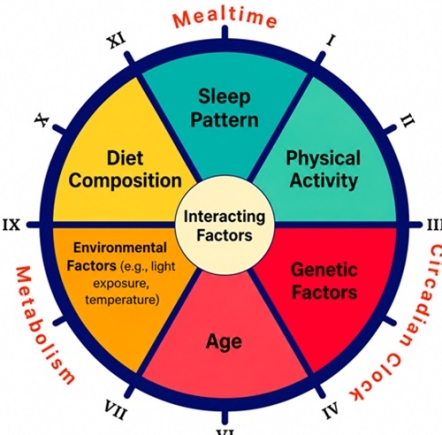
Many people dismiss this as a diet myth, but growing scientific evidence shows that when we eat, it is just as important as what we eat.
This idea forms the basis of chrononutrition, a field that explains how meal timing influences our metabolism, weight and risk of chronic diseases such as obesity and diabetes.
The body operates on a natural 24-hour schedule known as the circadian rhythm.
This internal clock regulates sleep, hormone release, body temperature and how energy from food is used.
While the body’s main clock is in the brain, several smaller clocks exist in the liver, stomach, pancreas and fat tissue.
These peripheral clocks are influenced strongly by the timing of our meals.
These smaller clocks are strongly affected by mealtimes. When food is consumed at the right time, mostly during the day, these clocks work smoothly.
But when food is consumed very late at night, or the eating schedule is constantly changed, these clocks get confused.
This is called circadian misalignment and can harm our metabolism.
Late eating becoming very common.
Modern lifestyles have shifted traditional eating patterns.
Many people, particularly in urban settings, now eat over long periods, from early morning until late at night.
Research shows that more than 80 per cent of adults eat through a window for 14 hours or more each day.
Busy routines mean that many students, office workers, traders and artisans often skip breakfast, have a rushed lunch and eat their heaviest meal after 7 pm.
Night-shift workers are especially affected.
The widespread use of screens (television, computers, phones) late at night also contributes to late-night snacking.
These habits encourage eating at times when the body is preparing for rest, not digestion.
As a result, food is handled less efficiently.
What happens when we eat late at night?
Research consistently shows that late eating has several harmful effects on metabolism:
• Increases hunger hormones, leading to overeating
• Reduces the amount of energy that is burned
• Slightly lowers body temperature
• Raises blood sugar levels
• Slows fat burning
• Promotes fat storage
This change means that even if the same quantity of food is consumed, eating late can still increase weight gain and raise the risk of type 2 diabetes.
For example, one study found that eating dinner at 9 p.m. caused significantly higher blood sugar levels compared to eating the same meal at 6 p.m.
Another study reported that individuals who ate late burned less fat the following morning.
These findings are especially concerning for Ghana, where undernutrition coexists with rising rates of obesity and diabetes and other diet-related health problems are prevalent.
Over the last two decades, the prevalence of diabetes in Ghana has tripled and overweight and obesity now affect at least 43 per cent of the urban population.
Late-night eating may be contributing to these trends.
Why early eating works better
During the morning and afternoon, the body’s metabolism is naturally more active. Insulin works more efficiently, more calories are burned and energy use is optimised.
Eating a larger proportion of daily food earlier in the day helps maintain stable blood sugar and supports healthy weight control.
A popular dietary approach based on this idea is Time Restricted Eating (TRE).
This involves limiting meals to an 8–10 hour window, for example, between 8 a.m. and 4 p.m. or 10 a.m. and 6 p.m.
Research shows that this simple change can reduce body weight, lower blood pressure, reduce blood sugar and improve insulin sensitivity.
An even more effective variation is Early Time Restricted Eating (eTRE), which places all meals earlier in the day to align better with the body’s metabolic rhythms.
Better choices for evening meals
Foods consumed in the evening should be light and low in fat. Good choices include:
• Vegetables and legumes
• Low-fat proteins such as grilled fish, chicken or tofu
• Foods rich in melatonin such as unpolished rice (brown, basmati), wheat, oats, nuts, tomatoes, strawberries, grapes, pepper, eggs, oily fish (mackerel), cow milk, mushrooms, black and white mustard, fenugreek, cardamom, black pepper, fennel seeds, germinated legumes or seeds and coffee beans.
• Foods rich in magnesium, like legumes, dark green leafy vegetables, nuts, seeds, whole grains, fortified cereals, lean meats and dark chocolate (70%).
• Caffeine-free herbal teas
Simple tips for healthy eating timing
• Eat more of your daily food earlier in the day.
• Keep meals within an eight to 10-hour eating window.
• Stop eating two to three hours before bedtime.
• Maintain consistent mealtimes each day.
• Choose lighter or less oily foods if eating in the evening.
Conclusion
Eating according to the body’s natural clock can significantly improve overall health.
It does not require special foods or complicated diets; only mindful attention to timing.
People with irregular schedules, such as shift workers, face higher health risks and may need personalised guidance.
For more information, consult the Ghana Food-Based Dietary Guidelines or speak with a registered dietician or nutritionist.
Department of Dietetics,
School of Biomedical and Allied Health Sciences,
University of Ghana.
