
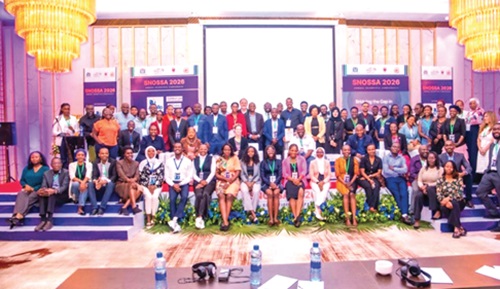
In July last month, 350 medics involved in brain and spinal cord tumour care gathered near the beach in Dar es Salaam, at the Johari Rotana.
The objective was clear: how do we collaborate to reduce the burden of brain and spinal cord tumours in Sub-Saharan Africa?
It was an engaging three days, and as we rounded up, there was a lot of food for thought.
There were some things to celebrate, such as the fact that this was the ninth year this meeting has happened.
Nine times in nine years is no mean feat in Africa, where intracontinental travel can be so burdensome.
Next year will be the 10th anniversary of the Society for Neuro oncology Sub-Saharan Africa, and change has been gradual, but positive.
Cutting edge science
It was a fantastic mix of cutting-edge science from high-income environments, to innovation from struggling medics in limited resource hospitals dotted around our sub-region.
There was a common theme: people are not lying down and rolling over under the scourge of the worsening prevalence of neuro-oncological disease.
They are fighting back, even in the worst of circumstances.
The sorrow ranged from the personal experiences of brain tumour patients, to the battles of carers and advocates, through to the daily battles of medical and surgical teams and the research exploits of scientists who wage the war with their test tubes and micro-pipettes.
Burden of disease
There were smiles, a lot of laughter and also some tears. Battles were described in vivid detail.
The hard-won victories of improved care in some hospitals on the continent were reflected in many presentations.
All over the continent, battles are being won against Neuro oncology, even if the scourge of cancer still piles up its own painful victories against the carers.
Africa still has the lowest number of specialised carers per capita of all the continents, and the fastest-growing burden of disease.
In every sector of the fight against brain and spinal cord tumours, we are underfunded, under-motivated and overstretched.
Investment in diagnosis
It was refreshing to have the Vice-President of Tanzania, Dr Emmanuel Nchimbi, open the conference with updates of great strides being made by the government as it increased investment in diagnosis, detection and treatment capacity across the board in multiple centres in the country.
This is a pattern that should be replicated across the continent.
The health challenge of Africa is no longer as much infectious disease as it is non-communicable conditions.
Cancer, diabetes, cerebral and cardiovascular disease are the big boys on the block, and they do not respond to helicopter strategies funded by donor money.
If the battle must be fought, it can only be won with information.
The kind that can only be garnered through consistent commitment to research and scientific implementation of governmental health policies.
Only this level of data mining can leverage multidisciplinary solutions needed for African specialty health problems.
In this special place in Africa, which is so close to all the archaeological findings of our beginnings as a human race, it was interesting to ask questions about the future.
We were geographically so close to the first footprints of mankind on earth all those tens of thousands of years ago.
Maybe this was a good place to ask.
And it looks like the cross-continental consensus and collaboration that Nyerere pushed for all those decades ago might be exactly what we need to win the brain and spinal cord tumour war.
I think SNOSSA 2026 asked all the right questions.
