
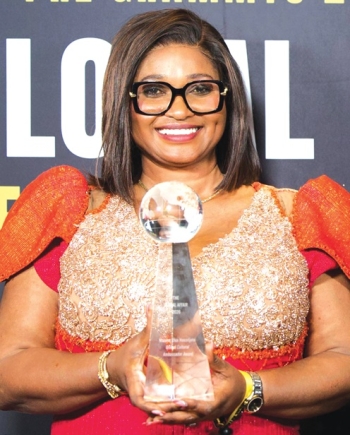
Then Marilyn Maame Efua Sekyi-Aidoo Houadjeto assumed office as the Chief Executive Officer (CEO) of the Ghana Tourism Authority (GTA) in January 2025, she stepped into a sector rich in promise but burdened by familiar constraints.
Ghana’s tourism story was globally appealing, yet often episodic – marked by moments of attention rather than sustained, system-driven growth.
Twelve months on, it is still too early for sweeping conclusions. But it is not too early to take stock of leadership approach, strategic direction and early signals of change. In that regard, the past year provides sufficient material for a measured assessment.
A confident start, tested early
One of the earliest and most visible tests of Maame Efua’s leadership came with December in Ghana 2025.
Ahead of the season, there were doubts in some quarters about delivery, coordination and Ghana’s ability to sustain momentum in an increasingly crowded global festive calendar.
December did not resolve every structural challenge, but it did what mattered most – it held.
The season unfolded with clearer national framing, stronger inter-agency coordination and a greater sense of stewardship. Rather than chasing novelty, the focus was on alignment – supporting private initiative, improving organisation and projecting confidence.
As an entry point into her first year, December served its purpose.
It demonstrated calm leadership under pressure and reinforced the importance of coordination over spectacle.
From episodes to a framework
Ghana’s cultural tourism journey did not begin in 2025. PANAFEST and Emancipation anchored the country’s moral connection to the African diaspora.
The Joseph Project sought to bridge memory and enterprise.
The Year of Return proved global demand at scale, while Beyond the Return attempted to extend that engagement beyond commemoration.
What Maame Efua Houadjeto has brought to this continuum is a push for coherence.
Through the Black Star Experience, her leadership has emphasised consolidation rather than constant reinvention.
The intent has been to align festivals, heritage, cuisine, fashion, music, sport and creative enterprise into a clearer national tourism framework – one that visitors can understand and investors can engage with.
This represents a shift from episodic celebration to a more structured cultural economy, where culture is treated not as an ornament, but as a strategic asset.
Activity, not noise
Beyond headline seasons, the Ghana Tourism Authority under her leadership has been visibly active across multiple fronts.
Heritage Month programming, culinary showcases, creative and cultural activations, sports-linked engagements and international tourism platforms have all featured during the year.
What stands out is not the volume of activity, but the attempt to connect it.
Domestic engagement has been prioritised alongside international promotion.
Diaspora-focused initiatives have become more closely aligned with national tourism objectives.
There has been deliberate collaboration with creatives, traditional authorities, hospitality operators and regional stakeholders.
Internally, attention to stakeholder engagement and institutional coordination suggests recognition that tourism growth depends as much on systems and people as on promotion.
Service, product and professionalism
A quieter but important theme of the year has been the growing emphasis on service orientation and professionalism.
In a competitive global market, destinations are judged not only by their assets but by the consistency of experience.
Early efforts at capacity-building, standards engagement and sector dialogue point to an understanding that visitor satisfaction, trust and value for money are central to long-term competitiveness.
Product expansion – from culinary and heritage tourism to sports and creative tourism – has also been more deliberately framed as part of a broader mix rather than standalone attractions.
MICE tourism has also become more prominent in strategic planning.
While still developing, Ghana's positioning as a potential regional destination for meetings, conferences and exhibitions reflects a more business-minded view of tourism’s role in the wider economy.
Leadership in partnership
It would be inaccurate to frame the past year as a solo effort. Progress has been underpinned by collaboration with the Ministry of Tourism, Culture and Creative Arts, led by Madam Abla Dzifa Gomashie; the Black Star Experience Secretariat; the Diaspora Affairs Office and other public and private stakeholders.
That collaborative posture has also shaped Ghana’s international engagement.
Maame Efua’s recent recognition as a Global Cultural Ambassador at a Pre-Grammy Ceremony in Los Angeles was less about personal acclaim and more about the visibility of Ghana’s cultural positioning on a global stage.
Awards do not substitute for delivery, but they do reflect perception.
The unfinished business
An honest one-year review must acknowledge what remains unresolved. Infrastructure gaps, uneven service quality, pricing pressures, limited data integration and the concentration of tourism activity around peak periods persist.
These challenges predate the current leadership and will require time, investment and coordination to address.
What the first year has established, however, is tone and trajectory.
Expectations for the years ahead
As Maame Efua Houadjeto moves beyond her first year, expectations will sharpen and become more transactional.
There will be pressure to increase international arrivals and tourism receipts, converting cultural appeal into sustained growth and higher visitor spend.
Destination promotion must be prioritised in key markets and supported by product readiness.
Domestic tourism promotion will need to be more aggressively pursued as a stabiliser of the sector and a driver of regional inclusion.
MICE tourism must shift from promise to performance, delivering tangible wins that reduce seasonality and link tourism to trade and investment.
Alongside these, improvements in service quality, product depth and regional spread will increasingly define success.
The first year has been about alignment and intent.
The years ahead will be judged by delivery and impact.
That is the natural progression of leadership – and the real test still lies ahead.
