
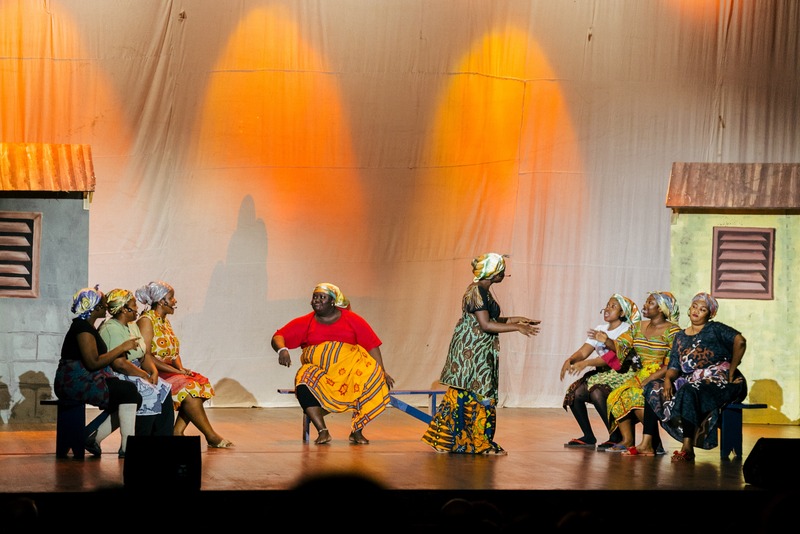
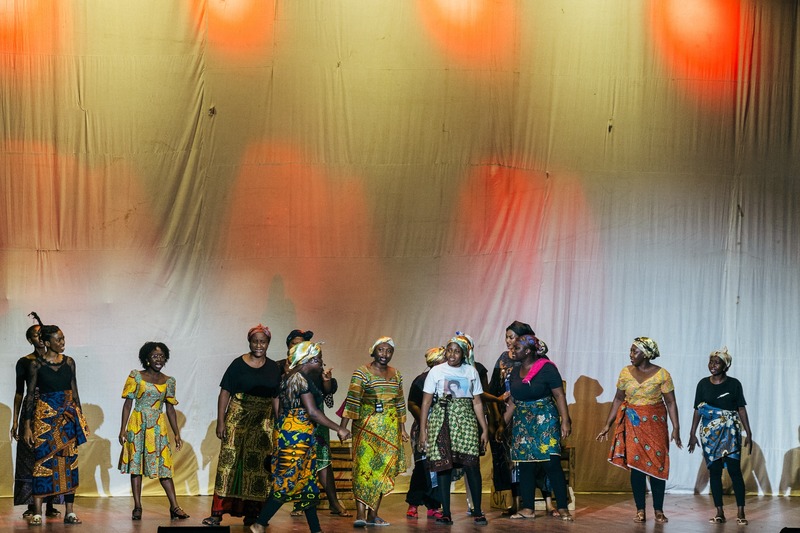
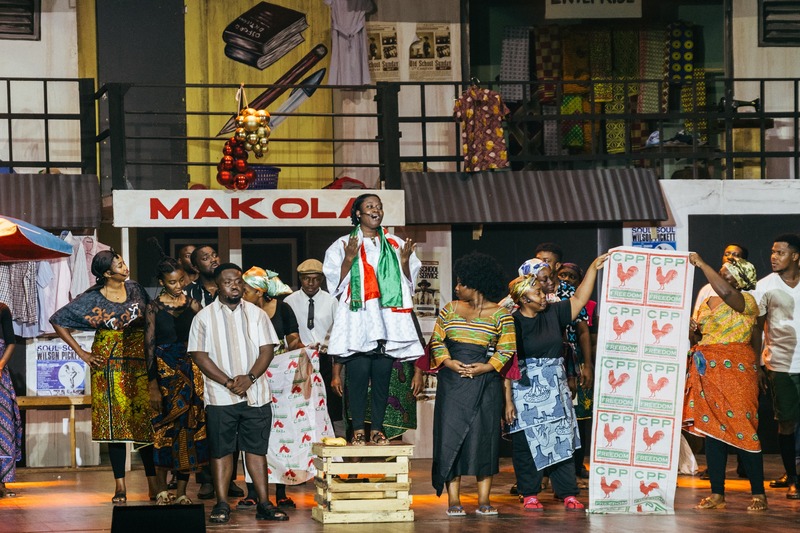
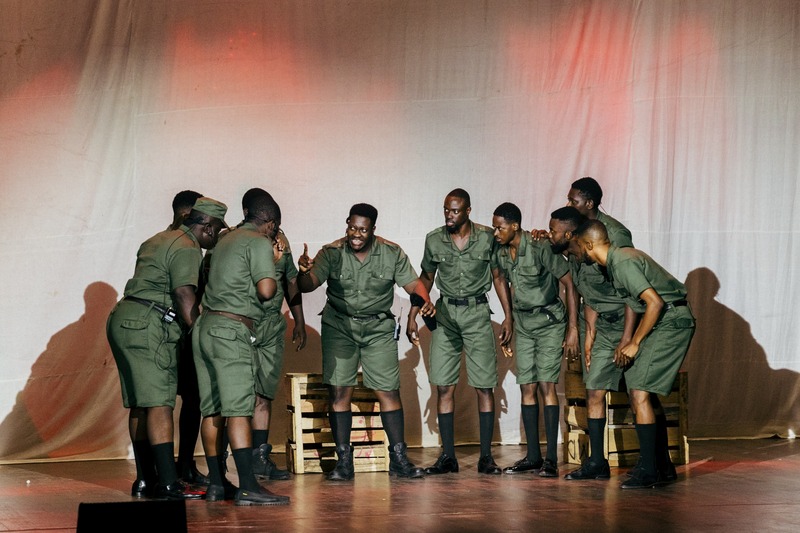
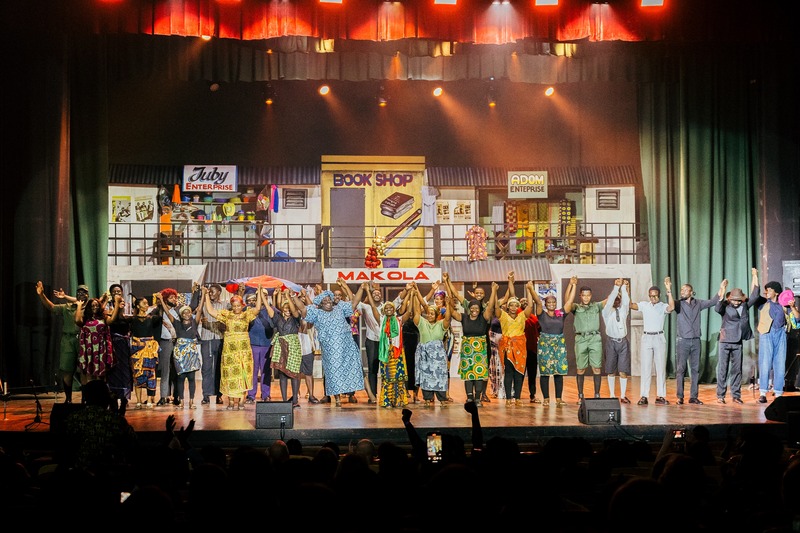
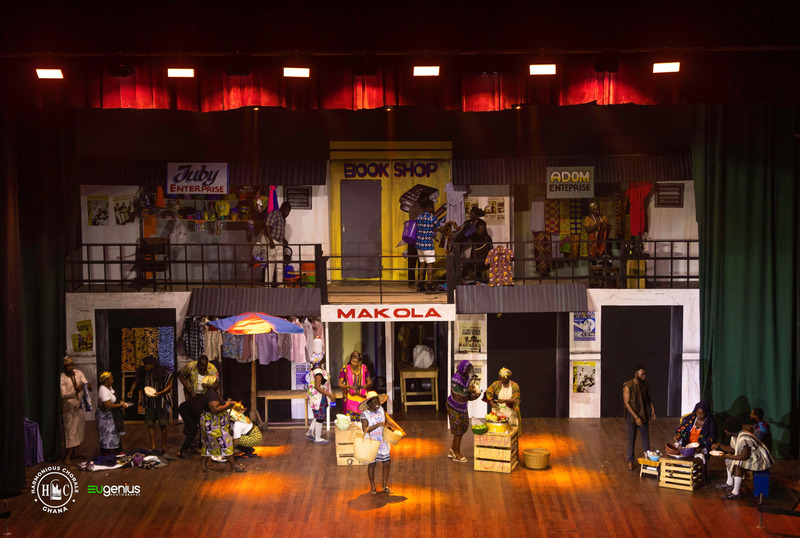
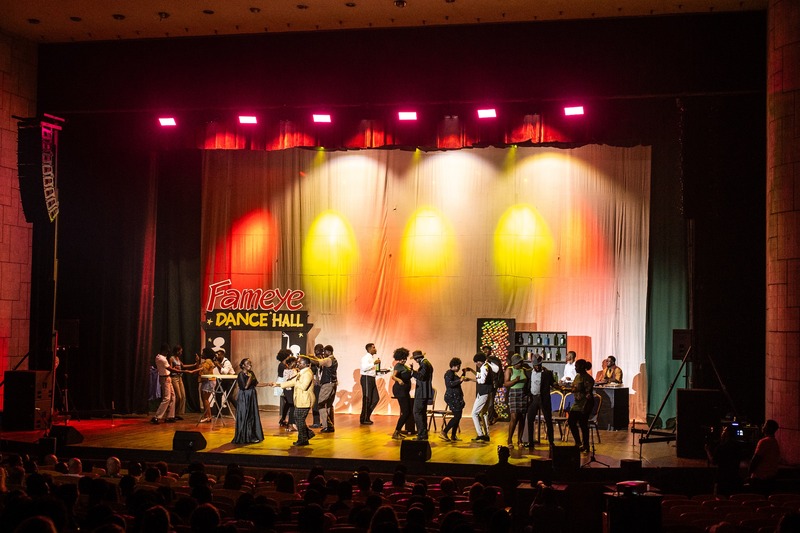
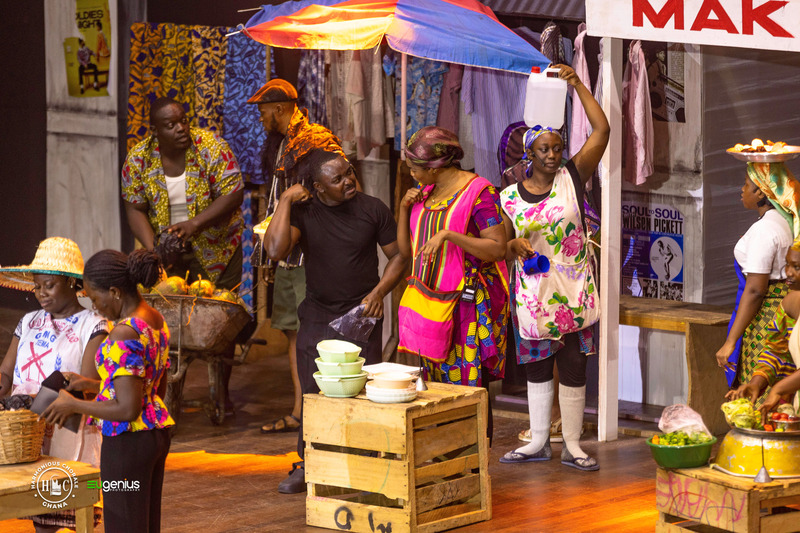
Ghana’s exciting potential to create musicals for local and global consumption was displayed at the National Theatre earlier this month when the Accra premiere of “Makola Queens” was brought to the stage.
The musical is produced by Ama Asantewa Diaka (Poetra Asantewa,) and Nii Dromo Yartey.
The cast is drawn from renowned Accra-based interdenominational choir, Harmonious Chorale.
Makola Queens tells the astonishing story of Rebecca Naa Dedei Aryeetey and her crucial role in Ghana’s independence struggle.
Aryeetey was the market queen of the flour traders at Makola Market in central Accra and is remembered for her entrepreneurial skills and political activism. She became known affectionately as Dedei Ashikishan (“ashikishan” means flour in Ga).
Honoured for her contribution to Ghanaian history, Dedei Ashikishan’s image appears on the 50 pesewa coin and a postage stamp.
Positive Action
Dedei Ashikishan gained prominence for her role in raising finance for Kwame Nkrumah’s Convention People’s Party (CPP) after the colonial authorities imprisoned him over his ‘positive action’ campaign.
She rallied voters and traders to ensure Nkrumah won the elections that saw him released from jail to become Leader of Government Business (de facto prime minister of the Gold Coast) in 1951.
This historical theme will strike a chord not only in Ghana and Africa but across the African diaspora and beyond.
Artistic Collaboration
The collaboration between the two artists began when Nii Dromo Yartey, a music director, voice coach, songwriter and 2D animator, read an article about contemporary market queens in Ghana that inspired him to jot down some song ideas looking at different aspects of the market.
He then met poet, musician, writer and spoken word artist, Poetra Asantewa, to discuss the potential for collaboration. She was already researching women in history and had written a poem immortalising the fearless Nkrumah supporter and political activist, Ama Nkrumah.
Asantewa told Yartey about the historical role of market queens like Dedei Ashikishan in bringing about the independence of Ghana.
The two spent the next year working together on a script and music score. Yartey left most of the research to Asantewa, focusing his attention on the music that could bring to life his preoccupation with “the market as a character”.
The result was the development of 16 musical scenes by the two composers showcasing the life of Dedei Ashikishan from her childhood to her rise as a market queen and CPP activist.
Map of the Musical
The 16 scenes are depicted in a map of the musical, illustrated by Nana Kwame Yeboah Diaka, which serves as a programme guide for audiences.
The musical opens with a stunning stage set welcoming the audience to Makola. The second scene, titled Matriarchy, shows Naa Dedei as a young girl being inducted into the life of the flour trader by her mother, Naa Aryeetey, and maternal grandmother, Ama Richter.
“We wanted this play to highlight Rebecca Naa Dedei Aryeetey but not to make the error of turning her into a saviour,” says Poetra Asantewa.
“The matriarchy scene was a way to register that she was very entrenched in community and took over a trade of flour that was handed down by her mother and her grandmother,” Poetra Asantewa told “Your Ghana, My Ghana”.
And indeed, although Ga societies are patriarchal and not matriarchal, the economic muscle that all Ghanaian market queens wield can create the sort of power associated with Akan matriarchies.
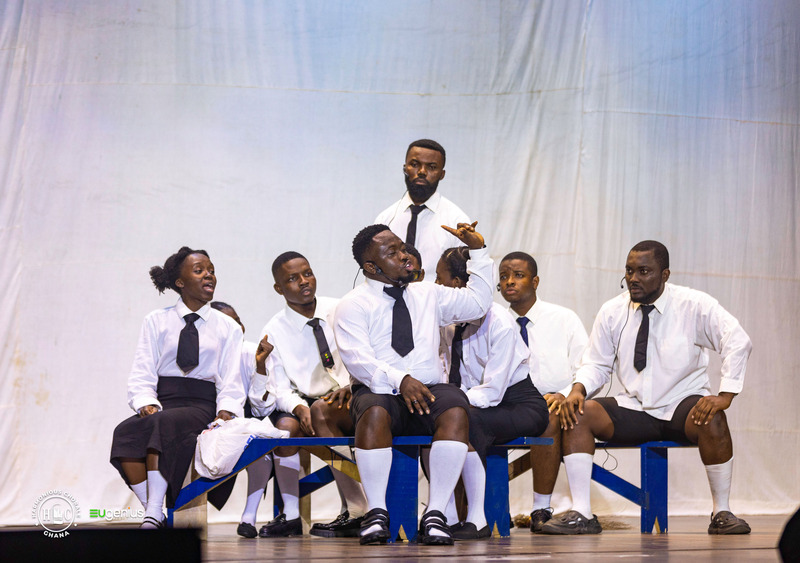
One of the most humorous scenes depicts the classroom, where Naa Dedei circumnavigates the hectoring instruction of a 1930s or 1940s schoolteacher as she learns to “keep her focus”, in an era when few girls went to school, learning to be good at numbers while developing street sense.
After leaving school in her late teens, she joins her mother and grandmother at Makola Market, developing the skills gathered to become a market queen in her own right.
Market as Character
Many of the scenes focus on bringing to life “the market as character”, as Yartey puts it, and this is done well. Various scenes depict the variety of experiences that can occur in the market.
Besides the pain of bereavement, tough things can happen if one loses focus, the quarrels between sellers, the havoc caused by a Makola julor (thief).
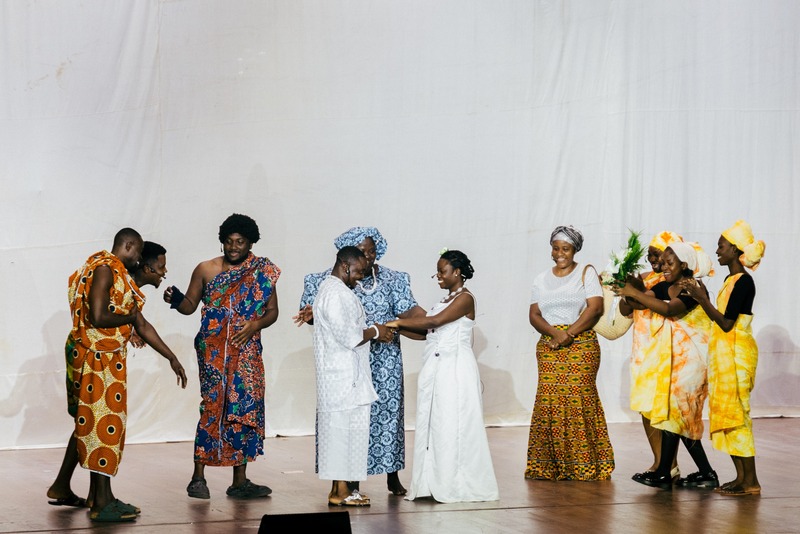
There are also joyful scenes – Christmas time in the market, blossoming romance as Naa Dedei meets her husband-to-be Herman and the Makola wedding.
The scene “Kenkey and Politics” shows the potential for politicisation in the marketplace and is followed by “Things are not the Same”, the turning point in the history of the Gold Coast/Ghana when the fatal shooting of three ex-servicemen in 1948 inflamed agitation for independence from British colonial rule.
We see Dedei Ashikishan growing as a CPP activist, though her powerful position within the party is underplayed.
The musical sidesteps the controversy over Dedei Ashikishan’s sudden death in 1961 at age 38. It is widely believed that she was poisoned by a political rival and died on the spot after accompanying then-President Nkrumah to a CPP meeting in Ho in the Volta Region.
Unable to confirm through their research whether this in fact happened, Poetra Asantewa and Yartey make the scene speculative, with community members reporting differing theories of her death “We heard she died in her sleep”, “She died at a rally”, “We don’t know how she died.”
The final scene of the musical focuses on the ultimate legacy of Dedei Ashikishan, her ability to inspire action. “If Naa Dedei could do it, so can we”, the cast sings.
Music Blend
The musical blends contemporary sounds with reggae, hip hop and highlife music, with the story narrated and sung in English, Ga and Twi.
“Musical theatre is kind of tricky. If you think of the style of music over the story, you might end up coming out with something you didn’t intend,” Nii Dromo Yartey says.
“So when I’m composing, I think about what will work with the dialogue, for example a simple chord progression with a specific tempo and rhythm that fits the dialogue. When I put the story first, from there the emotions will be captured by the chord progressions,” Yartey explained.
For the CPP scenes, “there’s a switch to capture the Ghanaian-ness,” Yartey added, noting also that he had created “different styles for different age groups.”
Raising Finance
As a trailblazer in the world of musicals, raising finance to stage Makola Queens has not been easy and it has taken two years to bring the production to the national stage.
A trial run of the musical was staged at the University of Ghana’s School of Performing Arts in 2023 before a small, targeted audience.
The Accra premiere on 1 August was made possible thanks to the financial support of eight individuals and the Swiss Embassy in Ghana. Ticket sales covered about half the production costs.
Next Steps
For Poetra Asantewa and Yartey, it is now back to the drawing board to work on what will put their production in its best light to attract more funding to sustain it locally and take it to the global stage.
Buoyed by critical acclaim for the Accra premiere, the creators plan to take Makola Queens on a tour of Ghanaian cities.
This is Ghana’s first original stage production that describes itself as a musical. Previous musicals have been adaptations of global successes, such as The Lion King, staged at Ghana International School.
Chief Moomen’s Mansa Musa and the Trail of Lost Gold, The Prelude, similarly promotes African history and heritage but appears to classify itself as a theatrical production rather than a musical.
Earlier musical genres that have won critical acclaim, such as Coz Ov Moni 1 and 2 created by FOKN Bois duo, Wanlov the Kubolor and Mensa, were crafted for cinema.
In Makola Queens, a gripping storyline and scenes showcasing Ghanaian history, culture, entrepreneurial talent and musical genius show potential to excite interest among audiences both locally and worldwide, which could one day place it among a pantheon of great Ghanaian productions.
The author is a journalist and economic historian specialising in economic development. The women behind Kwame Nkrumah’s independence revolution were the subject of her first “Your Ghana, My Ghana” column in March 2024.
