

Fruit gets a bad rap when the conversation turns to blood sugar. You have probably heard that it’s “too sugary” or that you should skip it if you want steadier blood sugar. But the science tells a more nuanced story.
“When you eat whole fruit like an apple or a pear, you’re getting fiber, water and antioxidants working together.
That’s very different from eating something with the same amount of sugar but none of the nutritional structure or benefits,” shares Jamie Lee McIntyre, M.S., RDN.
That structural complexity is exactly what makes whole fruit worth understanding on its own terms, and why the apples-versus-pears debate is more interesting than it first appears.
So where do apples and pears fit in? Both are crisp, portable and easy to love. They both can absolutely be part of an eating pattern that supports stable blood sugar.
And while the differences between them are smaller than the internet might suggest, a few details are worth knowing if you want to make the most of each bite. Let’s break it down.
How apples impact blood sugar
Apples can be a smart choice for blood sugar, and a lot of that comes down to fiber.
They’re rich in pectin, a soluble fiber that slows digestion and moderates how quickly glucose gets absorbed into your bloodstream.
That slower release helps explain why apples tend to sit low on the glycemic index, meaning they raise blood sugar more gradually than many quick-digesting snacks.
Fiber isn’t the whole story, though. Apples also contain polyphenols, plant compounds that may play a supporting role in how your body handles glucose.
In fact, much of the blood-sugar benefit tied to apples is attributed to their combination of fiber and these phenolic compounds.
And there’s a helpful detail about apple sugar itself: Fructose is the main sugar in apples, and it’s absorbed more slowly than glucose, which adds to that gentler, more gradual response.
When you eat apples matters too. Research suggests that eating an apple before a carb-heavy meal may help blunt the spike in blood sugar that follows.
One study found that an apple “preload” lowered the post-meal glucose peak compared with drinking water before the same rice meal, which is a simple, practical way to soften the rise from starchier foods.
What pears do to blood sugar
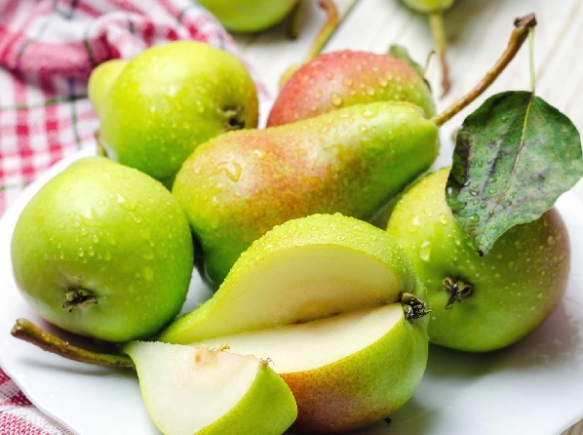
Pears follow a similar script, with a few of their own strengths. A medium pear delivers around 27 grams of carbohydrate and about 6 grams of fiber, which is a bit more than an apple offers.
Much of that fiber is concentrated in and just beneath the skin, so peeling a pear means leaving some of its benefits behind.
Like apples, pears carry a fair amount of soluble fiber and plenty of water, both of which help temper how sugars are absorbed.
Their glycemic index also sits in the low range, making them a steady-energy choice for most people.
“Pears are one of the more fiber-dense fruits you can grab, and that fiber is doing quiet work behind the scenes to support your glucose response,” shares Whitney Stuart, M.S., RDN, CDE.
What’s happening “behind the scenes” is partly about fermentation. Some of the fiber in pears feeds the beneficial bacteria in your gut, which produce short-chain fatty acids.
Research suggests these compounds may play a role in how your body regulates blood sugar over time, though scientists are still mapping out the details, and more robust data based on humans is needed to confirm this.
Nonetheless, it is a reminder that a fruit can have an effect as your body digests, not just the moment you eat it.
Why it’s essentially a tie
So which one wins? For blood sugar, apples and pears are close enough that neither deserves to knock the other out.
Both are low on the glycemic index, are sources of soluble fiber and come with water and antioxidants that help support healthy blood sugar levels.
The gaps between them are small and unlikely to make a meaningful difference for most people, but there are a few worth noting.
How to Eat Fruit for Better Blood Sugar
How you eat fruit often matters more than which fruit you choose. A few simple habits can help you get steadier energy from any piece of produce:
1. Focus on fiber-rich fruits. Fiber slows digestion and softens the rise in blood sugar after you eat.
Choosing whole, unpeeled fruits like apples and pears, and leaving the skin on when it’s edible, helps you hold on to that benefit instead of losing it to peeling or juicing.
2. Add a protein. Pairing fruit with a protein source can blunt the glucose response and keep you feeling satisfied longer.
Think a pear with a spoonful of cottage cheese, or apple slices alongside a hard-boiled egg. The protein slows how fast the meal leaves your stomach.
3. Include a fat. A little healthy fat works similarly, slowing digestion and smoothing out your energy.
Try apple slices with a tablespoon of nut butter, or a few walnuts next to your pear. It also makes the snack more filling and enjoyable.
Key Points
Apples contain natural sugar, but their fiber and polyphenols have blood sugar benefits.
Pears have a touch more fiber than apples, as long as you eat the skin.
Include both for two healthy, fiber-rich fruit options that can support blood sugar.
