
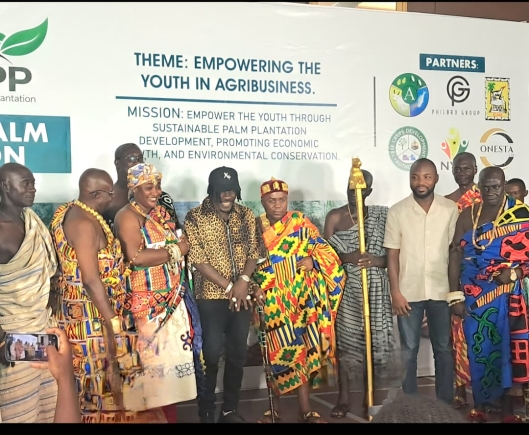
3,000 youth sign up for Youth in Palm Plantation initiative
More than 3,000 young Ghanaians have applied to be part of the Youth in Palm Plantation initiative, a new agribusiness programme aimed at tackling unemployment and promoting sustainable livelihoods.
The Chief Executive Officer of Philbro Group, Philip Nana Kwame Brobbey made this known at the official media launch of the project held on Friday, describing the overwhelming response as a clear indication of the growing interest in agriculture among the youth.
According to him, the initiative, which is being rolled out in collaboration with key stakeholders, including the National Youth Authority, Ministry of Employment and Labour Relations, seeks to position oil palm cultivation as a viable and profitable venture for young people across the country.
“This level of interest shows that the youth are ready to embrace agriculture when the right opportunities are presented,” he noted.
The CEO explained that the programme is designed not only to provide employment but also to equip participants with practical skills, financial support and access to land to establish their own palm plantations.
The launch, which attracted industry players, traditional leaders and members of the creative arts sector, highlighted the importance of agribusiness as a solution to Ghana’s unemployment challenges.
Dancehall artiste Shatta Wale, who has been actively promoting the initiative, urged young people to take advantage of the opportunity and rethink their perception of agriculture.
He stressed that farming, particularly oil palm cultivation, has the potential to generate significant income if approached with dedication and the right mindset.
The Youth in Palm Plantation project is expected to create jobs and contribute to economic growth by increasing local production and reducing reliance on imports.
For his part, Osabarima Asare Twe II assured potential investors of the traditional authority’s firm commitment to the initiative, revealing plans to make substantial land available to drive the project forward.
According to him, the Kade Traditional Council is prepared to allocate between 20 and 30 acres of land to individuals and organisations ready to invest in the venture.
“We are fully committed to the success of this initiative because we believe it holds great potential for job creation and economic growth in our area. As traditional leaders, it is our responsibility to create the enabling environment for development, and one of the ways we can do that is by making land readily accessible to serious investors.”
He further emphasised that the land allocation would be done in a transparent and supportive manner to attract credible partners.
“We are ready to work hand-in-hand with investors who are genuinely interested in contributing to this project. The land will be made available under clear and mutually beneficial arrangements to ensure sustainability and long-term impact,” he added.
Osabarima Asare Twe II also encouraged the youth and private sector players to take advantage of the opportunity, noting that the initiative could transform the local economy and improve livelihoods if fully embraced and additionally help fight Galamsey.
