
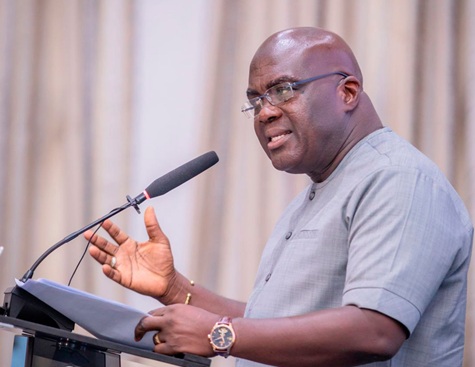
The Chief of Staff, Dr Julius Debrah, has called for the collective action of state and non-state actors to win the fight against poor environmental sanitation.
He stressed that when the country got its sanitation systems right, "the country works, the population is healthy, children can go to school healthy and the whole system works."
Dr Debrah said that while the government committed resources to support the fight against environmental crimes to improve sanitation, citizens must rise and play their part in improving sanitation.
"Diseases do not ask for titles before they enter homes; floods do not look at your status before invading your homes and offices, that is why we all need to act collectively to address the challenge," he said.
Delivering the keynote address at the Clean Conference held at the University of Ghana last Friday, he stressed that while the government would lead the process to protect the environment, the private sector needed to support the effort by investing in the sector.
Conference
The Clean Conference, which was organised by Ignite Media and other partners, including the Graphic Communications Group Ltd (GCGL), focused on national ecological accountability and Agenda 2030.
Held on the theme “Assessing progress towards Agenda 2030 and the UN SDGs on Sanitation and Clean Environment,” the conference brought together government officials, traditional authorities, religious leaders, academia, key actors in the environment and sanitation space.
It discussed key issues such as the state of sanitation in Ghana’s progress; efforts of sustainability towards a healthy Ghana; solving the WASH sector challenges and country's effort to achieve sustainable development goal (SDG) Six.
While commending Ignite Media for organising the conference, Dr Debrah said the media in Ghana must set the agenda for healthy discourse on the sanitation challenge confronting the country.
He said rather than dedicating more time to trivial issues, the media should redirect their efforts to the sanitation challenge that affected everyone.
"The media should also play their part by making sanitation appear on the headlines and take centre stage in prime-time discussions. The media should limit the gossip and focus more on the sanitation discourse," he said.
Dr Debrah said the recent floods that ravaged the country were a wake-up call that the impact of poor sanitation spared no one.
He called on businesses to ensure responsible production by ensuring that their activities did not destroy the environment.
"Let us write the story together; let us choose responsibility over death; let us work to save our country," the Chief of Staff added.
Collective responsibility
The National Chief Imam, Sheikh Usmanu Nuhu Sharubutu, said poor sanitation had dire environmental, health and economic consequences and therefore needed attention.
Speaking through his Spokesperson, Sheikh Arimiyawo Shaibu, the Chief Imam said poor sanitation weakened and undermined the country's tourism potential.
"It is in the light of this that a conference on sanitation needs to be commended highly. We need to fight the sanitation war in the mind; appreciate God's beauty and protect our environment," the Chief Imam said.
He added that through collective responsibility, the country must build a mindset that prioritised cleanliness not just as a religious duty, but a national responsibility.
Enforcement
The Ga Mantse, King Tackie Teiko Tsuru II, said tackling the country's sanitation and environmental challenges required stronger collaboration between traditional authorities and state institutions.
He said that with just four years to the deadline for achieving the SDGs, efforts must be ramped up if the country wanted any chance of meeting the deadline.
"The SDGs will not be achieved by the government alone; it needs the commitment and support of the chiefs, religious bodies and every Ghanaian," he said.
The Ga Mantse called for decisive action to halt the destruction of wetlands, pollution of the Odaw River and building on watercourses.
For his part, the Managing Director of Ignite Media, Klaus VonBackustein, said the Clean Conference was a timely initiative meant to ignite the national discourse on how multi-stakeholders could work together to tackle the country’s environment and sanitation challenges.
He said the conference showed the media's power to influence national development.
"We cannot continue to treat our rivers, forests, wetlands and the environmental in general as if we have an unlimited supply of those resources,” he stated.
Mr VonBackustein stressed that through cross-stakeholder collaboration, the country could rid itself of filth and build robust systems to preserve the environment.
