
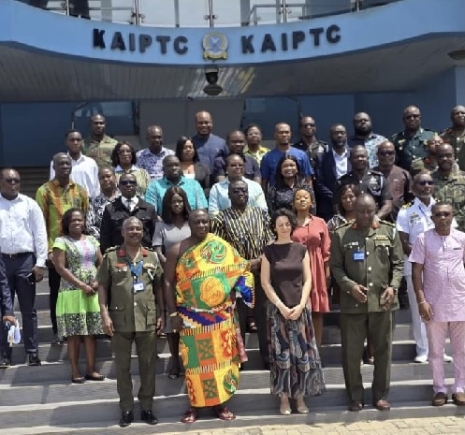
KAIPTC opens national dialogue on illegal mining, Calls for actionable roadmap to tackle menace
A three-day National Validation and Dialogue Workshop on the safety and security ecosystem of illegal mining has opened in Accra.
The forum put together by the Kofi Annan International Peacekeeping and Training Centre (KAIPTC) with support from the Spanish government, is a critical stage in a broader process that began with regional consultations in the Ashanti and Western Regions, where stakeholders, including mining communities, traditional leaders, security agencies and civil society — shared firsthand experiences.
These engagements revealed that illegal mining has evolved beyond a sectoral issue into a complex national security and governance challenge, affecting environmental sustainability, livelihoods, public trust and institutional authority.
The national forum, scheduled from March 24 to 26, is also meant to provides an opportunity to consolidate these findings, identify vulnerabilities and strengthen coordinated responses.
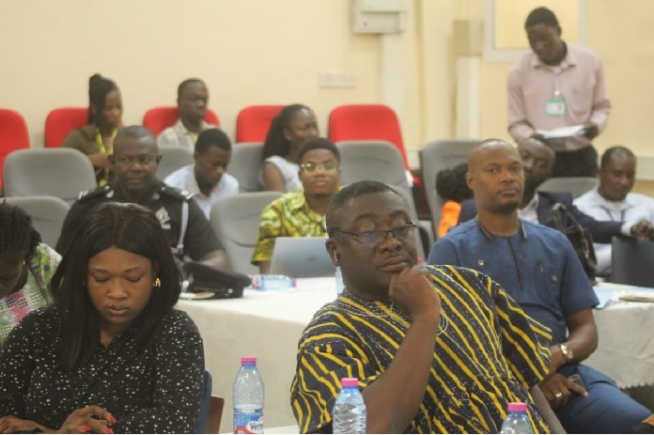
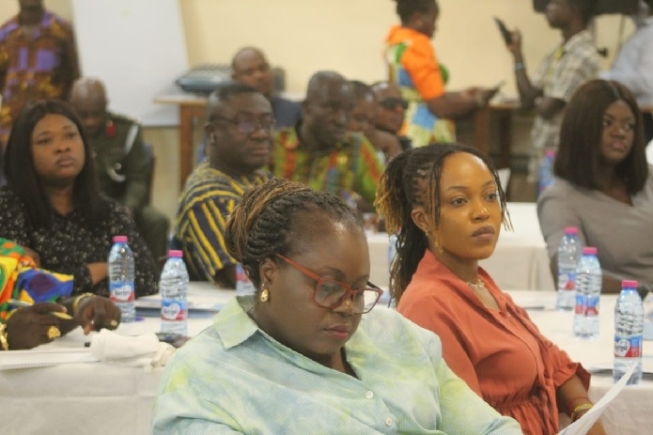
It has brought together policymakers, security agencies, civil society and development partners to craft a coordinated national response to the growing threat.
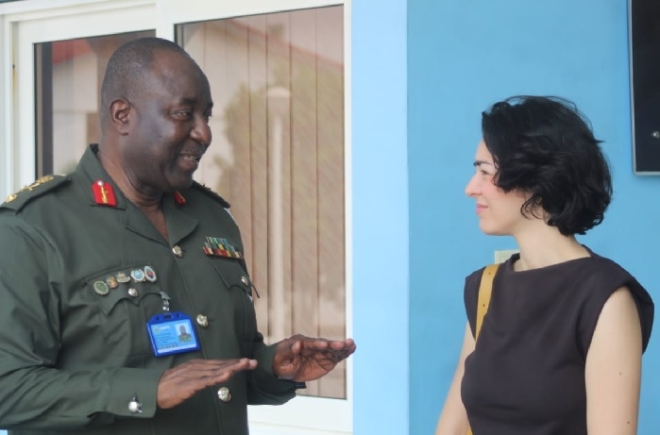
Notable among the attendees are Deputy Commandant of the Kofi Annan International Peacekeeping Training Centre, Brig. Gen. Zibrim Bawah Ayorrogo, Deputy Spanish Ambassador to Ghana, H E Isabel Escarlata Ibarra Serrano De Haro, Head of Programmes-Peace Supoort Operations, KAIPTC, Colonel Andrews Alipoe, Chief of Apremdo, Takoradi, Nana Egya Kwamina XI and Head of Conflict, Governance Leadership Programmes, KAIPTC, Ernest Ansah Lartey.
Action-driven response
In a welcome address, Brig. Gen. Zibrim Bawah Ayorrogo emphasized the need for a coordinated, action-driven national response to the growing challenges of illegal mining.
He stressed that the forum’s goal is not merely to produce a policy document, but to develop a practical and realistic roadmap.
This roadmap, he explained, will clearly assign leadership roles, strengthen coordination among agencies, and establish timelines for implementation, monitoring and evaluation.
Brig. Gen. Ayarrogo highlighted key concerns such as weak coordination among institutions, fragmented mandates, and limited state presence in high-risk mining areas, which have allowed criminal networks to thrive.
"What has emerged clearly from both regional processes is the recognition that illegal mining in Ghana is no longer a challenge that can be addressed through isolated enforcement actions or sector specific responses alone."
Insecurity
He stressed that the emergence of illegal weapons in mining zones further escalates insecurity and links local challenges to broader regional threats.
Central to his remarks was the call for moving beyond discussions to actionable outcomes.
According to him, this approach is essential to bridging the gap between national policies and real impact at the community level.
"Today, we are called upon to examine how Ghana’s existing legal frameworks, regulatory systems, security arrangements, and development policies align with the realities that have been validated at the community and regional levels."
"This is an opportunity for honest and constructive reflection on where our coordination mechanisms are effective and where gaps, overlaps, or ambiguities continue to weaken implementation, accountability, and public confidence," he said.
He also underscored the importance of collaboration among key institutions, including the National Integrated Mechanism for Addressing Illegal Mining (NIAMOS), government ministries, security services, and development partners, in translating dialogue into concrete action.
"On behalf of the KAIPTC, I would like to express our sincere appreciation to the Embassy of Spain in Accra for their strategic and financial support, which has enabled this initiative to move from field research and regional dialogue to this national platform for policy alignment and institutional commitment," he said.
Spain support
Isabel Escarlata Ibarra Serrano De Haro reaffirmed Spain’s strong support for Ghana’s efforts to tackle illegal mining, emphasizing that security and development must go hand in hand.
She highlighted that illegal mining (galamsey) poses not only environmental and economic challenges but also serious threats to community stability, governance and public trust.
She also mentioned that insights gathered from regional engagements in the Ashanti and Western Regions reveal a complex mix of economic pressures, criminal networks and institutional gaps driving the problem.
"For Spain, supporting this process is a natural extension of our commitment to the principle that President John Dramani Mahama has often brandished: there can be no development without security, as they must go hand in hand," she said.
She explained that Spain’s involvement reflects its broader commitment to promoting peace, security, and sustainable development in Ghana and across strategic regions like the Sahel and Gulf of Guinea.
"Our cooperation with Ghana has grown steadily in this direction-through training programmes, capacity-building initiatives, and security projects that strengthen institutions and enhance resilience. We are proud to accompany Ghana not only as a partner, but as a friend committed to shared values and common objectives," she added.
