
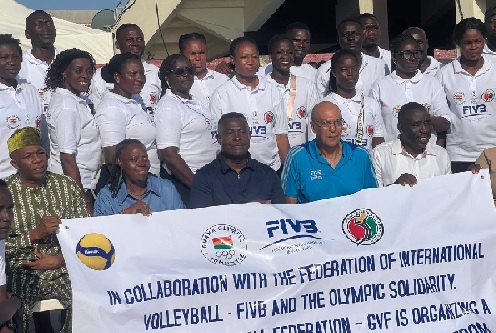
Ghana has the potential to become a volleyball powerhouse on the continent and in the world, a top international coach has declared as a five-day coaching course drew to a close at the Accra Sports Stadium.
Mustafa Achuche, a seasoned FIVB-certified instructor, made the assertion as 39 aspiring coaches from Ghana and Nigeria completed the Level One Coaches Course, organised under the joint auspices of Olympic Solidarity, the Ghana Volleyball Federation (GVF), and the International Volleyball Federation (FIVB).
The intensive programme, which began on August 3, equipped participants with modern techniques in game strategy, physical conditioning, match analysis, and sports psychology – shifting away from outdated methods toward the evidence-based approaches that define elite volleyball today.
“Ghanaians love volleyball, and I am excited about that,” Achuche told Graphic Sports during a break last Thursday. “We want to grow the game here, and it begins with the quality of coaching. What I have witnessed this week fills me with great optimism.”
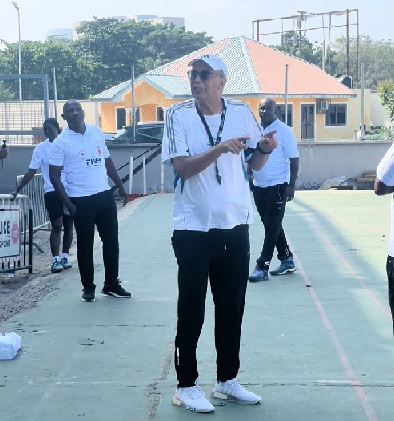
The course brought together 28 coaches from Ghana and 12 from Nigeria, marking the first time in over five years that a fully funded FIVB programme has been hosted on Ghanaian soil.
Achuche, who has delivered coaching programmes across Africa and Europe, also issued a passionate appeal to the nation's youth to take volleyball seriously – not merely as a recreational activity but as a legitimate career path.
“Young people can build a living from this sport – through playing professionally, coaching, officiating, or even sports administration,” he said.
“With discipline and dedication, volleyball can become a national pastime that also provides economic opportunity. There is no reason Ghanaian youth cannot match the achievements of their counterparts in Egypt, Tunisia, and Brazil.”
The FIVB Level One certification is the foundational tier of the global coaching framework. Graduates are now authorised to lead grassroots development programmes, identify emerging talent, and build the pipelines that feed into national teams.
Participants described the week as transformative. Grace Asante, a physical education teacher from Achimota, said: “We have learned how to read matches in real time, manage team dynamics, and prevent injuries. I am returning to my students with an entirely new set of skills.”
