


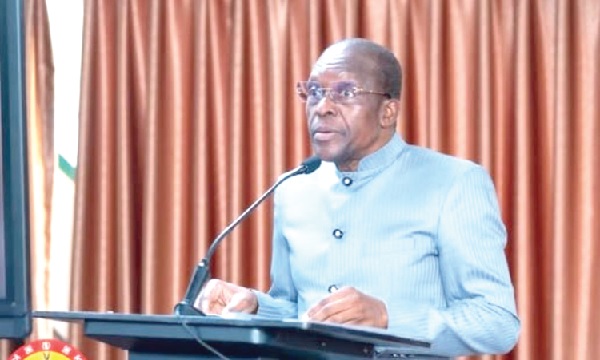
THE Parliament has launched the first Public Financial Management (PFM) Media Dialogue, with Speaker of Parliament, Alban Bagbin, stating that the effort is vital to address diminishing public trust and promote accountability in the use of national resources.
He stated that the conversation brings the Parliament and the media together at a time when citizens are losing trust in major government institutions.
Mr Bagbin highlighted that, according to the 2024 Afrobarometer data, although 73 per cent of Ghanaians continue to favour democracy, satisfaction with its functioning has significantly declined.
Additionally, Members of Parliament, ministries, departments, agencies and assembly members are among the least trusted institutions.
He added that public servants carry a responsibility to be open, transparent and accountable in managing public resources, particularly when trust levels in democratic institutions are weakening.
“This reality must change, and our gathering today provides an opportunity to begin reshaping that narrative,” he said.
Speaking on the theme, ‘Parliament, the Press and the Public: Building Accountability Through Dialogue’, he disclosed that it shows how the media and the parliament must work together to help people understand how public money is spent and distributed.
“Accountability becomes truly effective only when the Parliament and the press interact openly, share insights, challenge one another constructively and ultimately strengthen each other’s work,” he said.
He said that the Parliament’s partnership with the World Bank and the Foreign, Commonwealth and Development Office (FCDO) is supporting a number of reforms aimed at improving the capacity of MPs and staff, especially on finance and economic committees.
Mr Bagbin added that strategic engagement with stakeholders outside Parliament, including the media, is essential to making those reforms effective.
According to him, the dialogue is meant to bridge gaps between technical information and the wider public, between figures and the real stories behind them, and between duty-bearers and the citizens they serve.
Citizen participation
Mr Bagbin stated that the debates will assist in enhancing citizens' perspectives on economic and financial governance, stimulate public participation in the budget process and improve communication clarity on complex financial problems.
He emphasised that the Parliament and the press play critical roles in democratic administration and must collaborate to improve public understanding of national spending.
He also pointed to gaps in the way Parliament engages with the budget process.
The Speaker of Parliament said that the House created a Budget Committee to ensure MPs take part in the early stages of preparing the national budget, but the committee was not involved this year.
“We are not only to sit in Parliament and be presented with a budget. We should be the ones who determine where the money should go,” he said.
He stressed that the Parliament cannot expect citizens to continue paying taxes if Members of Parliament do not guide spending priorities on their behalf.
“If we fail in that respect, we fail the people,” he said.
Improved oversight
The Speaker also raised concerns that the Economic and Development Committee was missing from the list of committees submitted for involvement in the PFM initiative, even though it is central to economic and development oversight.
He said financial and economic governance requires broader participation than only the traditional finance-related committees.
He told participants that Parliament’s future engagement with citizens will focus on making technical financial language simpler and more accessible.
This, he said, will help rebuild trust between MPs and voters.
“That way, we will be able to claw back the lost trust our people, our voters, have in us as leaders,” he said.
Mr Bagbin encouraged MPs, journalists and stakeholders to engage candidly during the forum, saying every participant brings a unique perspective that must be heard. “Please muster the courage, speak. We want to hear your voice,” he said.