
Last Thursday, Ghana’s Finance Minister, Dr Cassiel Ato Forson, delivered a budget statement that seems to put meaningful weight behind the often-repeated ambition to grow the creative and cultural economy.
For years, creatives have heard speeches about potential but seen little in the way of structured investment.
This time, however, the budget included major commitments (with three main ones) that could reshape Ghana’s cultural landscape: a Creative Arts Fund seeded with GH¢20 million, the rehabilitation of the National Theatre and the establishment of a Film Fund aimed at reviving Ghana’s film ecosystem.
Individually, these are positive steps. Taken together, they suggest a broader economic strategy that recognises culture as a sector capable of creating jobs, driving exports and enhancing Ghana’s tourism appeal. For a country positioning itself as a hub of cultural tourism on the continent, under the aegis of the Black Star Experience initiative, this shift is not only timely but necessary.
Creative Arts Fund with transformational possibilities
The GH¢20 million Creative Arts Fund is the clearest signal yet that the government intends to back creativity with real money.
For years, creatives have navigated inconsistent funding, informal business structures and a lack of predictable support.
A dedicated fund provides a practical mechanism through which musicians, designers, visual artists, chefs and performers can access production grants, training, technical upgrades and market access.
This intervention aligns with the broader potential of Ghana’s creative economy.
Pre-pandemic data showed that the cultural and creative industries contributed about 2.5 per cent of Ghana’s GDP, with the capacity to grow much further. Employment figures are even more striking.
The Ministry of Tourism, Culture and Creative Arts reported in 2018 that over 1.2 million jobs were linked to cultural, creative and tourism activities.
With global creative industries employing millions of young people, it goes without saying that Ghana stands to gain significantly if it strengthens its creative value chains.
Infusing public capital into these ecosystems has implications that go far beyond entertainment.
It is about building an economy of ideas, skills, services and products that can generate jobs, export value, and year-round tourism activity.
Strengthening national identity, tourism growth
Creativity is one of Ghana’s strongest assets. From music to fashion, culinary expression to performing arts, these elements feed into tourism demand and national branding.
Visitors increasingly seek immersive cultural experiences – festivals, food markets, fashion events, art exhibitions and film screenings.
The Creative Arts Fund, if managed well, can help fuel these offerings.
Tourism already has the potential to contribute billions to the economy.
But its growth is directly linked to cultural vibrancy.
A stronger creative sector means more products for tourists to consume, more reasons to stay longer, and greater global visibility for Ghana.
Soft power matters, and creative output remains one of the easiest ways to shape how the world perceives a country.
Reviving cultural infrastructure – The National Theatre
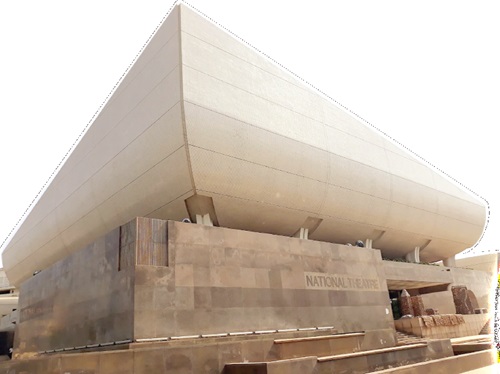
The budget’s commitment to rehabilitate the National Theatre in Accra, alongside plans to develop a second national theatre in Kumasi, is equally important.
For decades, the National Theatre has served as a symbolic and functional anchor for Ghanaian culture.
Its renovation will not only restore its physical fabric but also expand its capacity to host international festivals, large-scale productions and cultural tourism events.
Upgrades to sound, lighting, staging and accessibility will allow local theatre companies to mount more ambitious work. Improved rehearsal spaces and backstage facilities will strengthen production quality.
The economic implications are practical: more jobs for technicians, creatives, producers and service providers, and a more competitive environment for Ghana to position itself as a cultural hub in the region.
The theatre’s management reforms and governance rebuilding efforts are timely. Infrastructure without institutional capacity will not deliver the expected returns.
But if the renovation is matched with professional leadership and a commercial strategy, it could become a sustainable asset that drives both creative livelihoods and visitor traffic.
Supporting Film – New lifeline for Ghanaian storytelling
The creation of a dedicated Film Fund is a long-awaited step toward revitalising the Ghanaian film industry.
Kumawood and other local film clusters remain culturally significant, but they struggle with financing, modern production capacity and formal distribution channels.
A Film Fund can reduce early-stage risk, encourage private investment, support higher-quality productions and help Ghanaian films reach festivals, streaming platforms and international markets.
Film has direct implications for tourism. Countries from New Zealand to South Korea have built strong tourism assets on the back of cinema.
Ghana could do the same, promoting film trails, festivals, studio experiences and cultural tours tied to cinema.
Implementation will determine success
While these commitments are promising, their success depends entirely on execution. Creatives will expect:
• transparent disbursement criteria
• an independent board with industry expertise
• measurable indicators for job creation and revenue
• decentralisation to ensure funds reach regions beyond Accra
• predictable release of seed allocations
The creative economy is capable of driving structured, formal employment, strong exports, enhanced national identity and sustained tourism growth.
But the institutions governing the Creative Arts Fund, the National Theatre and the Film Fund must set clear rules, timelines and governance practices.
Turning point if done right
The 2026 Budget puts a real stake in the ground. For the first time in years, Ghana’s creative ecosystem is being supported through a coordinated public investment plan.
If executed strategically, these interventions could strengthen the cultural economy, deepen tourism offerings, create thousands of jobs and project Ghana’s identity more strongly on the world stage.
The creative sector has been waiting for this moment.
Now the task is to turn policy commitments into working studios, stronger cultural institutions, export-ready products and thriving creative businesses that uplift communities and fuel tourism growth across the country.
The hope of the people in the sector is that this won’t turn out to be another talk shop!
