
In an era where digital screens and pop culture threaten to overshadow indigenous art forms, the Hogbetsotso Za (festival) bursts forth as a defiant celebration of tradition.
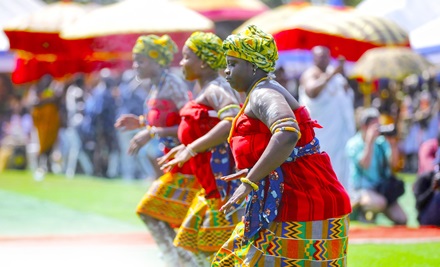
Agbadza dancers, predominantly women, take centre stage, embodying the unbreakable spirit of Anlo culture.
Their rhythmic movements weave a powerful narrative of endurance, identity and community, reminding all that true culture cannot be erased – it must be performed.
Captured here are women whose movements speak a language of endurance.
They are not mere performers; they are custodians of identity.
Clad in bright kente and colourful traditional cloth, their synchronised motions echo the migration, resilience and triumph of the Anlo people.
Each sway of the hip, each beat of the drum, recalls a chapter of history — from Notsie to Anloga — retold through motion and song.
At the heart of the Hogbetsotso Za, amid the swirl of colours and the regal procession of chiefs, one rhythm reigns supreme — Agbadza.
And within that rhythm, it is the women who hold the pulse of the celebration.
Their feet stamp centuries of memory into the earth, their arms slice the air in graceful assertion and their beaded waists tell stories older than the festival itself.
Agbadza, once performed in honour of returning warriors, has evolved into a dance of pride and cultural continuity.
The women who dance it today carry more than rhythm; they embody the collective memory of a people who refused to let time steal their voice.
Their movements remind us that tradition is not static — it breathes, adapts and flourishes through those who dare to keep it alive.
The Hogbetsotso durbar has become one of the many platforms where such expressions unfold.
As dignitaries, chiefs and visitors fill the grounds, it is these dancers who transform the event from ceremony into celebration.
Their energy bridges past and present, merging ancestral reverence with modern cultural confidence.
It is a visual manifesto of who the Anlo people are — proud, resilient and forever in motion.
Their rhythm beats not just in drums, but in the hearts of those who watch and remember.
For the Anlo women, each step on the festival grounds is a declaration: We are here.
We remember. We endure.
